Masseter muscles
The masseter muscles are a paired set of powerful muscles located at the sides of the jaw. They are primarily responsible for closing the mouth and generating the force needed for chewing and biting. Because of their size, strength, and superficial position on the face, the masseters are one of the most influential muscles when it comes to both jaw function and lower-face appearance.
Unlike many facial muscles that subtly affect expression, changes in the masseter muscles can visibly alter face shape. This makes them clinically relevant not only in dentistry and jaw pain management, but also in aesthetic medicine.
Structure & anatomy
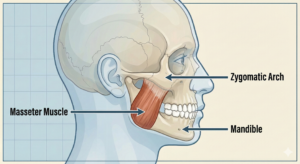
Each masseter muscle runs from the zygomatic arch (cheekbone) down to the angle and ramus of the mandible (lower jaw). The muscle is composed of superficial and deep layers, allowing it to generate significant vertical force while maintaining control and stability of the jaw.
Because the masseter lies close to important anatomical structures—including branches of the facial nerve, salivary glands, and blood vessels—any intervention involving this muscle requires detailed anatomical knowledge and precise technique.
Function
The primary function of the masseter muscle is elevation of the mandible, meaning it closes the jaw. It works alongside other chewing muscles to enable speaking, eating, and swallowing. In healthy function, the masseters activate intermittently and symmetrically.
Problems arise when the muscle becomes overactive. Prolonged clenching, grinding, or stress-related jaw tension can cause the masseters to contract more frequently and for longer durations than intended, leading to fatigue, pain, and changes in muscle size.
Clinical significance
From a clinical standpoint, the masseter muscle is significant because dysfunction or overuse can contribute to a range of symptoms. These include jaw pain, facial tension, headaches, tooth wear, and symptoms commonly associated with TMJ disorders. Because muscle overactivity is often gradual and subconscious, many people do not realise the masseters are contributing to their symptoms until they are specifically assessed.
Masseter hypertrophy (enlarged jaw muscles)
Masseter hypertrophy refers to an increase in the size and thickness of the masseter muscles. This typically develops over time due to repetitive overuse, most commonly from clenching or grinding the teeth. Hypertrophy may occur on one side or both, sometimes asymmetrically.
Clinically, enlarged masseters may feel firm or bulky when the jaw is clenched. Aesthetically, hypertrophy can widen the lower face, create a squarer jawline, and overpower other facial features, even in individuals with otherwise fine bone structure.
Jawline clenching
Jaw clenching is a sustained contraction of the masseter muscles, often occurring during periods of stress, concentration, or sleep. Unlike chewing, clenching involves prolonged muscle activation without relaxation. Over time, this constant workload contributes to muscle fatigue, soreness, and enlargement.
Chronic clenching is one of the most common contributors to both masseter hypertrophy and jaw discomfort, yet many people remain unaware they do it.
Teeth grinding
Teeth grinding, also known as bruxism, involves repetitive grinding or clenching of the teeth, most commonly at night. This places significant strain on the masseter muscles and can accelerate hypertrophy. Dental symptoms such as tooth wear, fractures, or sensitivity are often the first signs, but muscular changes may occur well before dental damage is noticed.
TMJ dysfunction
TMJ dysfunction encompasses conditions affecting the temporomandibular joints and surrounding muscles. While not all TMJ issues are muscle-based, overactive masseters frequently contribute to symptoms such as jaw pain, limited opening, clicking, or facial tension. Differentiating between joint-dominant and muscle-dominant TMJ presentations is essential for appropriate management.
Aesthetics
Beyond function, the masseter muscles play a major role in facial aesthetics. Because they sit at the widest point of the lower face, their size directly influences how slim or broad the jawline appears. When enlarged, they can create a heavy or square appearance that does not always reflect underlying bone structure.
Face shape
Prominent masseter muscles can change face shape from oval or heart-shaped to square or rectangular. This effect is muscular rather than skeletal, meaning the face may appear wider during clenching or in certain lighting conditions. For many people, this contributes to a perception of facial imbalance rather than a desire for a dramatically altered appearance.
Proportions and balance
Facial harmony depends on balance between the upper, mid, and lower face. Enlarged masseters can visually weigh down the lower third of the face, drawing attention away from the eyes and cheeks. Addressing masseter overactivity can restore proportion rather than create an artificial or over-slimmed look when done conservatively.
Treatment options to relax and slim the lower face, and jawline
Treatment approaches focus on reducing excessive muscle activity rather than eliminating normal function. By allowing the masseter to relax, symptoms such as tension and clenching can improve, and over time the muscle may reduce in size. This can lead to both functional relief and subtle changes in facial contour.
Natural options
Natural approaches to facial slimming may include stress management, jaw awareness, dental splints, and physiotherapy. While these can help reduce symptoms and protect the teeth, they rarely lead to meaningful or lasting changes in muscle size on their own.
Medical treatments
Medical treatments target the muscle directly to reduce overactivity. When performed correctly, these approaches can improve comfort, reduce clenching, and gradually soften the appearance of a bulky jawline. Treatment should always be individualised, conservative, and performed by experienced medical professionals with a strong understanding of facial anatomy.
Medical masseter treatments involve a series of simple steps.
Check your suitability
Suitability for masseter treatments
Not everyone with a strong jawline is a suitable candidate for masseter treatment. Ideal candidates are those with confirmed muscle overactivity, hypertrophy, or functional symptoms such as clenching or jaw tension. A thorough assessment is essential to determine whether the masseter muscle is the primary contributor and to ensure treatment aligns with both functional needs and aesthetic goals.
Want to know more about masseter & facial slimming?
Learn more about facial slimming treatments in our complete facial slimming treatment guide.
Searching online for a “facial slimming treatment near me”?
Curious about whether facial slimming treatment is right for you? Explore our facial slimming treatment page.