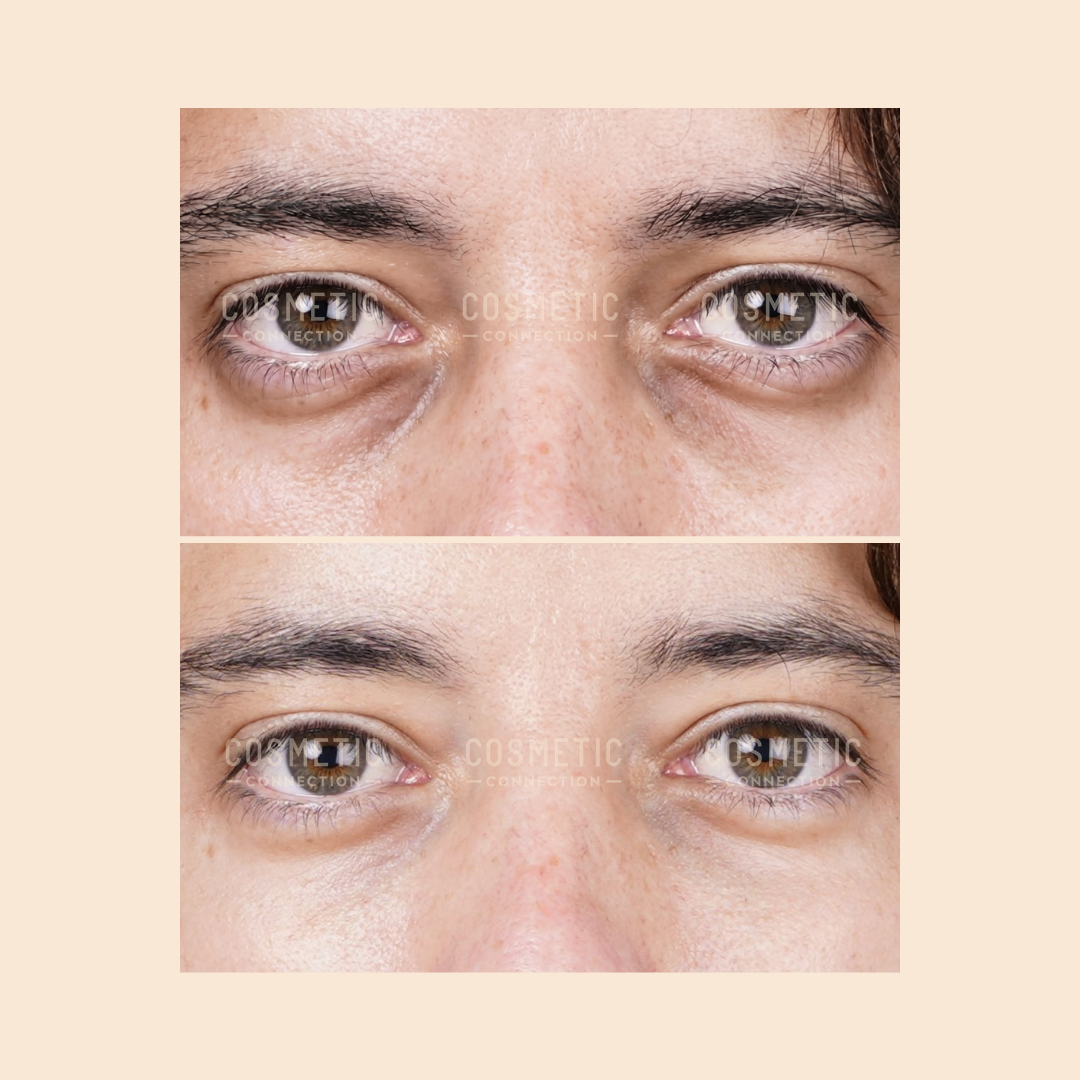
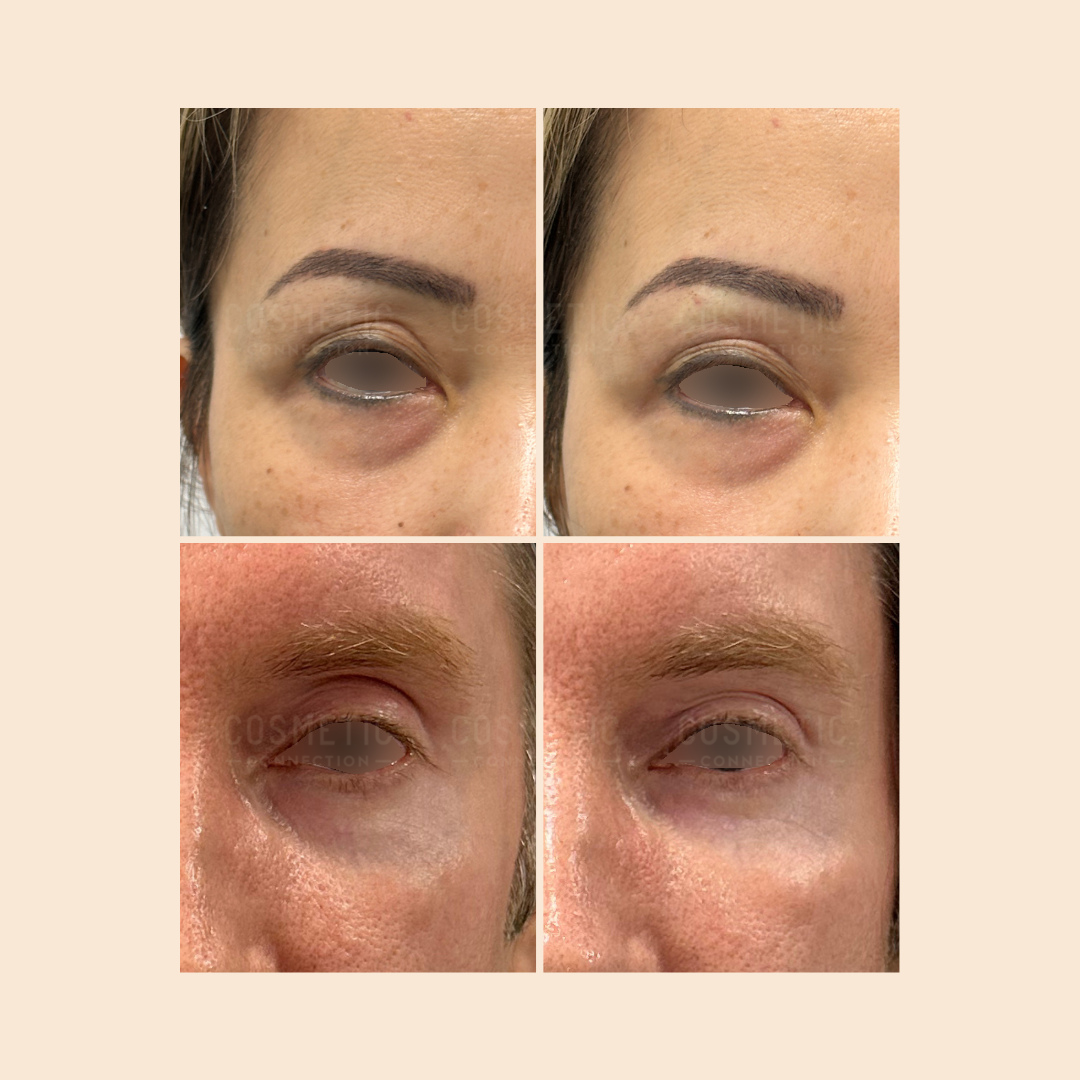
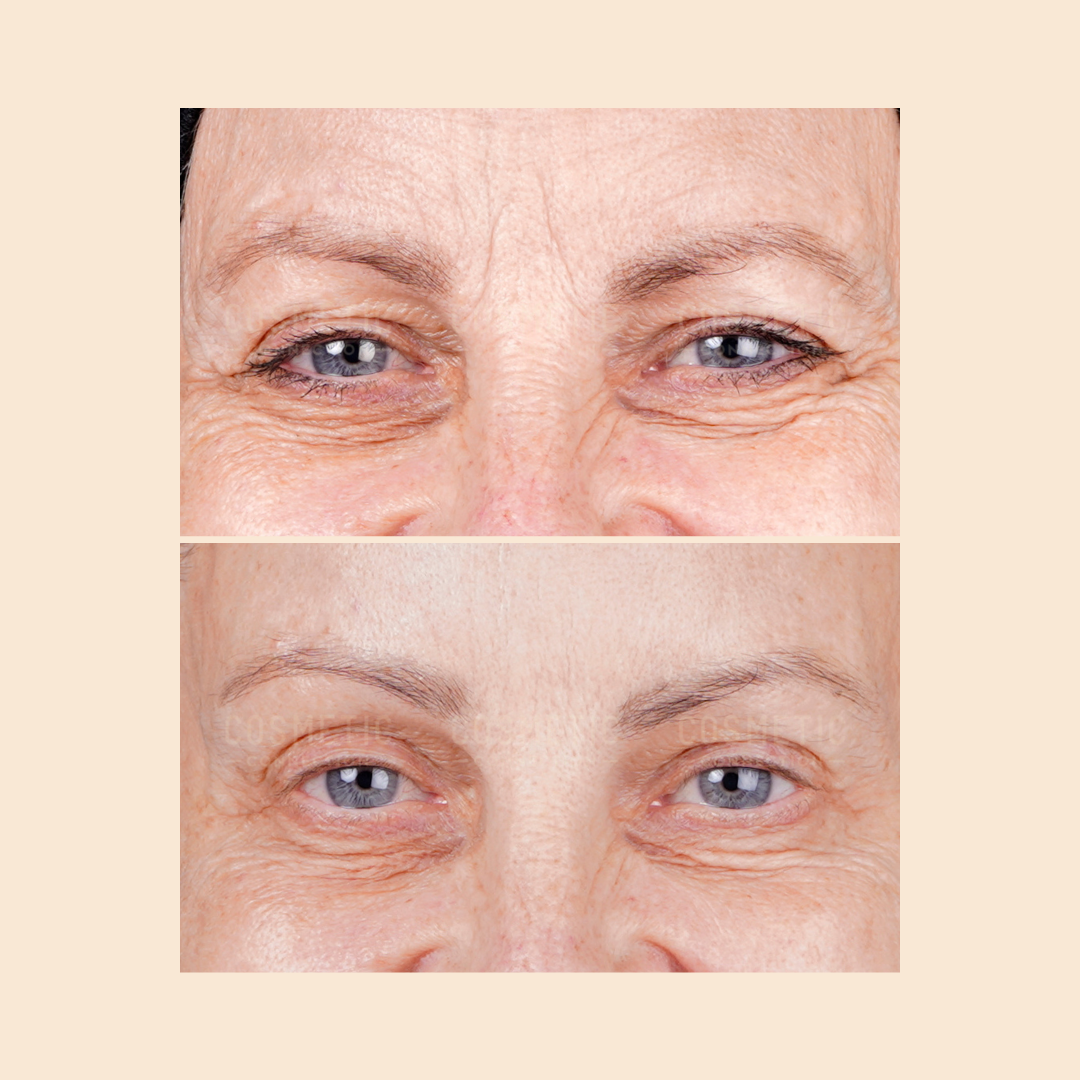
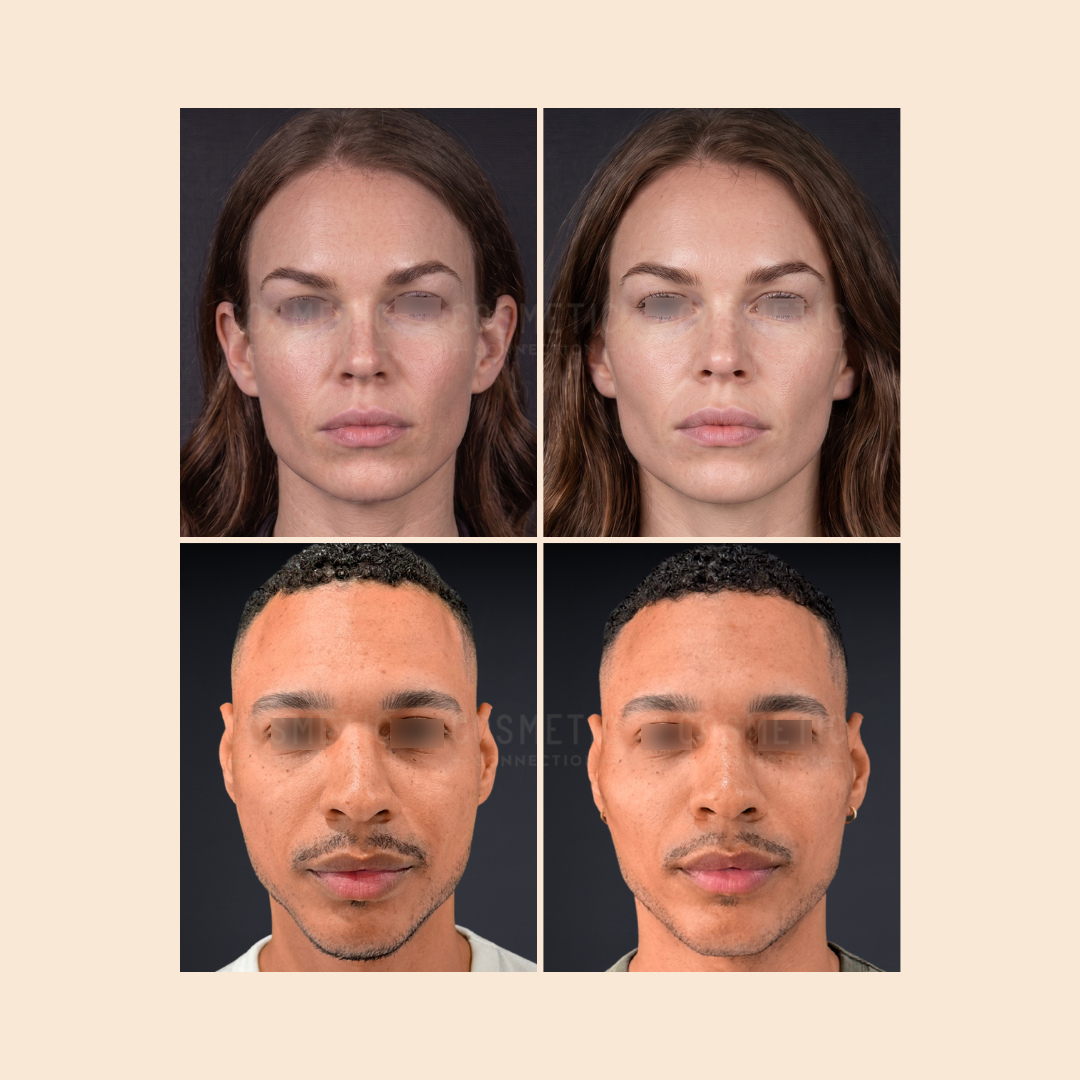
Crow’s feet & eye wrinkle treatment
10–20 min typical treatment time
Doctor-led, surgery-free
Completely personalised results
All-inclusive pricing & ongoing support
Soften crow’s feet and eye wrinkles with a non-surgical approach to refresh your appearance.

Start your booking process by providing us some details
As seen in













When skincare stops being enough
Treat eye wrinkles the medical way.
You haven't changed, your skin has
It's confronting to notice eye wrinkles, even when you care for your skin. Crow's feet deepen due to deeper structural changes.
Your current efforts aren't the full solution
Serums & surface solutions help skin quality but don't fix deeper changes. It’s not about doing more, it’s about choosing treatment that targets the cause.
This isn’t about change, it’s about preservation
It’s about looking refreshed, rested, and like yourself, all while preserving natural expression and identity.
Refined, not different
Our clinicians design your plan using the CXN Method™ and treat to the Undetectable Standard™.
Treatment info
Goals
Suitability
Preparation
Aftercare
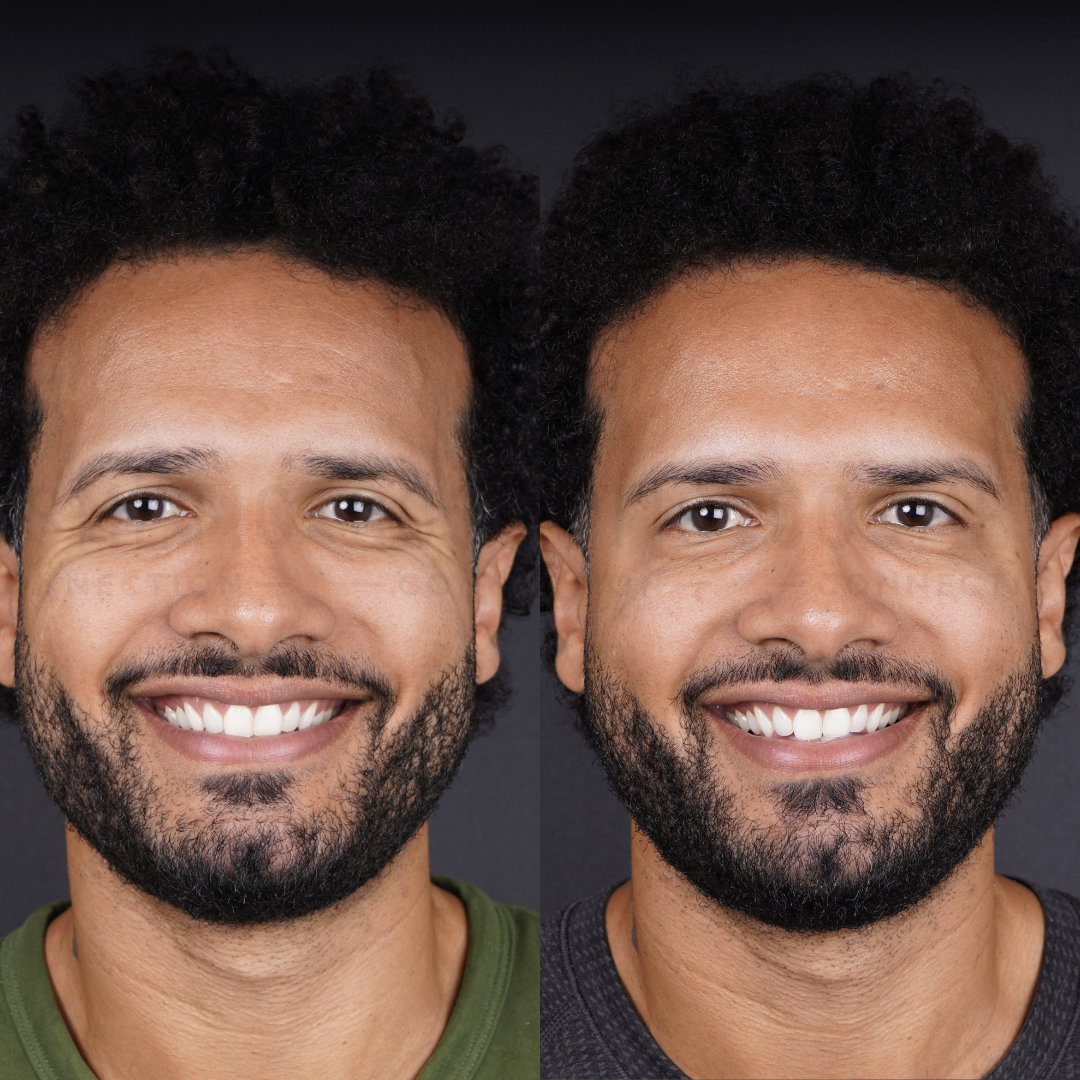
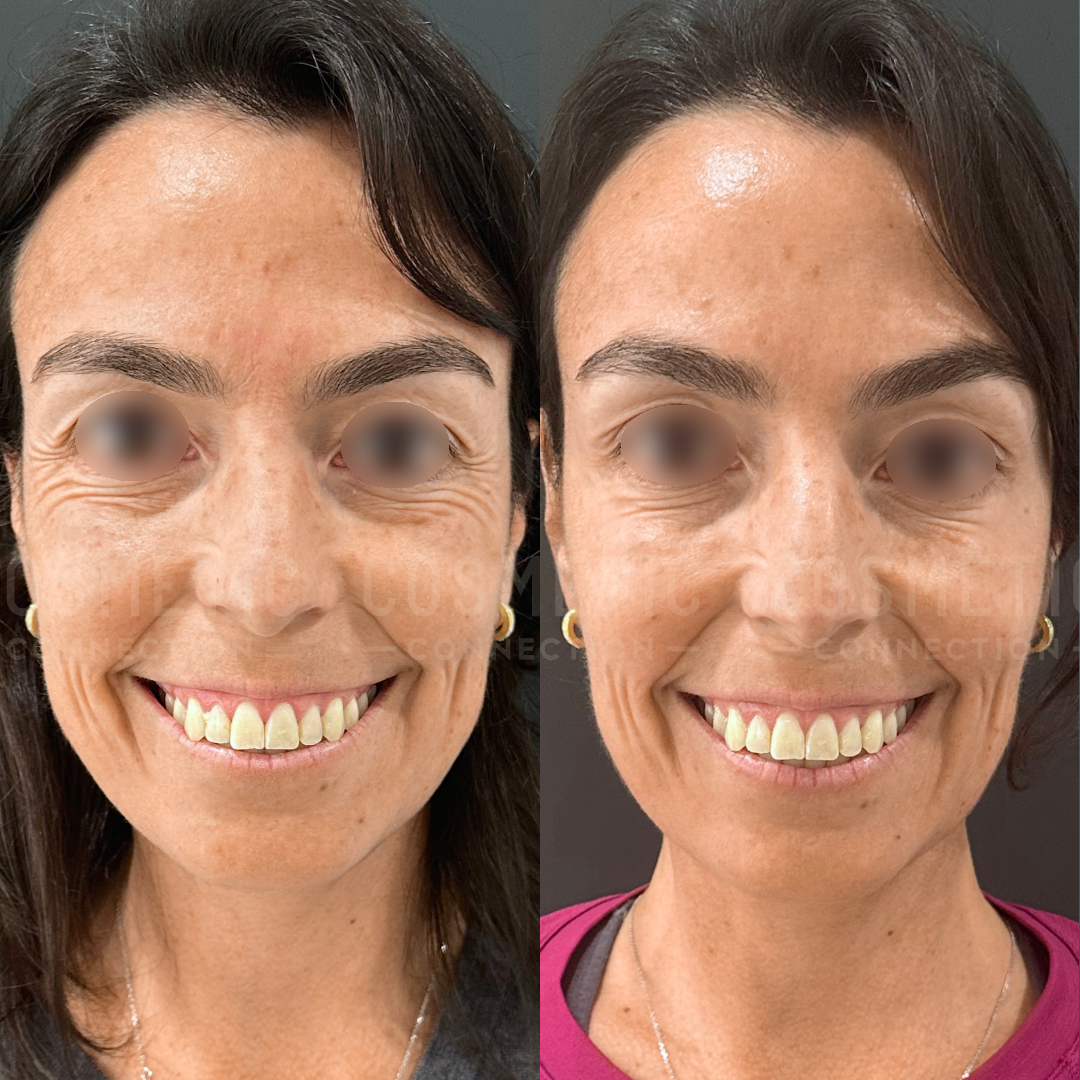
Results

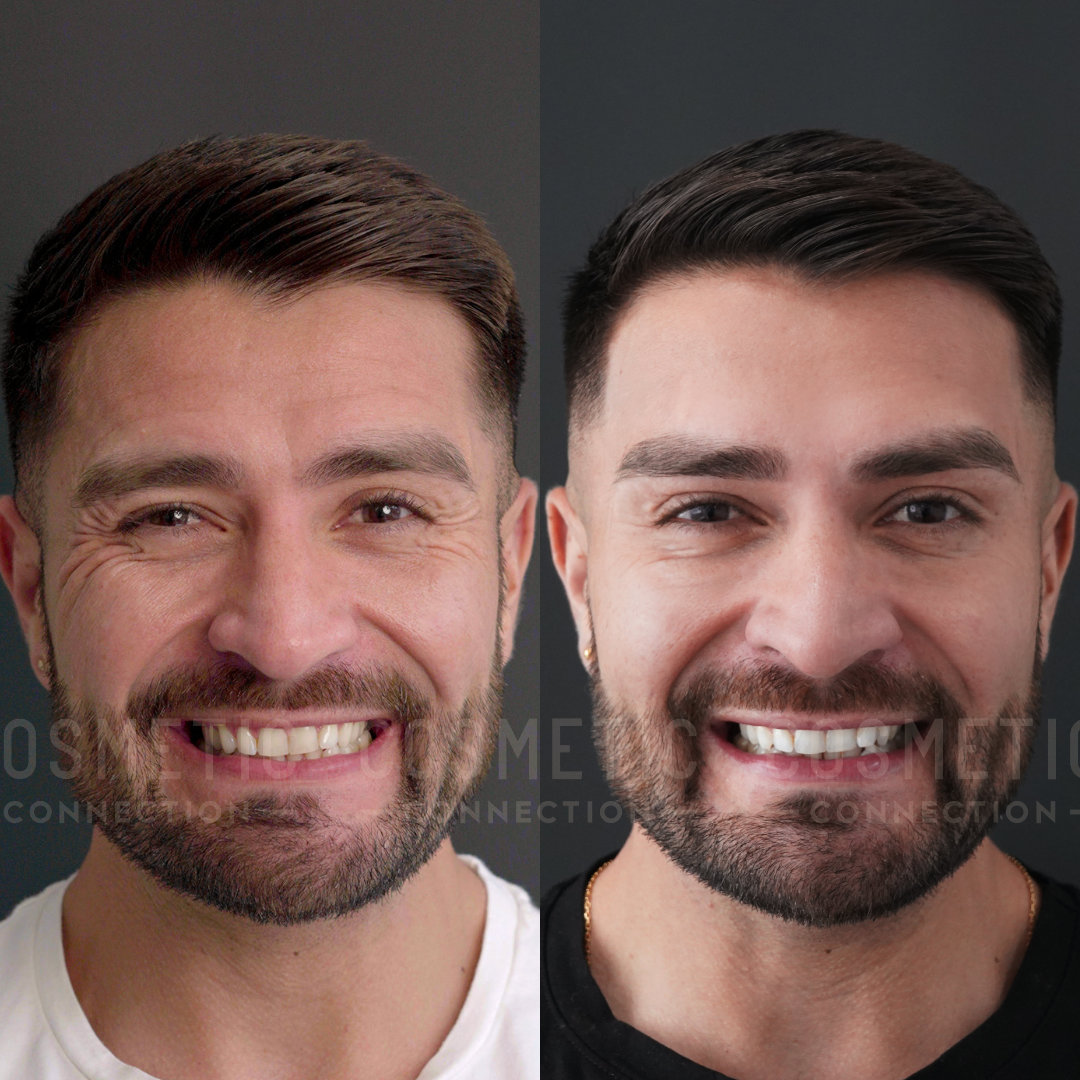
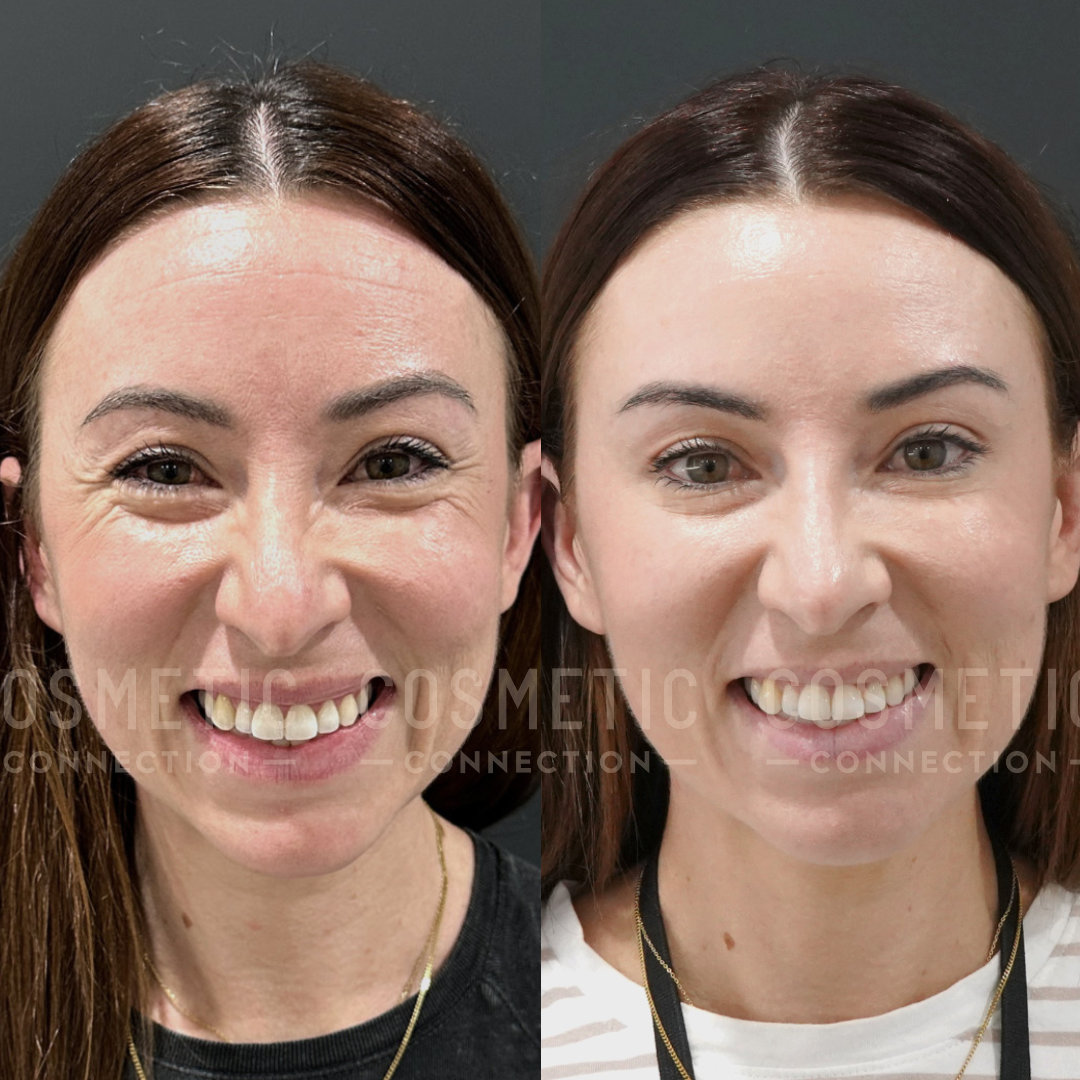
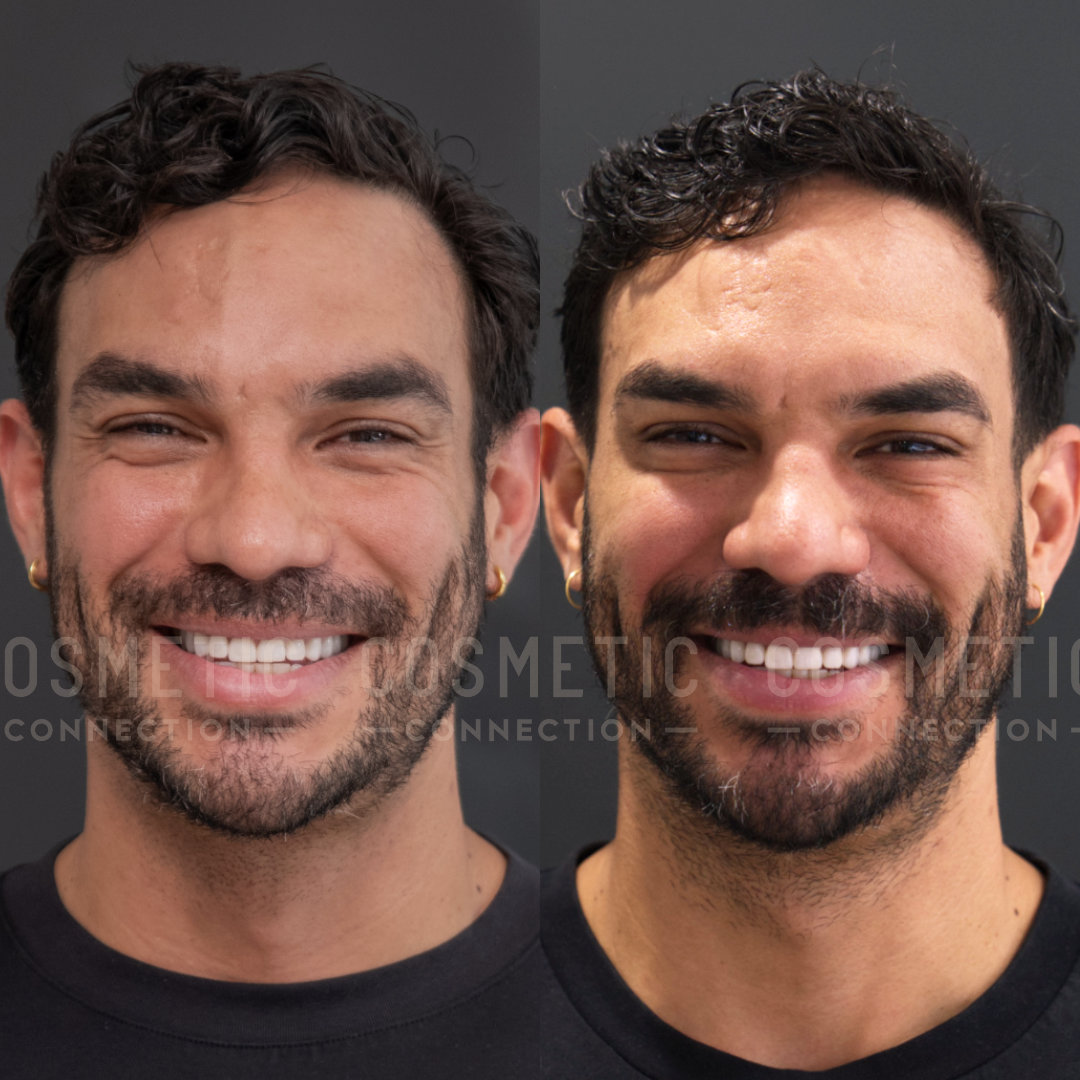
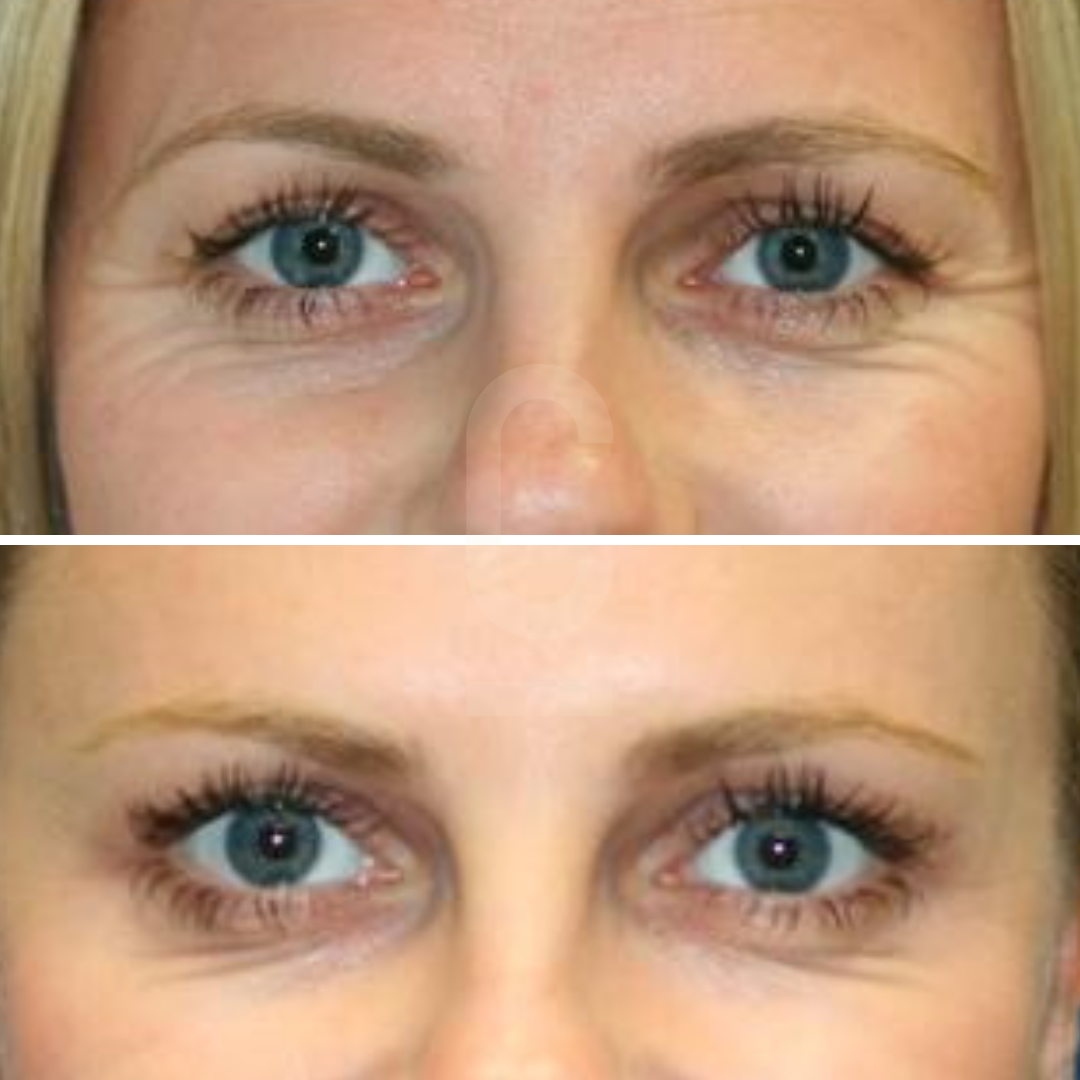





Why Cosmetic Connection?
Our focus is on thoughtful, measured assessments and personalised clinical plans, ensuring your treatment is guided by medical expertise.
Our process ensures you’re a good fit for treatment before you commit.
Every recommendation is completely tailored to your anatomical baseline and desired result.
Refine your looks without the risk, cost, or extended downtime of surgery.
Our treatment options are based on strong clinical evidence, and a proven track record or efficacy and safety.
Our all-inclusive, flat-fee pricing structure ensures your clinician is focussed entirely on your result, not the amount of product used.
Still unsure? Read our essential guide before you book.

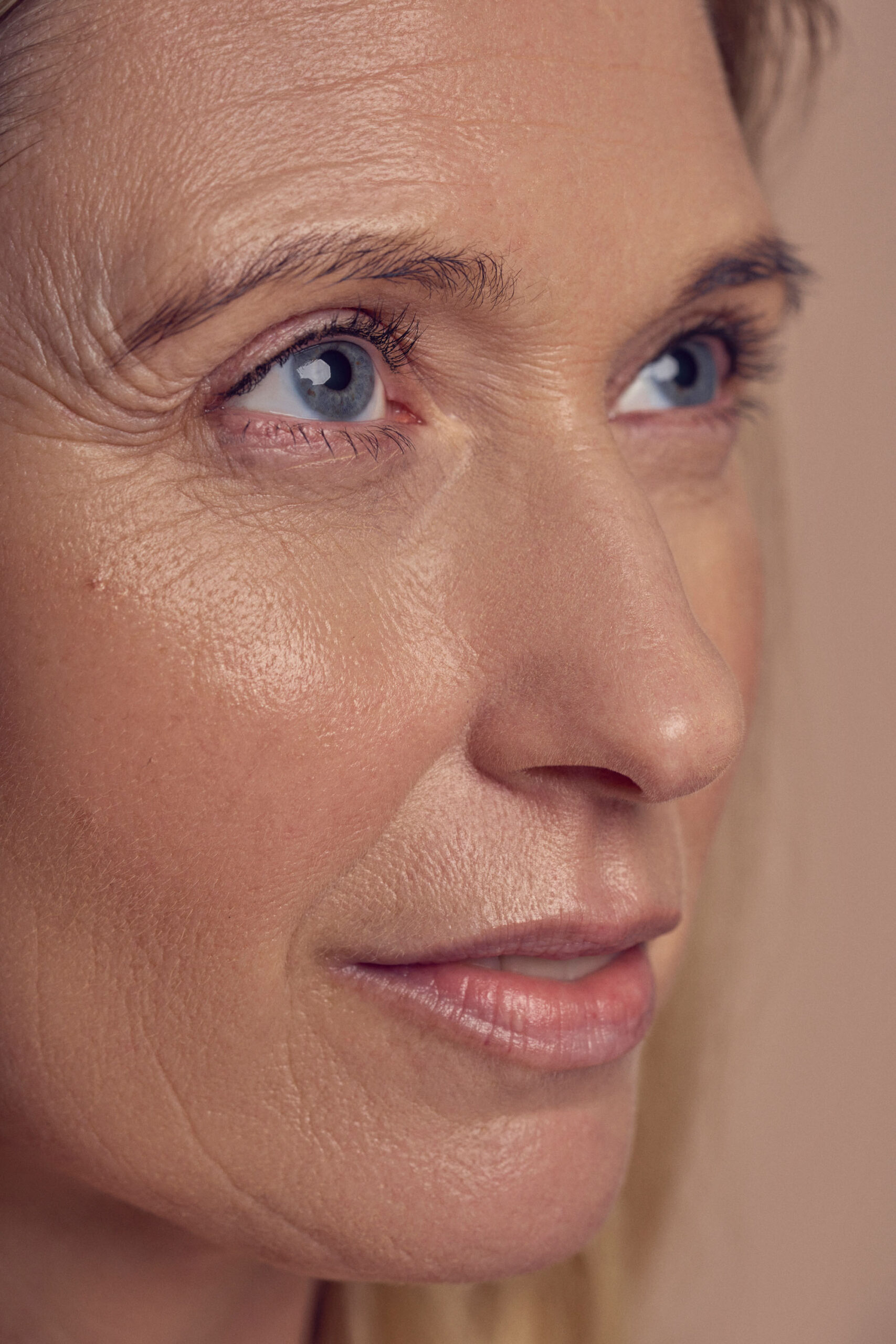
What are crow’s feet?
Crow’s feet are fine lines and wrinkles that form at the outer corners of the eyes. They are one of the earliest signs of facial ageing and are commonly associated with smiling, squinting, and other natural expressions.
These lines are dynamic at first, meaning they appear with movement, but over time can become visible even when the face is at rest.
What causes crow’s feet?
Crow’s feet develop due to a combination of muscle activity, skin changes, and environmental factors.
Repetitive facial expressions
The primary cause is repeated contraction of the orbicularis oculi, the circular muscle surrounding the eyes. This muscle is responsible for:
- Smiling
- Squinting
- Blinking
- Expressing emotion
Each time it contracts, it pulls the skin inward, creating fine lines at the outer corners of the eyes.
Loss of collagen and skin elasticity
As we age, collagen and elastin levels decline. This reduces the skin’s ability to return to its original position after movement, allowing lines to become more permanent.
Sun exposure and environmental factors
The skin around the eyes is thin and more vulnerable to UV damage. Sun exposure accelerates collagen breakdown, making crow’s feet more noticeable over time.
Skin quality and hydration
Dry or dehydrated skin can exaggerate the appearance of fine lines, particularly in delicate areas like around the eyes.
Volume and structural changes
Subtle changes in facial volume and support around the eyes can contribute to the appearance of deeper lines and shadows in this area.
How crow’s feet develop over time
Crow’s feet typically progress gradually:
- Early stage: Fine lines appear only when smiling or squinting
- Moderate stage: Lines become more visible and take longer to fade
- Advanced stage: Lines remain visible even at rest
This progression varies depending on genetics, lifestyle, and environmental exposure.
Understanding crow’s feet anatomy
The orbicularis oculi muscle plays a central role in the formation of crow’s feet. It surrounds the eye like a ring and is constantly active throughout the day.
Because the skin in this area is thinner and more delicate than other parts of the face, it is more prone to creasing and long-term wrinkle formation.
How consultations for crow’s feet work
Doctor-led consultations for crow’s feet focus on identifying the underlying causes of your lines, rather than taking a one-size-fits-all approach.
This includes assessing:
- Facial movement patterns
- Skin quality and elasticity
- Volume and structural support around the eyes
- Lifestyle factors such as sun exposure and squinting habits
A personalised plan may then be discussed based on your anatomy, concerns, and goals.
Possible outcomes, benefits, and associated risks are explained during consultation. Treatment recommendations are individualised, and specific results cannot be guaranteed.
Crow’s feet are primarily driven by repeated muscle movement combined with age-related skin changes. Addressing them effectively requires understanding both the underlying anatomy and contributing lifestyle factors, not just the lines themselves.
Can you prevent crow’s feet?
Crow’s feet cannot always be completely prevented, as they are a natural result of facial expression and ageing. However, their development and progression can often be slowed by protecting the delicate eye area and reducing repetitive strain on the skin.
Prevention focuses on maintaining skin quality, minimising environmental damage, and managing habits such as squinting.
How to reduce the risk of crow’s feet
Wear sunglasses to reduce squinting
One of the most effective ways to prevent crow’s feet is also one of the simplest.
- Wear sunglasses outdoors, especially in bright conditions
- Choose styles that provide good coverage around the eyes
- Reduce the need to squint, which repeatedly activates the orbicularis oculi
Limiting this repeated muscle contraction can help slow the formation of fine lines.
Protect the eye area from sun exposure
The skin around the eyes is thinner and more vulnerable to UV damage.
- Apply broad-spectrum SPF daily, including around the eye area
- Reapply when outdoors for extended periods
- Combine sunscreen with hats and sunglasses for added protection
Sun exposure accelerates collagen breakdown, making lines appear earlier and more pronounced.
Maintain skin hydration and barrier function
Hydrated skin appears smoother and more resilient to movement.
- Use gentle, hydrating eye creams or moisturisers
- Avoid harsh products that may irritate the eye area
- Maintain a consistent skincare routine
Well-supported skin is less prone to developing deep, set lines.
Support collagen and skin quality
Collagen provides structure and resilience to the skin.
- Use skincare with ingredients that support collagen (e.g. retinoids, antioxidants)
- Maintain a balanced diet and healthy lifestyle
- Avoid smoking, which accelerates skin ageing
Address vision and eye strain
Frequent squinting isn’t always due to sunlight.
- Ensure your vision is properly corrected if needed
- Adjust screen brightness and positioning
- Take regular breaks from screens
Reducing unnecessary eye strain helps minimise repeated muscle contraction.
Be mindful of expression patterns
Smiling and expressing emotion are natural and important—but repeated, exaggerated squinting can contribute to deeper lines over time.
Awareness of these patterns can help reduce unnecessary strain without affecting natural expression.
Start early, but appropriately
Preventative approaches are often most effective before lines become deeply established.
Early assessment allows for a personalised approach based on your skin quality, facial movement, and lifestyle factors.
Preventing crow’s feet is less about avoiding expression and more about protecting the skin and reducing repetitive strain on the eye area over time.
Have questions?
Read the FAQ for general information. For personalised advice, start here.
Crow’s feet are fine lines and wrinkles that form at the outer corners of the eyes. They are caused by repeated facial expressions such as smiling, squinting, and laughing, combined with natural ageing and skin changes.
When you smile, the orbicularis oculi muscle around the eyes contracts, pulling the skin inward. Over time, repeated movement combined with reduced skin elasticity leads to the formation of fine lines.
Crow’s feet can begin to appear in your late 20s to early 30s, often starting as fine lines that show only with expression. They may become more noticeable over time depending on skin quality, sun exposure, and lifestyle factors.
Crow’s feet are a natural part of ageing, but they can also appear earlier due to sun exposure, frequent squinting, and genetics. They are often one of the first visible signs of facial ageing.
While they can’t always be completely prevented, their development can be slowed with sun protection, wearing sunglasses, maintaining skin hydration, and reducing repetitive squinting.
Crow’s feet may gradually become more noticeable over time as skin elasticity decreases and repeated movement continues. Whether to treat is a personal decision based on your preferences.
Discomfort is typically minimal. Most treatments are quick and well tolerated, with techniques used to maximise comfort.
A common concern is losing natural expression. When approached conservatively, the goal is to soften lines while preserving a natural, expressive smile.
Treatment is designed to maintain your natural smile. The aim is not to remove expression, but to reduce the repetitive movement that contributes to deeper lines.
Longevity varies depending on the treatment approach, your metabolism, and lifestyle factors. This will be discussed during your consultation.
There is usually minimal downtime. Some mild redness or swelling may occur, but most patients return to normal activities shortly after.
When performed by a qualified and experienced practitioner, treatments are generally well tolerated. A consultation is essential to assess suitability and discuss any potential risks.