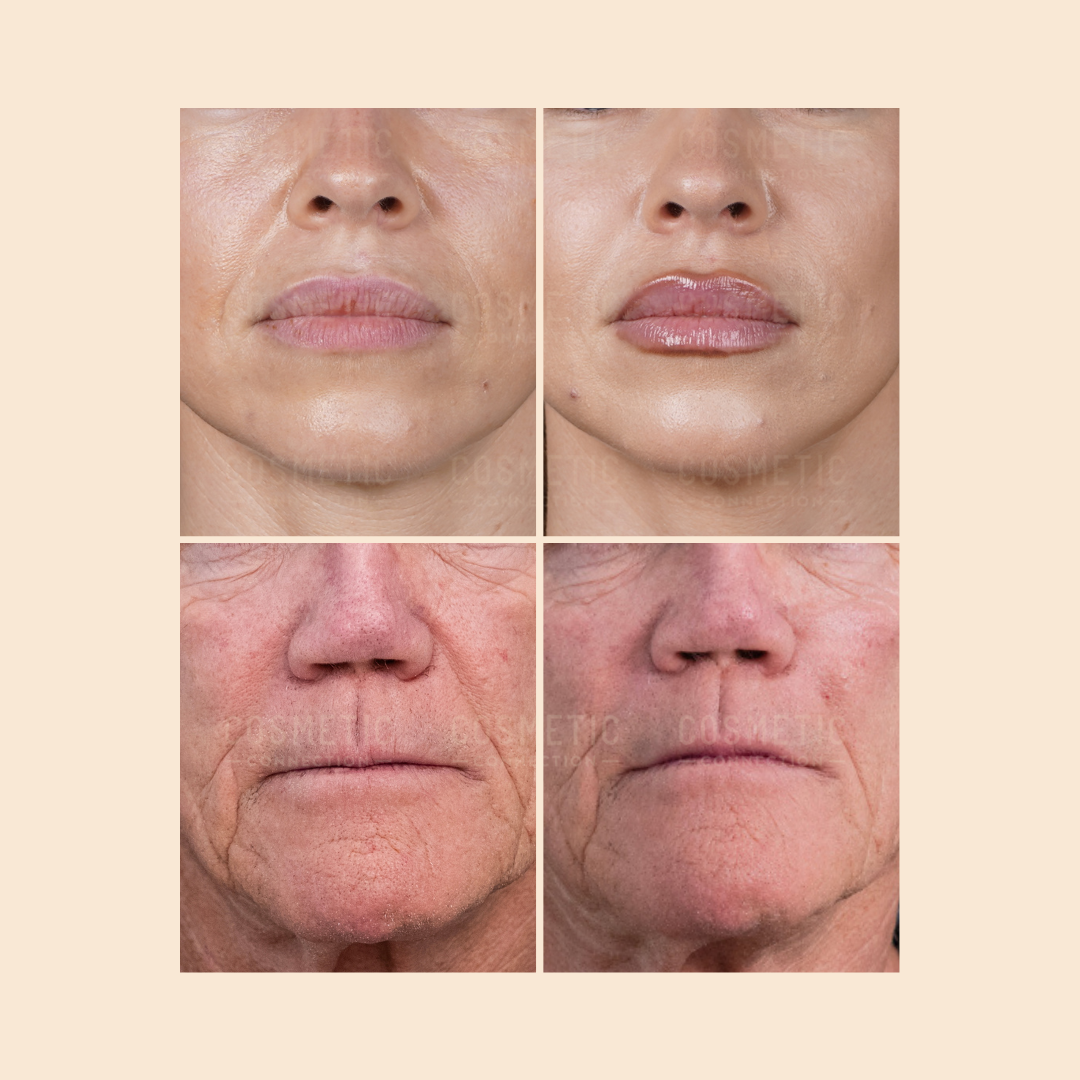
Smile lines treatment in Australia typically costs between $1,500 and $2,500 per appointment. The variation depends on the treatment approach, whether the midcheek is treated alongside the fold itself, and the extent of volume correction required. This guide explains what drives the cost, what is included, and what to look for when comparing providers.
Quick answer: Non-surgical smile lines treatment in Australia ranges from approximately $1,500 to $2,500 per appointment at reputable doctor-led clinics. Treating the fold in isolation typically sits at the lower end of this range. A plan that also addresses midface and cheek volume — which tends to produce a more natural result — sits at the higher end. At Cosmetic Connection, pricing is flat-fee, meaning the cost is confirmed before treatment begins with no variable charges applied during the procedure.
What affects the cost of smile lines treatment?
Smile lines treatment cost is not uniform — several factors influence where an individual appointment falls within the typical pricing range.
- Treatment area: Treating the fold directly is a more contained procedure than addressing the fold and the midcheek together. A plan that incorporates broader midface volume restoration will cost more than one focused solely on the crease.
- Fold depth and volume required: Deeper, more established folds or more significant volume loss require more correction to achieve the same degree of softening as a shallower fold. The extent of correction needed influences the overall cost.
- Treatment approach: Immediate volume support and collagen stimulating treatments are priced differently. Collagen stimulating treatments may involve a series of sessions, which affects how the total cost is structured over time.
- Provider qualifications and clinic type: Doctor-led clinics with specialist training in facial anatomy typically sit at the higher end of the pricing range. Treatments performed by less experienced practitioners at lower-cost clinics carry a different risk profile that should be factored into any cost comparison.
- Location: Clinic costs vary between cities and between inner-city and suburban locations across Australia.
Smile lines treatment cost in Australia: typical ranges
| Treatment approach | Typical cost range (AUD) | Notes |
|---|---|---|
| Fold only — volume support | $1,500 – $1,800 | Targeted treatment of the nasolabial crease directly |
| Fold + midcheek volume support | $1,800 – $2,500 | Addresses upstream cause and the fold; typically a more complete result |
| Collagen stimulating treatment (per session) | $800 – $1,500 per session | Often requires 2–3 sessions; total investment higher but longevity greater |
| Combination approach | $2,000 – $2,500+ | Multiple treatment methods in the same appointment |
These ranges reflect pricing at established, doctor-led Australian clinics. Pricing at non-medical or nurse-led clinics may sit lower; the variation in training, anatomical knowledge, and complication management capability is worth understanding before making a decision on that basis alone.
Is smile lines treatment covered by Medicare or health insurance?
Non-surgical cosmetic treatment for nasolabial folds is not covered by Medicare or private health insurance in Australia. It is classified as a cosmetic procedure rather than a medical necessity. The full cost is payable by the patient.
Some clinics offer payment plan arrangements. At Cosmetic Connection, our payment options page outlines how appointments can be structured financially. It is worth asking about this at your consultation if it is relevant to your planning.
Get started
Flat-fee pricing vs variable pricing: why it matters
Pricing structures for cosmetic treatment vary significantly between clinics. Understanding the difference matters when comparing costs.
Variable pricing — sometimes called “per mL” or “per syringe” pricing — means the total cost of your appointment is not confirmed until the treatment is underway or complete. The price can increase during the session if more volume is used than initially estimated. This model can make it difficult to know your actual cost before committing.
Flat-fee pricing means the cost of your treatment is confirmed at consultation and does not change based on product quantities used during the procedure. At Cosmetic Connection, all treatments are priced on a flat-fee basis. You can view our complete treatment and pricing guide before booking, so there are no surprises.
Our guide to understanding cosmetic treatment pricing explains why the flat-fee model benefits patients and what to look for when comparing clinic pricing structures.
What should I expect to get for the cost?
When assessing value — rather than just cost — it helps to understand what a well-structured smile lines treatment appointment should include.
- A thorough face-to-face assessment of the fold, midface, and surrounding anatomy before any treatment is recommended
- A clearly explained treatment plan with realistic expected outcomes discussed before you commit
- Treatment performed or directly supervised by a doctor with specific training in facial anatomy
- A follow-up or review pathway if you have concerns after treatment
- Written aftercare instructions
In our experience, the most common source of patient dissatisfaction with smile lines treatment at other clinics is not the price paid — it is being treated without a thorough assessment, or being treated for an area that was not actually the primary driver of the concern. A slightly higher cost at a clinic that assesses suitability carefully is almost always better value than a lower cost at one that does not.
Is smile lines treatment worth the cost?
This depends entirely on how much the concern is affecting you day to day and what you are hoping treatment will achieve. It is a question worth being honest about at consultation.
Patients who tend to find the value strongest are those whose nasolabial folds are visible at rest, who consistently notice them in photos or mirrors, and who have realistic expectations about softening rather than eliminating the fold. The research supports meaningful, lasting improvement in these patients — a systematic review published in Aesthetic Plastic Surgery (Stefura et al., 2021) confirmed sustained improvement in fold severity scores through six months and gradual return toward baseline by 12 months, with most patients describing satisfying outcomes.
For patients who are only bothered by their smile lines when smiling, or whose folds are very mild, the cost-to-benefit ratio is less clear-cut — and an honest assessment may reflect that a different approach, or no treatment at the current time, is the more appropriate recommendation. This is exactly the kind of guidance our nasolabial fold treatment suitability guide covers in more detail.
Get started
Frequently asked questions
Why does smile lines treatment cost more at some clinics than others?
Pricing reflects the qualifications of the treating practitioner, the clinic’s overhead costs, the treatment model used, and whether pricing is flat-fee or variable. Doctor-led clinics with specialist training in facial anatomy typically sit at the higher end. The gap between the cheapest and most expensive options in Australia can be significant — and the difference in training, assessment quality, and complication management capability is a meaningful factor in that variation.
Does the cost of smile lines treatment include a consultation?
This varies between clinics. At Cosmetic Connection, the consultation and assessment are included as part of the appointment structure — you are not charged separately for the assessment conversation before treatment is confirmed. Check this with any clinic you are considering.
How often will I need to repeat treatment and what does that cost over time?
With volume support treatment, most patients return for maintenance at around 12 months. The cost per maintenance appointment is typically similar to the initial treatment. Collagen stimulating approaches involve a higher initial investment (often two to three sessions) but tend to extend the interval between treatments, which can reduce the annual cost over time.
Is cheaper smile lines treatment less safe?
Not necessarily — but lower-cost treatment often reflects a different level of practitioner training, anatomical knowledge, and assessment quality. The nasolabial fold is located in close proximity to vascular structures where complications, though rare, can be serious. Treatment performed by an experienced doctor with specialist facial anatomy training carries a different risk profile to treatment performed by a less experienced practitioner. This is worth considering when comparing options purely on price.
References
- Stefura T, Kacprzyk A, Droś J, Krzysztofik M, Skomarovska O, Fijałkowska M, Koziej M. (2021). Tissue Fillers for the Nasolabial Fold Area: A Systematic Review and Meta-Analysis of Randomized Clinical Trials. Aesthetic Plastic Surgery, 45(5), 2300–2316. https://doi.org/10.1007/s00266-021-02439-5
- Minelli L, Brown CP, Warren RJ, van der Lei B, Mendelson BC, Little JW. (2023). Lifting the Anterior Midcheek and Nasolabial Fold. Aesthetic Surgery Journal, 43(9), 941–954. https://doi.org/10.1093/asj/sjad126