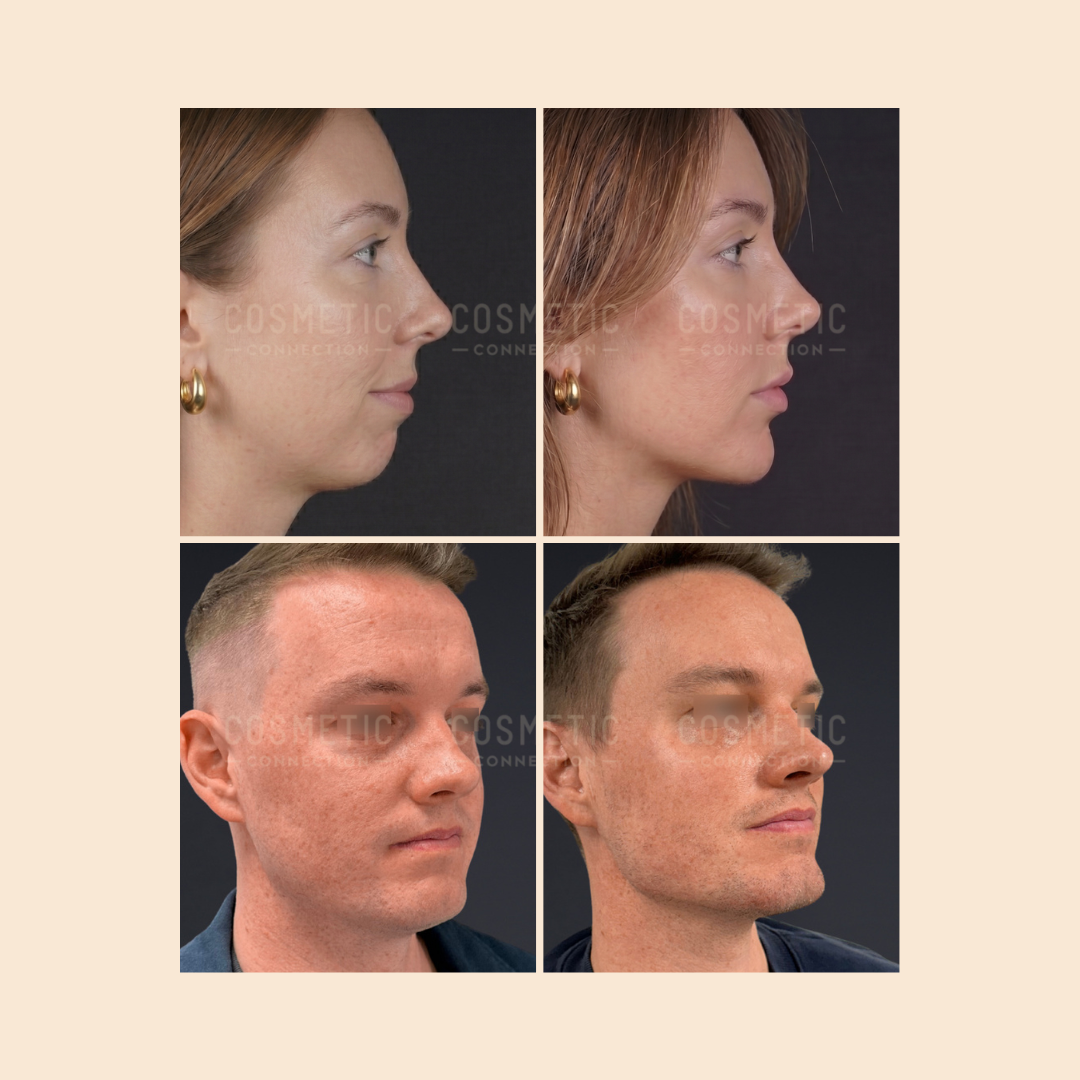
There are many ways to pursue a more defined jawline, and the options range from things you can do at home to non-surgical cosmetic treatments to jaw surgery. This guide covers all of them — what each involves, who it suits, and what the evidence actually says about results.
Quick answer: The most effective approach depends on what is causing your jawline to lack definition. For most people, the underlying cause is one of three things: soft tissue (fat or loose skin), bone structure, or muscle. Identifying your cause is the first step — the right option follows from that.
What actually determines how your jawline looks
Your jawline is shaped by four things working together: the mandible (the jawbone), the masseter muscles on each side, the fat distributed along the lower face and under the chin, and the skin overlying all of it.
A change in any one of these can affect definition. Someone with a structurally strong mandible but excess fat under the chin will have a very different concern to someone with a naturally recessed chin and good skin elasticity. The treatment that works for one will not necessarily work for the other.
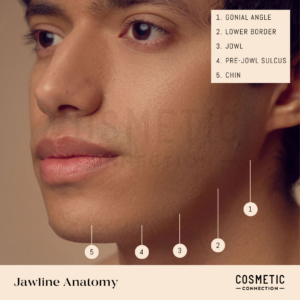
The jawline can also be broken into distinct zones — the chin point, the chin body, the pre-jowl area, the angle of the jaw, and the ramus (the vertical section that connects to the ear). Each zone responds differently to different approaches, and a concern in one zone is not the same as a concern in another. For a broader look at how the chin and jawline work together, our guide to chin contouring covers the chin’s role in lower face definition in detail.
Mewing and facial exercises: what they can and cannot do
Mewing refers to a specific tongue posture — resting the tongue flat against the roof of the mouth — that some claim reshapes the jawline over time. It is popular in looksmaxxing communities and has generated significant online discussion.
The honest assessment is this: there is no peer-reviewed clinical evidence that mewing produces measurable structural changes to the mandible or jawline definition in adults. Bone remodelling through soft tissue pressure is documented in orthodontics, but the forces involved there are sustained, calibrated, and applied over years with fixed appliances. Tongue posture does not replicate that mechanism.
What mewing may do is improve posture and head position, which can have a modest effect on how the jawline appears — particularly the neck-to-chin angle. That is not nothing, but it is a long way from the structural changes its proponents claim.
Chewing gum works similarly. It exercises the masseter muscles, which can increase in size with repeated use. A larger masseter adds some width and definition to the back of the jaw — but it can also cause jaw clenching and teeth grinding. It is also a slow process, and the results are limited.
Facial exercises more broadly have minimal evidence behind them. They may support muscle tone, but they cannot move bone, redistribute fat, or tighten significantly lax skin.
Lifestyle factors that affect jawline definition
Two lifestyle factors have a genuine, documented effect on how the jawline looks: body composition and posture.
Excess body fat distributes across the face including the lower face and under the chin. Reducing overall body fat — through diet and exercise — will reduce fat in these areas too, though you cannot target fat loss to the face specifically. For some people, this makes a meaningful difference to definition. For others, the fat distribution in the lower face is largely genetic and does not shift significantly with weight loss.
Posture affects the relationship between the chin and the neck. A forward head position compresses the cervical angle and reduces the apparent separation between the jawline and the neck. Improving posture — particularly through strengthening the deep neck flexors and posterior chain — can restore some of this definition without any intervention.
Dehydration, alcohol, and poor sleep contribute to facial puffiness that reduces definition temporarily. These are worth addressing, but they are not structural fixes.
Non-surgical cosmetic treatments for jawline definition
Non-surgical cosmetic treatments are the most direct non-surgical route to changing the structural appearance of the jawline. There are several distinct approaches, and they address different aspects of the concern.
Structural volumising treatments
Placing volume strategically along the jawline can sharpen the border between the face and the neck, add definition to the angle of the jaw, and improve the lateral profile. The approach is highly anatomical — placement points vary depending on which zone of the jawline is the primary concern. In our experience, the most impactful results come from treating the jawline in the context of the whole lower face, not in isolation.
At Cosmetic Connection, our approach is concern-based rather than product-based. Before any treatment is planned, we assess the mandibular anatomy, the position of soft tissue, the skin quality, and whether the chin is contributing to the concern — because a weak chin projection can make the jawline look less defined even when the jawline itself is structurally sound. You can read more about how we approach this in our before and after guide to jawline contouring results.
Results from volumising treatments are visible immediately and evolve over the following two weeks as initial swelling settles. How long they last varies between individuals based on metabolism, the volume placed, and the specific area treated — but most people find results are maintained for 12–18 months before a review is warranted.
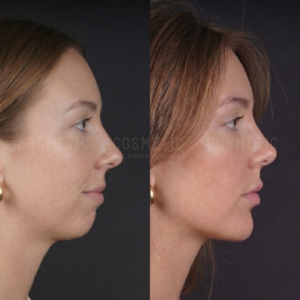
Before and after treatment for jaw structure (nose and lips also treated).

Before and after treatment for jaw structure.
Muscle-relaxing treatments for jaw width
If the concern is jaw width rather than definition — a broad or square lower face caused by prominent masseter muscles — the approach is different. Relaxing the masseter muscles reduces their size over a period of four to eight weeks, which can slim the lower face and create a more tapered appearance. This is a separate concern to definition, and the two are sometimes confused.
For people who grind their teeth or clench their jaw, this approach has the additional benefit of reducing jaw pain and protecting the teeth. Our detailed facial slimming guide covers this in full.
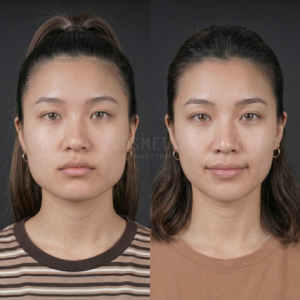
Before and after masseter treatment to slim the jaw.
Fat dissolving treatments under the chin
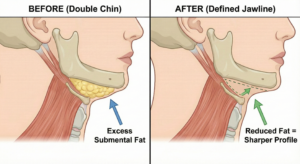
Submental fat — the fat pad directly under the chin — is one of the most common contributors to a poorly defined jawline. When this area is full, it obscures the border between the jaw and the neck regardless of how well-defined the bone structure is underneath. Non-surgical fat reduction in this area can dramatically improve the cervicomental angle (the angle between the chin and the neck) and, by extension, the apparent definition of the jawline.
This is a distinct concern from jawline volume and is covered in detail in our guide to double chin removal.
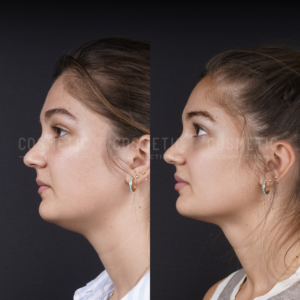
Before and after treatment for chin fat.
Get started
Male vs female jawline: how the goals differ
Jawline aesthetics are not the same across genders, and the treatment approach needs to reflect this.
A conventionally masculine jawline is characterised by a square-ish angle, a broad and relatively flat chin, and strong lateral definition — the jaw looks like it has corners. The overall shape tends toward a rectangular lower face.
A conventionally feminine jawline tends toward a softer angle, a tapered chin, and smooth rather than angular definition — the lower face narrows toward the chin in a gentle V. Strong angularity in a feminine face can look unnatural unless the broader facial proportions support it.
These are generalisations, and individual goals vary significantly. Many people — regardless of gender — want something specific to their own face rather than a textbook aesthetic. That is exactly why we take a suitability-first approach before any treatment planning begins. Our dedicated guide to jawline contouring for men covers the male approach in full detail.
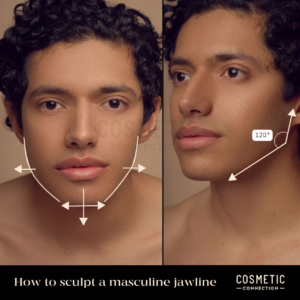
Approach to masculinising the jaw.
How non-surgical jawline contouring compares to surgery
Surgical options for the jawline include jaw implants, genioplasty (surgical chin repositioning), and mandibular angle implants. These are permanent, require general anaesthetic, involve recovery measured in weeks, and carry the risks associated with any surgical procedure.
They are appropriate for people with significant structural concerns — a severely recessed chin, major asymmetry, or skeletal discrepancies that cannot be meaningfully improved non-surgically. For most people seeking jawline definition, surgery is not the right starting point.
Non-surgical treatments are reversible, involve no downtime beyond minor swelling for a few days, and can be adjusted over time as your face changes or your preferences evolve. The trade-off is that the degree of change is more modest than surgery, and the results require maintenance. The comparison is covered in depth in our guide on jawline contouring costs which also addresses how pricing differs between approaches.
Below is a summary comparison:
| Factor | Non-surgical contouring | Jaw surgery | Mewing / exercises |
|---|---|---|---|
| Immediacy of results | Immediate, evolves over 2 weeks | Visible after swelling resolves (weeks) | Months to years, if at all |
| Degree of change | Moderate — structural refinement | Significant — structural alteration | Minimal |
| Reversibility | Yes | No | |
| Downtime | Minimal (1–3 days mild swelling) | 2–6 weeks | None |
| Who it suits | Most adults seeking definition | Significant structural concerns | Those willing to commit long-term for modest gains |
| Cost (Australia) | $1,500–$4,500+ | $10,000–$30,000+ | Free |
| Maintenance required | Yes, every 12–18 months | No | Ongoing daily practice |
Thread lifts
Thread lifts use absorbable sutures inserted beneath the skin to lift and reposition sagging tissue. They can contribute to jawline definition by lifting jowl tissue, but their results are modest and typically shorter-lived than volumising treatments. They are best suited to people whose primary concern is skin laxity rather than lack of structure, and they are most effective when used as part of a broader treatment plan rather than as a standalone solution.
What to look for in a provider
The jawline is an anatomically complex area. It sits in close proximity to important vascular structures, and treatment here requires a thorough understanding of facial anatomy and the ability to manage complications if they arise.
Our guide to choosing a jawline contouring provider covers this in detail, but the essentials are: look for a doctor-led clinic, confirm that the treating practitioner has specific experience with lower face anatomy, ask about their complication management protocols, and be cautious of providers who offer treatment without a proper suitability assessment first.
At Cosmetic Connection, all treatments are doctor-led, all consultations are suitability-first, and we operate on flat-fee pricing so you know exactly what you are committing to before you proceed. You can explore our clinic locations or view our flat-fee pricing at any time.
Get started
Frequently asked questions
Can you get a defined jawline without surgery?
Yes, for most people. Non-surgical cosmetic treatments can add structural definition to the jawline, slim the masseter muscles, and reduce submental fat — all without surgery. The degree of change is more modest than surgical options, but for the majority of people seeking definition rather than structural correction, non-surgical options are appropriate and effective.
How long does jawline contouring last?
This varies between individuals. Most people find results from volumising treatments are maintained for 12–18 months before a review or top-up is needed. Muscle-relaxing treatments for jaw width typically require maintenance every four to six months initially, with intervals often extending over time.
Does mewing actually work?
There is no peer-reviewed clinical evidence that mewing produces measurable structural changes in adults. It may improve posture and the appearance of the neck-to-chin angle, but it does not remodel bone or redistribute fat. Its popularity online significantly outpaces the evidence behind it.
Is jawline contouring painful?
Most people find jawline contouring well-tolerated. Topical numbing is applied before treatment, and the procedure itself typically takes 20–40 minutes depending on the areas being addressed. Some mild tenderness and swelling for one to three days afterward is normal.
Who is not suitable for non-surgical jawline contouring?
People with active infection in the treatment area, those who are pregnant or breastfeeding, and people with certain autoimmune conditions are typically not suitable. Anyone with unrealistic expectations about the degree of change achievable non-surgically may also be assessed as not suitable at consultation — which is exactly the kind of honest assessment a suitability-first approach is designed to provide.
How much does jawline contouring cost in Australia?
Non-surgical jawline contouring at Cosmetic Connection ranges from $1,500 to $4,500 or more, depending on the areas addressed, the volume required, and the complexity of the concern. Our flat-fee pricing means the cost is confirmed at consultation with no surprises. Full pricing detail is covered in our jawline contouring cost guide.