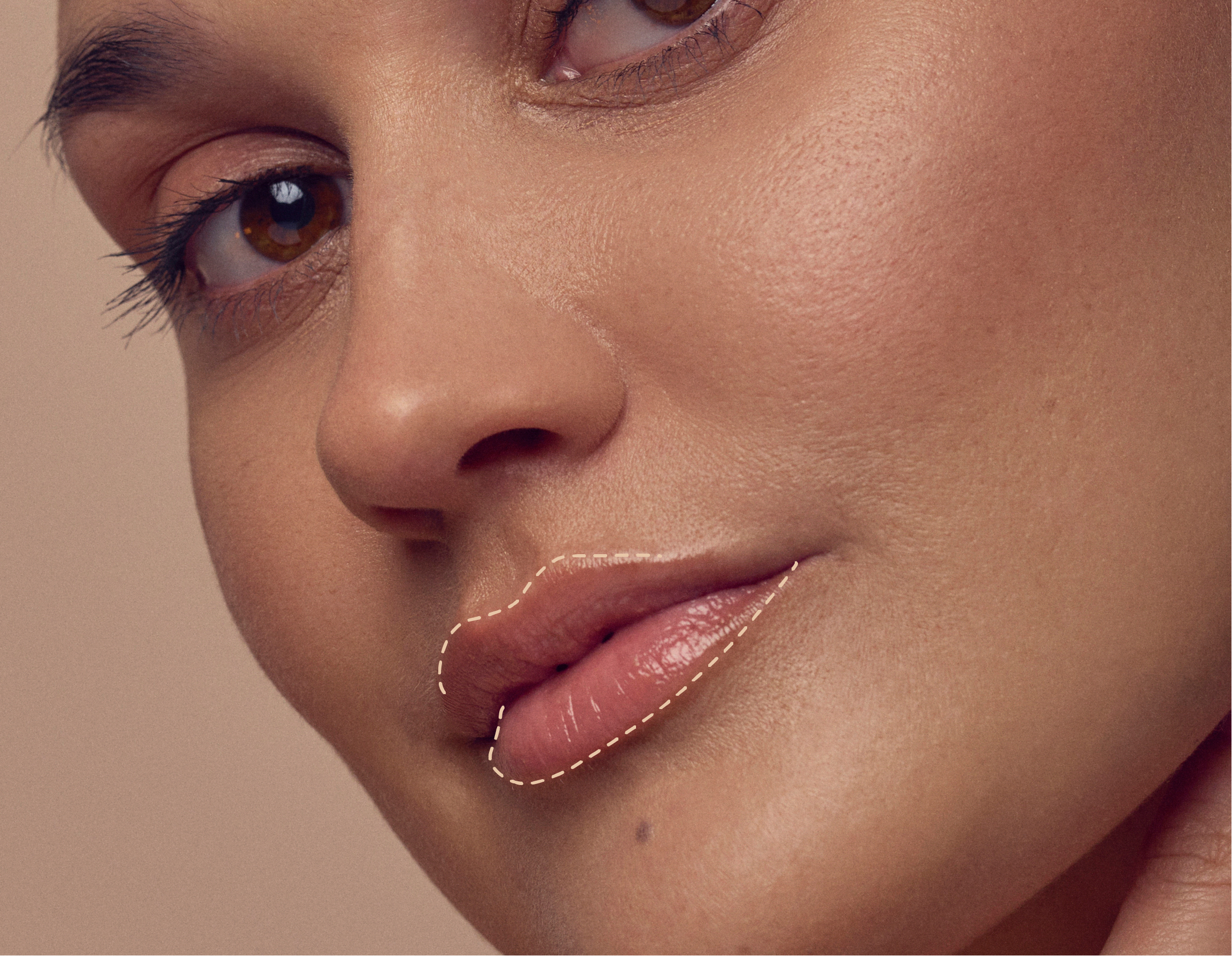
Thin lips are the most common reason people seek non-surgical lip enhancement. But “thin lips” is not a single presentation, and what is achievable varies depending on the specific anatomy. This guide covers what thin lips actually means clinically, which treatment categories apply, what realistic outcomes look like, and the common mistake of expecting maximum volume as the solution.
Quick answer: Lip enhancement for thin lips can produce meaningful, natural-looking results in most patients. The treatment type and volume depend on which aspect of thinness is the concern: low overall volume, lack of vertical height, a lip that disappears when smiling, a thin upper lip relative to the lower, or age-related volume loss. Each has a different optimal approach. Conservative first treatment with a review is consistently the best starting strategy.
What “thin lips” actually means clinically
Thin lips is a general description that encompasses several distinct presentations, each suited to a different treatment approach:
| Presentation | Clinical description | Best treatment approach |
|---|---|---|
| Naturally low volume in both lips | Upper and lower lip both have low tissue volume relative to the face; often genetic | Volume-restoring cosmetic treatment to both lips; staged, conservative approach |
| Thin upper lip with adequate lower lip | Upper lip notably thinner than lower; may be genetic or age-related | Targeted volume to upper lip only; careful technique to avoid inverting the natural upper-to-lower ratio |
| Age-related volume loss | Lips were fuller earlier in life; progressive thinning with age due to collagen and fat loss | Volume restoration to both lips; Rejuran for perioral skin quality; approach depends on the degree of loss |
| Very small overall lip structure | Small lips in proportion to a larger face | Conservative volume addition with specific attention to proportionality — more is not better here |
How much improvement is realistic for thin lips?
This depends primarily on the starting anatomy. Patients with naturally thin lips but good structural capacity — defined borders, good tissue quality, normal lip anatomy, deflated-look — respond very well to volume-restoring treatment and can achieve substantial, natural-looking improvement.
Patients with very small overall lip capacity have a lower proportionate limit — the maximum volume that looks natural relative to their face is lower than for patients with a larger facial structure. Exceeding this limit produces an unnatural result regardless of technique.
Patients with age-related thinning respond well to restoration — treatment that returns lips to their earlier volume consistently produces natural results because the anatomy already has the structural blueprint for that volume.
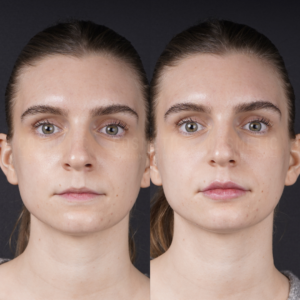
Before and after treatment for thin lips.
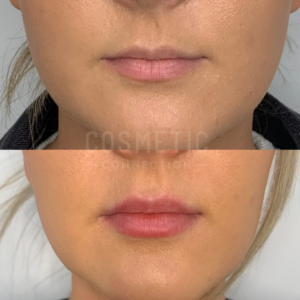
Before and after treatment for thin lips.
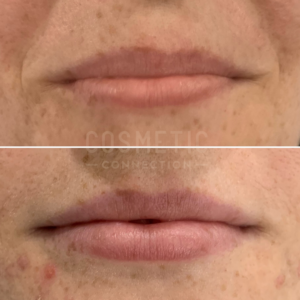
Before and after treatment for thin lips.
The common mistake: treating thin lips with maximum volume
The most consistent error in treating thin lips is attempting to achieve maximum volume in a single session. Thin lips have less capacity to accommodate large volume changes in short timeframes without looking unnatural.
A staged approach starting conservatively, reviewing at 2-4 weeks, and adding volume in a subsequent session if needed, produces significantly better long-term results than maximising volume at the first appointment.
It is also safer: if an adverse outcome occurs at a conservative first session, there is less product to manage and the reversal process is simpler.
If you would like an honest assessment of what is realistic for your specific anatomy, request a consultation with our clinical team. We’ll assess your lips using our 3 pillar framework, and provide fair, honest guidance.
Get started
Frequently asked questions
Can very thin lips be significantly improved with non-surgical treatment?
Yes, in most cases. The degree of improvement depends on the starting anatomy and proportionate limit. Most patients with naturally thin lips achieve meaningful, natural-looking improvement with a staged approach. Patients should have realistic expectations about what “significant improvement” means within the constraints of their individual anatomy. A thorough consultation establishes this clearly before treatment.
How many sessions does it take to get a good result for thin lips?
Most patients achieve a satisfying result within one to two sessions. A first conservative session followed by a 4 week follow-up so additional volume can be added if needed, is the recommended approach.
Will treatment for thin lips look natural or obvious?
Natural-looking results are achievable for thin lips with the right technique and volume. The common concern is that starting with very little volume means any change will look dramatic — this is not necessarily true. A skilled clinician can produce a subtle, proportionate improvement even for very thin starting lips. See our full guide on natural lip enhancement results for more.