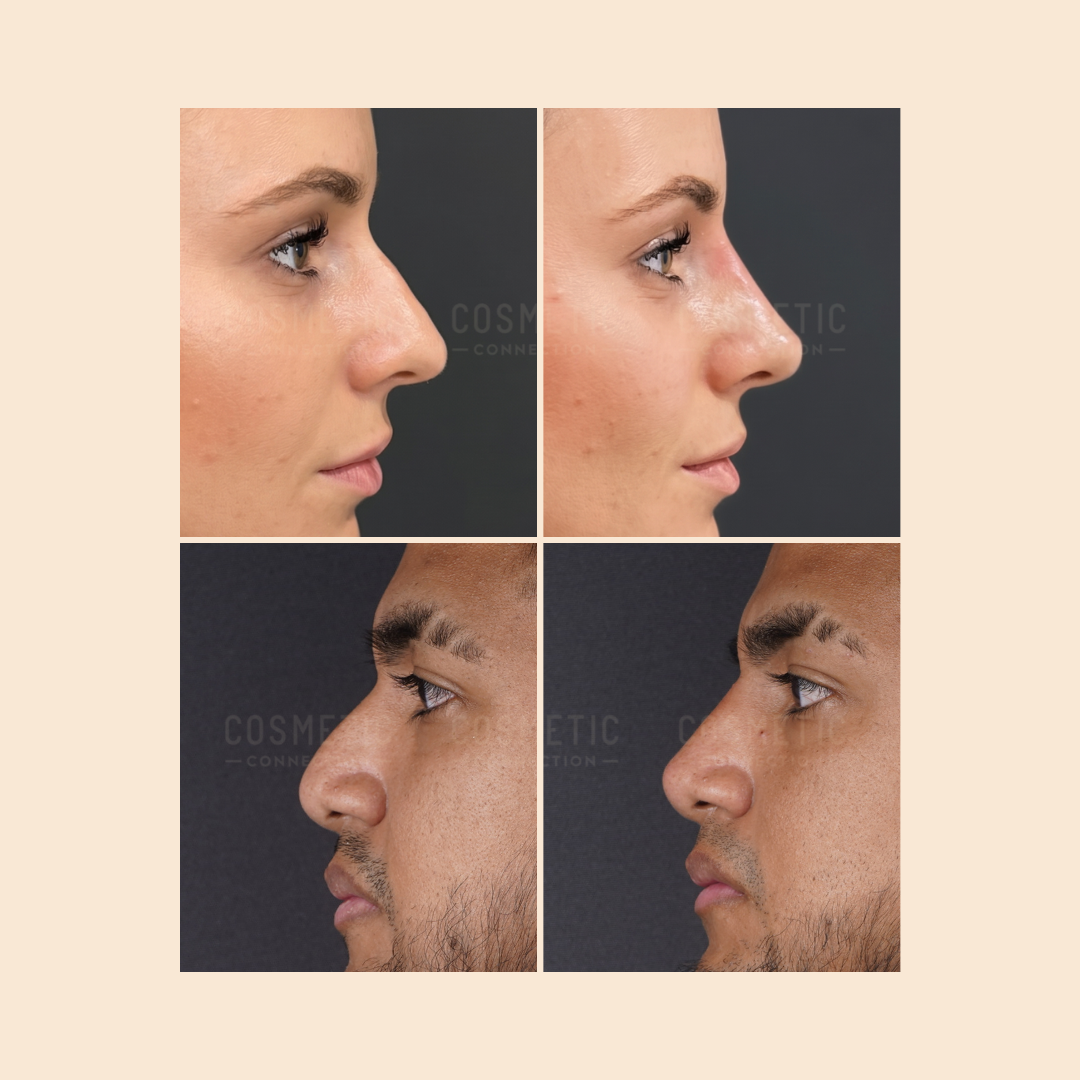
A flat or low nasal bridge is one of the most common concerns people bring to a non-surgical rhinoplasty consultation, and it is also one of the concerns that responds best to treatment. Adding height and definition to a flat bridge can meaningfully improve facial proportion, create the appearance of a slimmer nose, and improve overall facial balance. This guide explains exactly what non-surgical rhinoplasty can achieve for a flat nose, who it suits, and what to expect from the procedure and result.
Quick answer: Non-surgical rhinoplasty is highly effective for a flat or low nasal bridge. Treatment adds height, definition, and projection, improving facial proportion and often making the nose appear slimmer from the front. Results are immediate, last 12–18 months, and are reversible. This is one of the most predictable outcomes in non-surgical rhinoplasty.
Why a flat nose responds so well to cosmetic treatment
A flat nasal bridge lacks vertical height and projection. It sits low against the face rather than projecting forward and upward. This creates two effects: the nose can appear wide because there is no vertical line to draw the eye, and the mid-face can look heavy or less defined.
Treatment placed along the bridge and dorsum addresses both effects simultaneously. Adding height increases vertical projection, which the eye reads as definition. The nose appears narrower and more refined, even though its physical width at the base has not changed. The overall mid-face reads as more balanced.
This is one of the more technically straightforward applications of non-surgical rhinoplasty: there is no hump to camouflage or complex geometry to navigate, which is one reason outcomes are particularly consistent for this concern.
Who is most likely to seek treatment for a flat bridge?
A low or flat bridge is particularly common among people of East Asian, Southeast Asian, South Asian, and African descent. For many people in these communities, non-surgical rhinoplasty represents an accessible way to adjust their features without permanently altering their appearance or undertaking surgery.
The goal is not to impose a particular aesthetic, it is to achieve what the individual person wants for their own face. In our experience at Cosmetic Connection, those seeking bridge height improvement consistently report high satisfaction. It is one of the most requested non-surgical rhinoplasty outcomes at our Sydney and Melbourne clinics.
What does the procedure involve for a flat bridge?
- Assessment of the natural bridge height, width, and proportion relative to the rest of the face
- Planning the treatment points along the dorsum (bridge)
- Treatment using a fine needle or cannula, with assessment from multiple angles throughout
- Immediate review and minor adjustments
- Aftercare instructions and a follow-up appointment if needed
The product used is a firm, cohesive formulation appropriate for structural support, not the same product used in softer areas like lips. Product selection matters for this application, and your practitioner should be using a product specifically suited to structural bridge work.
| Bridge concern | What treatment can do | Expected outcome |
|---|---|---|
| Low, flat bridge | Add height and projection along the dorsum | Significant improvement in profile and frontal view |
| Flat bridge with wide appearance | Add bridge height to create vertical definition | Slimmer frontal appearance |
| Flat bridge with drooping tip | Bridge and tip combination | Comprehensive profile and proportion improvement |
| Flat bridge after rhinoplasty | Requires assessment of post-surgical anatomy | Possible, but more complex |
Interested in non-surgical rhinoplasty for a flat bridge? Bridge height and definition is one of our most performed applications at Cosmetic Connection. Our doctor-led teams in Sydney (St Leonards) and Melbourne (Toorak) will assess your anatomy and give you an honest picture of what’s achievable.
Get started
What does non-surgical rhinoplasty for a flat bridge look like?
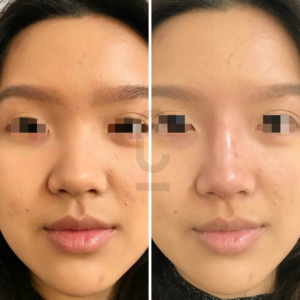
See more non-surgical rhinoplasty results.
How long do results last for bridge treatment?
The nasal bridge is a low-movement area, which means results placed there tend to persist toward the longer end of the typical 12–18 month range. Many clients find their bridge result holds well for 14–18 months before softening enough to warrant a maintenance treatment.
Frequently asked questions
Is non-surgical rhinoplasty for a flat nose painful?
The bridge of the nose is generally one of the less sensitive areas for treatment, compared to the tip. Topical numbing cream is applied before treatment. Most clients describe mild pressure or a brief sting at each treatment point.
How much product is needed for a flat bridge?
This varies depending on the starting anatomy and the degree of improvement desired. Your practitioner will plan the volume in consultation based on your specific goals. Conservative, precise placement consistently produces the most natural-looking results.
Will my nose look obviously treated after bridge treatment?
A well-executed bridge result should look like your nose, improved — not like you have had a procedure. The most common feedback we receive is that friends and family notice the client looks better without being able to identify why.
Can I combine bridge treatment with tip treatment in the same session?
Yes, and this is a common combination for people who want both improved bridge definition and tip lift. The two are assessed and planned together to ensure the overall proportional result is harmonious.
Is the treatment reversible?
Yes. All standard treatments used in non-surgical rhinoplasty in Australia are reversible using an appropriate medical agent.
Want to know more about non surgical rhinoplasty?
Read our complete guide to non surgical rhinoplasty in Australia.