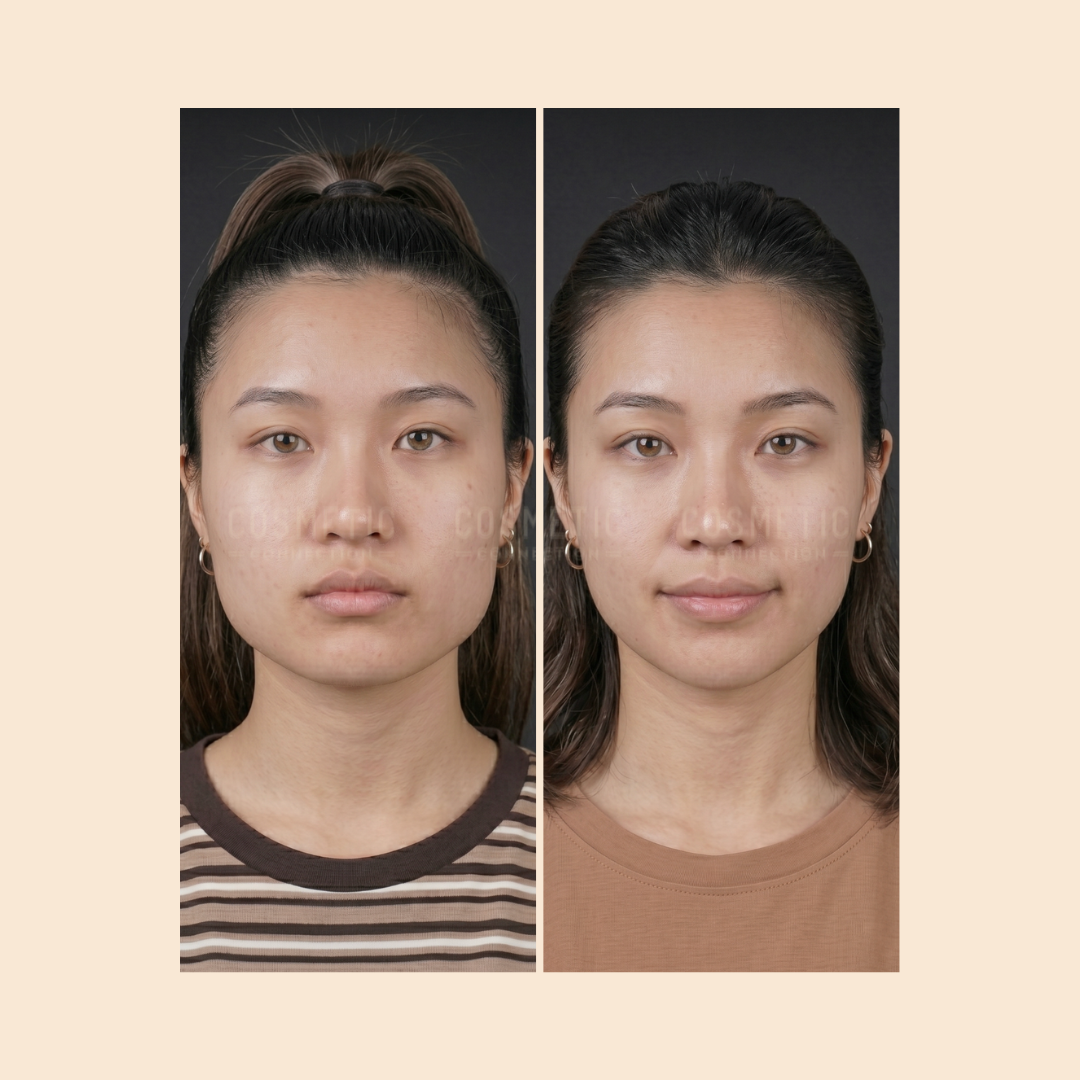
Cheek volume treatment in Australia costs between $1,500 and $3,000 per appointment, depending on the treatment approach, how much treatment is required, and the clinic you choose. That’s a wide range — and understanding what sits inside it helps you evaluate pricing before your first consultation, rather than being surprised after it.
Quick answer: Cheek treatment in Australia costs $1,500–$3,000 per appointment at reputable doctor-led clinics. The range reflects genuine clinical variation in how much treatment is needed, not arbitrary pricing. Significantly lower prices frequently reflect reduced clinical standards, product quality, or practitioner qualifications. Treatment is not covered by Medicare or private health insurance.
What the $1,500–$3,000 range reflects
The cost of cheek volume treatment varies between patients for real clinical reasons — not because clinics price arbitrarily. The main variables are:
Amount of treatment required
Cheek treatment is priced based on the quantity of treatment used. A patient requiring subtle volume restoration in one specific area of the mid-face will need less treatment than a patient requiring broader correction across multiple fat compartments. The difference in what’s clinically appropriate can be significant, and it translates directly to cost.
Treatment approach
Volumising treatment and collagen stimulating treatment are different products with different mechanisms, timelines, and price points. Collagen stimulating treatment tends to sit toward the higher end of the range — it requires more product per session because it works by stimulating a gradual biological response rather than directly filling volume. It also lasts longer, which changes the calculus when considering long-term cost.
Areas being addressed
Cheek treatment can address multiple distinct zones of the mid-face — the lateral cheekbone for definition, the anterior cheek for volume, the sub-malar area for support, and the upper cheek for tear trough transition. Addressing more zones requires more treatment, which increases the cost of a single appointment.
Clinic location and clinical standard
Doctor-led clinics in metropolitan areas — Sydney and Melbourne — typically sit at the higher end of the range relative to nurse-led clinics or regional providers. This reflects the higher clinical overhead of doctor-led practice, not simply a location premium. The regulatory and clinical standard required for cheek treatment — which sits close to vascular structures and carries higher technical demands than many other treatment areas — warrants this level of care.
Long-term cost: non-surgical vs surgical
One of the questions we hear regularly is whether non-surgical treatment is cost-effective compared to surgical cheek augmentation over time, given that non-surgical results require maintenance.
| Cost factor | Non-surgical treatment | Surgical augmentation (implants) |
|---|---|---|
| Initial cost (Australia) | $1,500–$3,000 | $8,000–$18,000+ |
| Maintenance frequency | Every 12–24 months | None (unless revision required) |
| Estimated 10-year cost | $7,500–$18,000 (5–6 treatments) | $8,000–$18,000+ (plus revision risk) |
| Revision cost if needed | Dissolution + retreatment — lower cost | Surgical revision — similar to initial surgery |
| Medicare / health insurance | Not covered | Not covered (elective cosmetic) |
| Downtime cost | Minimal — most return to work same day | 4–6 weeks recovery — potential income impact |
Over a 10-year period, the total cost of non-surgical maintenance and surgical augmentation are broadly comparable for many patients — particularly once surgical revision risk is factored in. The meaningful difference is flexibility: non-surgical treatment can be adjusted, paused, or stopped at any point. Surgical augmentation is a permanent commitment with a different risk profile. For most patients considering this for the first time, starting non-surgically remains the more prudent financial and clinical decision.
For a detailed comparison of what each approach involves, see our non-surgical vs surgical cheek augmentation guide.
How Cosmetic Connection prices cheek treatment
At Cosmetic Connection, we use a flat-fee pricing model. This means the cost of your treatment is confirmed before you proceed — there are no add-ons, no “just a little more” charges added during the appointment, and no variable unit pricing that makes the final bill unpredictable.
Our full pricing is available on our flat-fee services page. We publish this publicly because we believe patients should be able to make informed financial decisions before attending a consultation, not after sitting in a treatment chair.
We also don’t use commission-based models where clinicians earn more by recommending more treatment. This is a structural feature of our practice that directly protects patients from over-treatment — one of the most common problems in cosmetic medicine.
Get started
What low pricing actually signals
The Australian market for non-surgical cosmetic treatments has significant variation in price — and significant variation in standard. These two things are connected.
Cheek treatment uses prescription medicines that are regulated as Schedule 4 substances in Australia. These are not commodities — they vary in quality, formulation, and clinical suitability. Lower-priced clinics frequently achieve their pricing through one or more of the following:
- Using lower-quality products that may produce less predictable or less durable results
- Delegating treatment to non-medical practitioners who carry lower regulatory costs
- Reducing consultation time to a degree that limits the quality of suitability assessment
- Offering promotional pricing as a loss leader that converts to additional treatments at the appointment
The cheek area is one of the more technically demanding areas of the face to treat well. It sits in close proximity to important vascular structures — the risk of a serious vascular complication, while rare, is real and requires immediate medical management. A clinic that cannot adequately manage this risk is not a safe environment for cheek treatment regardless of price.
This doesn’t mean the most expensive option is automatically the best. It means that pricing significantly below the $1,500 starting point in the Australian market warrants direct questions about who is performing the treatment and what product is being used.
What affects how much treatment you’ll need
The clearest predictor of cost within the $1,500–$3,000 range is the degree and distribution of change being addressed. Broadly speaking:
- Subtle, focal restoration — for example, early volume loss in one specific area — typically sits at the lower end of the range
- More significant volume restoration across the mid-face, or treatment across multiple zones, typically sits higher
- Patients seeking structural definition augmentation (adding volume that wasn’t there before) generally require similar or more treatment than restoration patients, as the anatomy has no previous volume baseline to return to
- First-time treatments and maintenance treatments may differ — some patients require more treatment initially to establish the result, with smaller maintenance quantities thereafter
These variables are discussed at your consultation once the doctor has assessed your anatomy. You won’t know the specific cost of your treatment until after that assessment — and any clinic that quotes a precise cost before examining you should prompt caution.
Is cheek treatment worth the cost?
This is a question only the individual patient can ultimately answer — it depends on how significantly the concern affects daily life, how important the outcome is to them, and what they’re comparing the cost against.
What we can say from clinical experience: patients who have undergone cheek volume treatment for genuine volume loss — not as a preventive measure or a trend — consistently describe the outcome as meaningful. The changes most commonly reported are looking less tired, feeling more confident in photographs, and no longer actively managing how they look in social or professional settings. For the patients who describe these experiences, the cost sits within a range they consider fair value for the change.
Patients who report less satisfaction are typically those who had vague or inflated expectations, or who pursued treatment for concerns that weren’t primarily driven by volume change. This is why a thorough suitability assessment before treatment is the most important determinant of outcome — including whether treatment is the right answer at all.
For a complete picture of what cheek volume treatment involves and what results look like, our cheek volume treatment guide is the right place to start. And to understand how to assess whether you’re a suitable candidate, our before and after results guide covers realistic outcomes across different patient presentations.
Get started
Frequently asked questions
Does Medicare cover cheek treatment in Australia?
No. Cheek volume treatment is an elective cosmetic procedure and is not covered by Medicare or private health insurance in Australia. The full cost is the patient’s responsibility. Some clinics offer payment plan options — at Cosmetic Connection, you can review available payment options on our payment options page.
Why does cheek treatment cost more at some clinics than others?
The main drivers are who is performing the treatment, what product is being used, and the clinical standard of the consultation and aftercare. Doctor-led clinics using prescription-grade products and maintaining appropriate clinical standards carry higher costs than nurse-led or lower-standard alternatives. The cheek area is technically demanding — this is not a context where the cheapest option is a neutral choice.
How many treatments will I need?
Most patients achieve their initial result in one appointment. Some patients with significant volume loss prefer to stage correction across two appointments — treating conservatively first and reviewing at two weeks before adding more. Ongoing maintenance is typically one appointment every 12–24 months at a quantity that may be less than the initial treatment.
Is the consultation cost separate from treatment cost?
At Cosmetic Connection, initial consultations are included in your overall appointment — you are not charged separately for the assessment. The treatment cost is confirmed before you proceed, so there are no unexpected charges on the day.
What’s included in the price?
At Cosmetic Connection, the flat-fee price includes the doctor consultation, the treatment itself, topical numbing, and your two-week review appointment. There are no itemised charges for individual components added on the day. Full details of what’s included are available on our flat-fee services page.