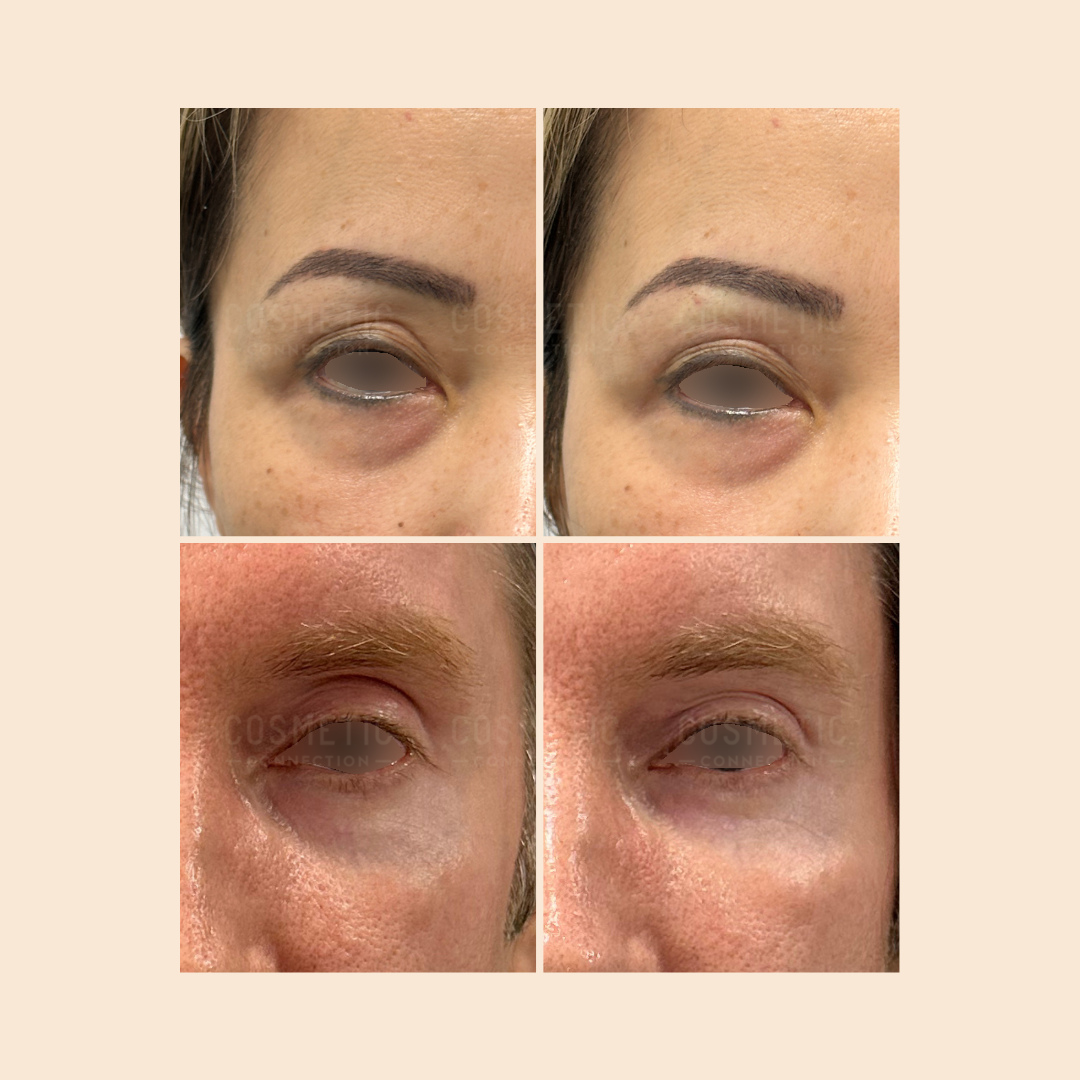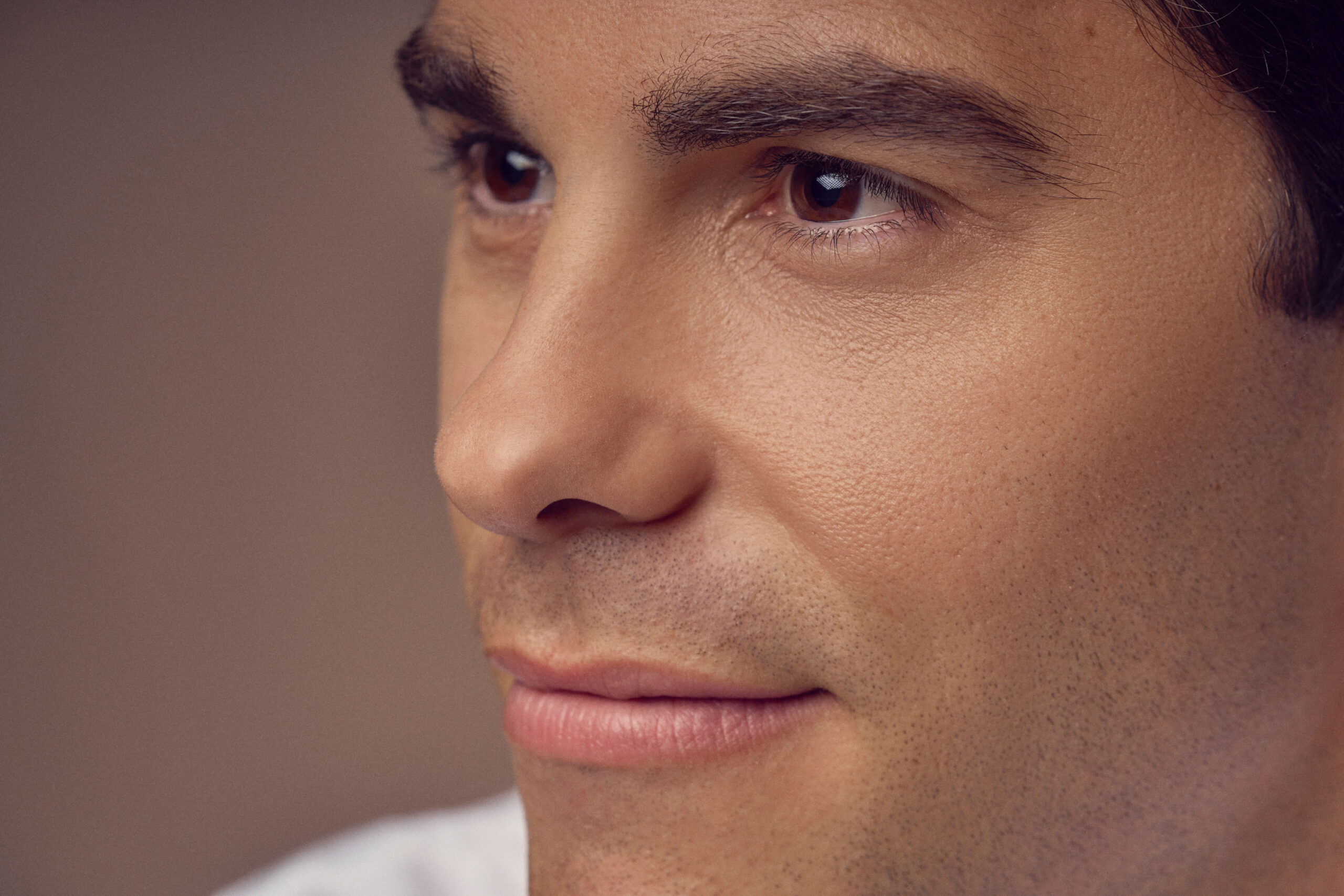
Hunter eyes describe a specific eye shape — deep-set, almond-shaped, with a defined upper eyelid and a characteristically low brow-to-lid ratio that creates an intense, focused appearance. This guide explains what hunter eyes actually are anatomically, what determines whether you have them, and what non-surgical options exist for those who want to move toward this aesthetic.
Quick answer: Hunter eyes are characterised by low upper eyelid exposure — the brow sits relatively close to the upper lash line — combined with a deep-set positioning of the eye in the orbit. Non-surgical upper eyelid volume treatment can contribute to this aesthetic in appropriate candidates by restoring or enhancing the structure of the upper eyelid area, though the achievable change depends heavily on your starting anatomy.
What are hunter eyes?
The term “hunter eyes” comes from an informal but widely used framework in facial aesthetics that contrasts two eye shapes. Hunter eyes are typically described as deep-set, slightly hooded, or recessed, with a lower brow position relative to the upper lash line — creating less visible upper eyelid show. They are often associated with a more intense, structured, or defined facial appearance, and the aesthetic is sought across genders.
Anatomically, hunter eyes result from a combination of factors: the depth of the orbital socket (how recessed the eyeball sits within the skull), the position of the brow relative to the orbital rim, the volume of the upper eyelid area, and the shape of the upper eyelid crease. These are predominantly structural and genetic characteristics — they cannot be created from scratch through any non-surgical treatment.
What non-surgical treatment can influence is the volume and structure of the upper eyelid area — specifically, restoring or enhancing the fullness of the upper eyelid in a way that changes how the eye reads. This is where upper eyelid volume restoration becomes relevant to the hunter eyes conversation.
What determines eye shape — and what you can change
Understanding what is and is not changeable non-surgically matters before pursuing any treatment for this aesthetic goal.
| Feature | What determines it | Changeable non-surgically? |
|---|---|---|
| Orbital depth | Bone structure | No |
| Brow position | Bone, soft tissue, muscle activity | Partially — targeted treatment can influence brow position |
| Upper eyelid volume and fullness | Fat pads, soft tissue volume | Yes — volume restoration addresses this directly |
| Upper eyelid crease height and shape | Anatomy, genetics | Limited — surgical options exist |
| Amount of upper eyelid exposure | Brow height, crease position, orbital anatomy | Limited — brow repositioning can influence this |
The most accessible non-surgical lever in the hunter eyes aesthetic is upper eyelid volume. A well-structured, appropriately full upper eyelid — where the transition from brow to lid is smooth and defined rather than hollow or deflated — contributes meaningfully to the deep-set, sculpted appearance that characterises hunter eyes. A review published on PubMed Central confirms that precision-based placement of volumising treatments tailored to the anatomical planes within the periorbital area can provide effective, natural-looking volume enhancement — the foundation of what makes non-surgical treatment relevant to this aesthetic.
How non-surgical upper eyelid volume restoration contributes to the hunter eyes look
Upper eyelid volume restoration places a small amount of structure into the upper eyelid area to build fullness where volume has been lost or was never fully present. In the context of hunter eyes, the goal is not simply to fill — it is to create a specific shape. A smooth, full upper eyelid with a well-defined transition to the brow contributes to the structured, defined eye appearance associated with this aesthetic.
It is important to be realistic about what volume restoration can and cannot achieve for this specific goal. If your starting anatomy includes a naturally high brow, a wide amount of upper eyelid show, or a shallow orbital socket, the structural foundations for classic hunter eyes are not present — and volume-based treatment along may not create them. Combination approaches to build structure and relax muscles may be required.
In our experience, the people who see the most satisfying outcomes from this treatment for the hunter eyes aesthetic are those who had the right underlying structure — so treatment is genuinely restoring a look they previously had, or refining one they partially have, rather than creating something entirely new.
Get started
Other non-surgical options relevant to the hunter eyes aesthetic
Upper eyelid volume restoration is one component of a broader set of non-surgical tools that can contribute to the hunter eyes aesthetic. Depending on your anatomy, other approaches may be more relevant, complementary, or a better starting point.
Brow positioning. The brow-to-lid ratio is central to the hunter eyes look. Treatment that influences brow position — either lowering a high brow or reshaping the brow arch — can contribute significantly to creating the lower, more structured brow appearance associated with this aesthetic. This is often more impactful than upper eyelid volume alone.
Upper face structural assessment. Hunter eyes do not exist in isolation — they are part of an overall upper face structure that includes the forehead, temples, brow, and orbital area. In our experience, the most effective approach to this aesthetic is an upper face assessment that considers all of these structures together rather than treating the eyelid in isolation.
Frequently asked questions
Can you get hunter eyes non-surgically?
Partially. The deep-set orbital structure that defines classic hunter eyes is determined by bone — something no non-surgical treatment alters. What can be influenced non-surgically is the volume and structure of the upper eyelid area and brow position. For people whose anatomy is close to this aesthetic, non-surgical treatment can meaningfully refine it. For those starting far from it structurally, surgical options offer greater structural change.
What is the difference between hunter eyes and prey eyes?
Hunter eyes are characterised by a lower brow position relative to the lash line, deeper orbital socket, and less visible upper eyelid show — creating a defined, intense appearance. Prey eyes typically describe the opposite: a higher brow, more visible upper eyelid, and a rounder, more open eye appearance. These are informal terms rather than clinical classifications, and most people sit somewhere between the two rather than firmly in one category.
Does upper eyelid volume restoration create hunter eyes?
It can contribute to the aesthetic in appropriate candidates by improving the structure and fullness of the upper eyelid area. But it does not change orbital depth, brow bone structure, or the fundamental shape of the eye. The change it produces is in the quality and definition of the upper eyelid — not in the structural characteristics that primarily define the hunter eyes look.
Are hunter eyes attractive?
Attractiveness is subjective and culturally variable. Hunter eyes have become a popular aesthetic reference point, particularly in online discussions about facial attractiveness, but they represent one aesthetic among many. The goal of any treatment should be to enhance your specific features in a way that suits your face — not to replicate a particular look that may or may not complement your overall structure.
What does non-surgical upper eyelid treatment cost in Australia?
Hunter eyes treatment costs between $1,500 and $3,000 depending on your requirements, and the skill of the clinician. Read more about how our pricing works.