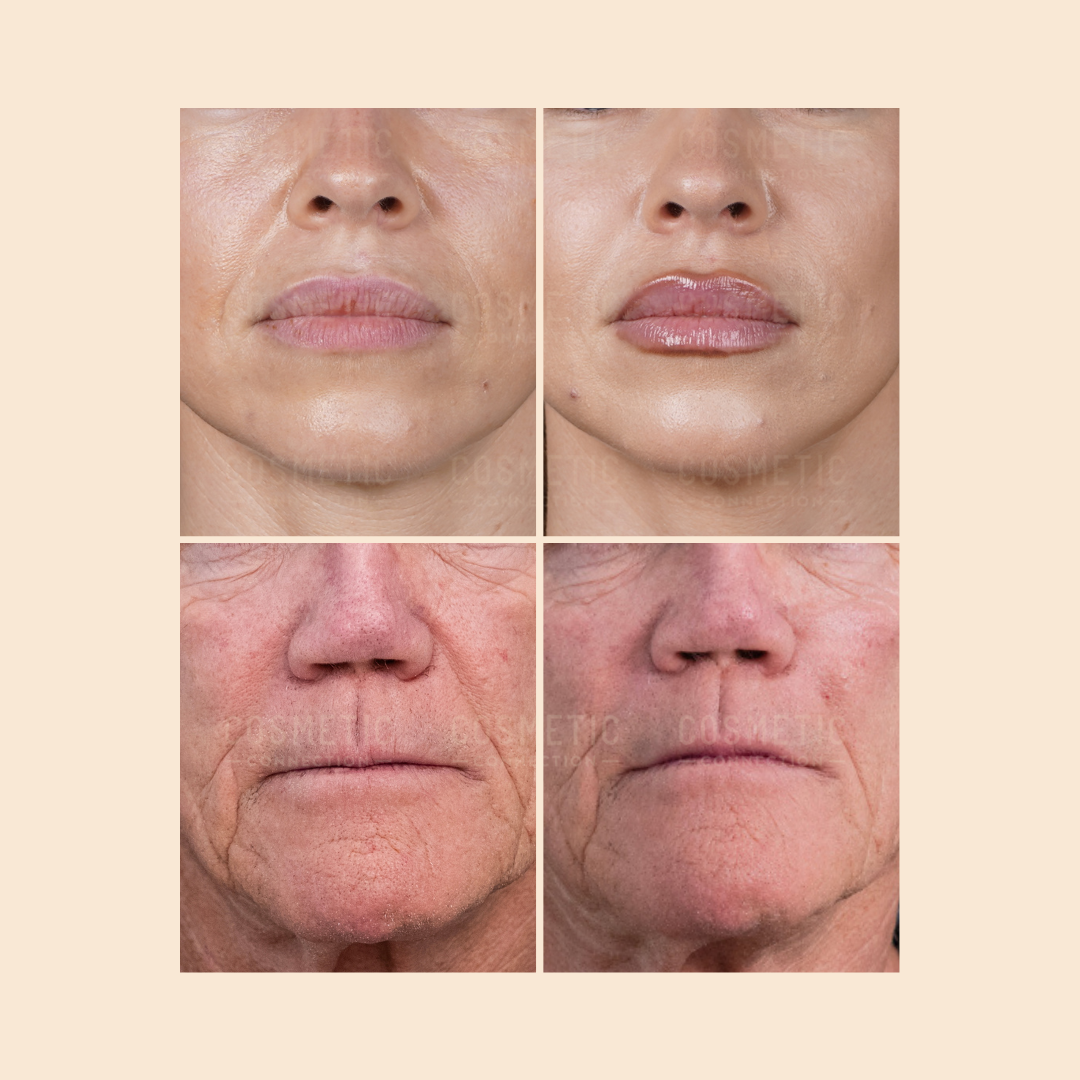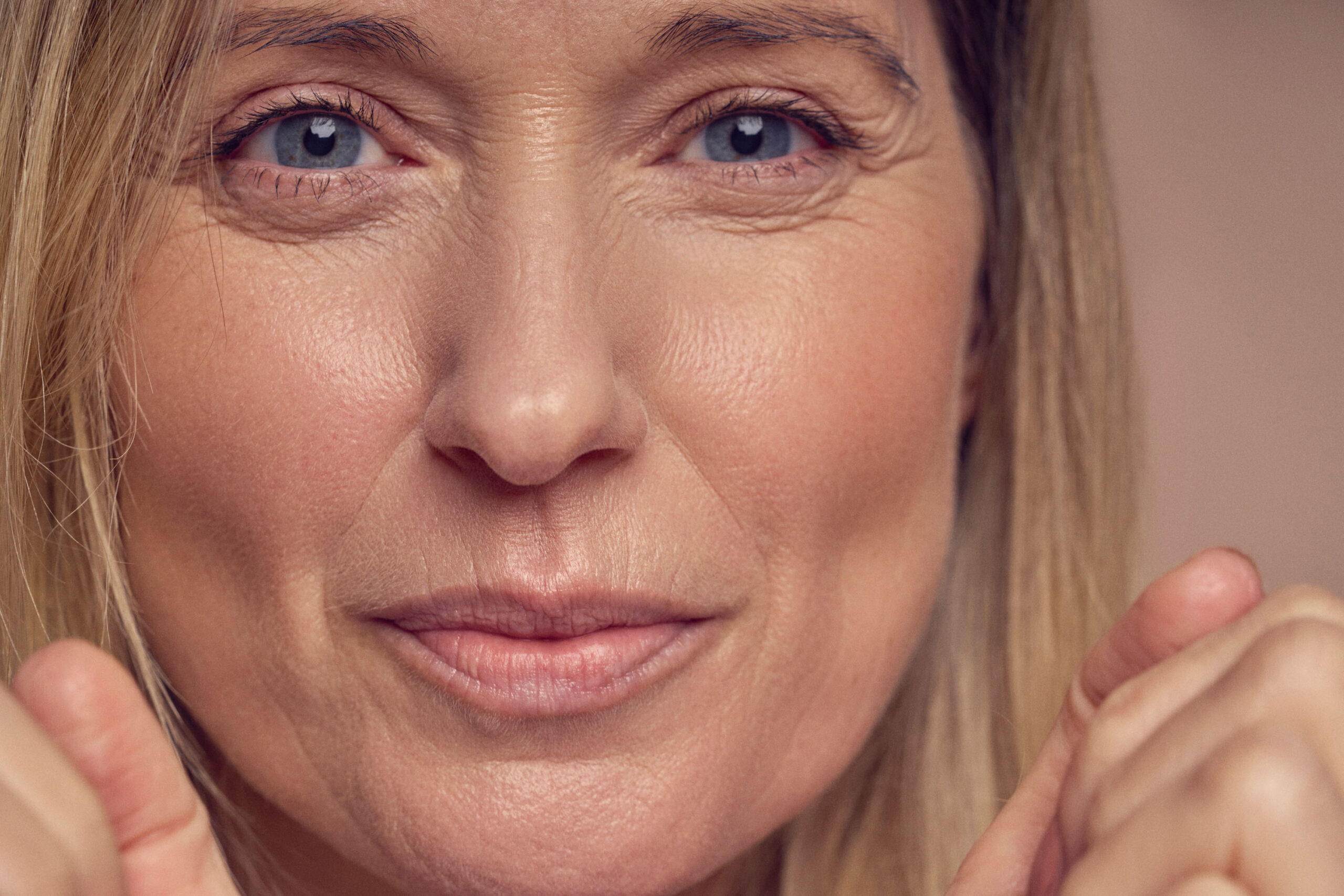
Nasolabial fold treatment is a non-surgical cosmetic procedure that addresses the creases running from the sides of the nose to the corners of the mouth. It works by restoring structural volume to the midface and the fold itself, supporting tissue that has thinned or descended with age. This guide explains the assessment process, what happens during treatment, what recovery looks like, and what realistic results involve.
Quick answer: Nasolabial fold treatment is performed in-clinic without general anaesthetic. Volume support is placed into the midface, the fold itself, or both — depending on what the assessment finds. The procedure takes 30 to 45 minutes, results are visible immediately, and most patients experience mild swelling and tenderness for two to five days afterward.
What does nasolabial fold treatment actually do?
The treatment works by restoring the structural volume that the midface loses with age. As fat pads thin and descend, and as bone support in the upper jaw reduces, the tissue above and beside the nasolabial fold loses the scaffolding that once kept it in position. The fold appears deeper because the surrounding tissue has dropped — not because the crease itself has moved.
Volume support placed in the right anatomical location restores that lost scaffolding. When placed in the midcheek, it lifts the overlying tissue, reducing the apparent depth of the fold from above. When placed directly in the fold, it fills the crease from below. In many cases, the most natural-looking result comes from a combination of both — addressing both the upstream cause and the fold itself.
Research published in Archives of Dermatological Research confirms that treating cheek volume loss directly produces statistically significant improvements in nasolabial fold depth, as measured by the Wrinkle Severity Rating Scale — supporting the clinical rationale for addressing midface volume rather than the fold in isolation. Our complete guide to smile lines treatment covers this structural distinction in more detail.
The assessment: what happens before treatment
No two nasolabial folds are identical, and the assessment determines everything that follows. At our clinics, the consultation involves a structured evaluation of the midface that considers several factors simultaneously.
- Fold depth and character: Is the fold present only during expression, or does it sit at rest? A deep resting fold typically requires more structural volume correction than a fold that only appears when smiling.
- Cheek and midface volume: How much volume has been lost from the fat pads of the cheek? If cheek descent is the primary driver of fold deepening, treating the cheek first — or simultaneously — produces a more complete result.
- Skin quality and laxity: Loose or thinned skin affects how the overlying tissue responds to volume support. Patients with significant skin laxity may need a different approach or a combination plan.
- Facial balance and proportions: The nasolabial fold does not exist in isolation. It sits within the context of the whole midface, and changes to its appearance affect the surrounding features. The assessment considers the lower eyelid, cheek, and lower face together.
- Patient goals and expectations: Treatment softens nasolabial folds — it does not eliminate them entirely. Understanding what is realistic for your anatomy is part of every assessment.
If treatment is appropriate, the plan is confirmed before anything is booked. If it is not — because the anatomy is not suited, the concern is better addressed differently, or the timing is not right — we say so at this point. This is the suitability-first approach that underpins everything at Cosmetic Connection.
Get started
Step by step: what happens during the procedure
Treatment is performed in-clinic and does not require sedation or surgical preparation. Here is what a typical appointment involves.
Preparation
Before treatment begins, a topical numbing preparation is applied to the treatment area and left for approximately 20 to 30 minutes. This significantly reduces discomfort during the procedure. The face is cleansed and prepared, and your treatment plan is confirmed with you before anything proceeds.
The procedure
Volume is placed using precise technique at the depth and location identified during assessment. Depending on the plan, this may involve the deep midcheek to restore structural lift, the fold itself to address the crease directly, or both. The procedure typically takes 30 to 45 minutes from start to finish. Most patients describe a mild pressure or brief stinging sensation rather than significant pain.
Immediately after
Some swelling and redness in the treated area is normal immediately after treatment and is expected. You are assessed before leaving the clinic, and any questions about aftercare are addressed at this point. Most patients return to their regular activities the same day or the following day.
Recovery: what to expect in the days after treatment
Recovery from nasolabial fold treatment is generally straightforward. The most common experiences in the days following treatment are mild swelling, some tenderness to touch, and occasional bruising at the treatment site. According to a systematic review and meta-analysis published in Aesthetic Plastic Surgery (Stefura et al., 2021), the most commonly reported side effects across randomised clinical trials were tenderness in 41% of cases, swelling in 34%, and bruising in 29% — all of which are temporary and resolve without intervention.
In the first 48 hours, avoiding strenuous exercise, alcohol, and excessive heat (saunas, steam rooms, hot yoga) helps minimise swelling. Sleeping with your head slightly elevated on the first night can also reduce puffiness. Most patients find swelling is at its peak on day two and resolves noticeably by day four or five.
The final result is best assessed after one to two weeks, once any swelling has fully settled. The improvement in fold depth is visible immediately after treatment, but the subtler refinements in how the treated volume integrates with surrounding tissue become clearer once recovery is complete.
What results look like — and how long they last
When assessed and treated correctly, nasolabial fold treatment produces a softening of the crease and a more rested, refreshed appearance in the midface. Facial movement and expression remain natural — the goal is a more supported version of your face, not a frozen or overfilled one.
Results typically last 12 to 18 months, though this varies depending on the approach used, the areas treated, your metabolism, and lifestyle factors. A systematic review in Aesthetic Plastic Surgery (Stefura et al., 2021) found that fold severity remained substantially improved at six months post-treatment and began gradually returning toward baseline by 12 months — confirming that results fade progressively rather than disappearing at a defined endpoint.
Collagen stimulating treatments, which work differently by triggering the body’s own collagen production rather than providing immediate volume, tend to have a longer duration of effect — in some cases extending to 24 months or beyond. The trade-off is that results build gradually over several months rather than being visible immediately. For patients whose concern involves both fold depth and broader skin quality changes, a combination approach may be appropriate. See our comparison of nasolabial fold treatment options for a full breakdown.
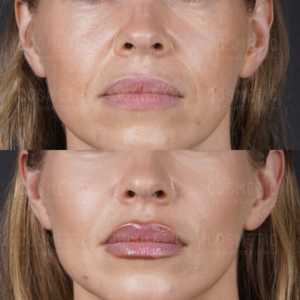
Before and after treatment for nasolabial folds (smile lines).
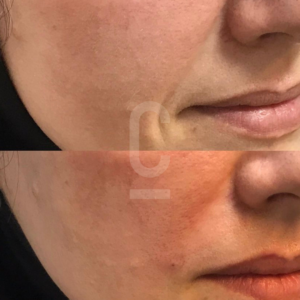
Before and after treatment for nasolabial folds (smile lines).
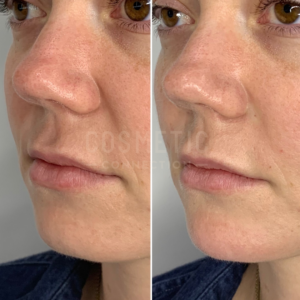
Before and after treatment for nasolabial folds (smile lines).

Before and after treatment for nasolabial folds (smile lines).
Who performs nasolabial fold treatment at Cosmetic Connection
Nasolabial fold treatment at Cosmetic Connection is performed by our doctor-led clinical team. The midface is one of the most anatomically complex regions of the face to treat — the proximity of vascular structures and the relationship between treatment depth and aesthetic outcome require a high level of anatomical knowledge and clinical experience.
In our experience, the most common reason patients are dissatisfied with nasolabial fold treatment elsewhere is not the treatment itself but how the plan was set — specifically, treating the fold in isolation when the primary driver was upstream volume loss, or placing volume too superficially. Accurate anatomical assessment before treatment is what separates a result that looks natural from one that looks done.
Our flat-fee pricing structure means the cost of your treatment is confirmed at consultation with no variable charges applied during the procedure.
Get started
Frequently asked questions
How many sessions of nasolabial fold treatment will I need?
Most patients achieve their desired result in a single treatment session. A follow-up assessment at around 12 months allows for maintenance treatment before the result has fully returned to baseline, which is more efficient than waiting for the fold to deepen fully before retreating.
Can nasolabial fold treatment be combined with other treatments?
Yes. In many cases, nasolabial fold treatment is part of a broader midface plan that may include cheek contouring, collagen stimulating treatment, or other areas of the face. Combined treatment plans are assessed individually — the goal is always to address the actual drivers of your concern rather than treating areas in isolation.
Will I look different immediately after treatment?
You will see an immediate change in the appearance of the fold. Some swelling will be present in the first few days, which means the result immediately post-treatment may look slightly more pronounced than the final outcome. The settled result, visible after one to two weeks, is typically more refined than what you see on the day.
Is nasolabial fold treatment reversible?
Volume support treatments that use certain materials can be dissolved if required — for example, if a patient is unhappy with their result or if a complication occurs. This is one of the clinical safety advantages of this treatment approach. Your treating practitioner will discuss reversal options as part of your consultation.
What is the difference between treating nasolabial folds and marionette lines?
Nasolabial folds run from the nose to the corners of the mouth. Marionette lines extend downward from the corners of the mouth toward the chin. They involve different anatomical structures and are addressed differently in treatment — though they often appear together and can be assessed in the same consultation.
References
- Stefura T, Kacprzyk A, Droś J, Krzysztofik M, Skomarovska O, Fijałkowska M, Koziej M. (2021). Tissue Fillers for the Nasolabial Fold Area: A Systematic Review and Meta-Analysis of Randomized Clinical Trials. Aesthetic Plastic Surgery, 45(5), 2300–2316. https://doi.org/10.1007/s00266-021-02439-5
- El-Mesidy MS, Alaklouk WT, Azzam OA. Nasolabial fold correction through cheek volume loss restoration versus thread lifting: a comparative study. Archives of Dermatological Research. 2020. https://doi.org/10.1007/s00403-019-02031-7
- Minelli L, Brown CP, Warren RJ, van der Lei B, Mendelson BC, Little JW. (2023). Lifting the Anterior Midcheek and Nasolabial Fold: Introduction to the Melo Fat Pad Anatomy and Its Role in Longevity and Recurrence. Aesthetic Surgery Journal, 43(9), 941–954. https://doi.org/10.1093/asj/sjad126