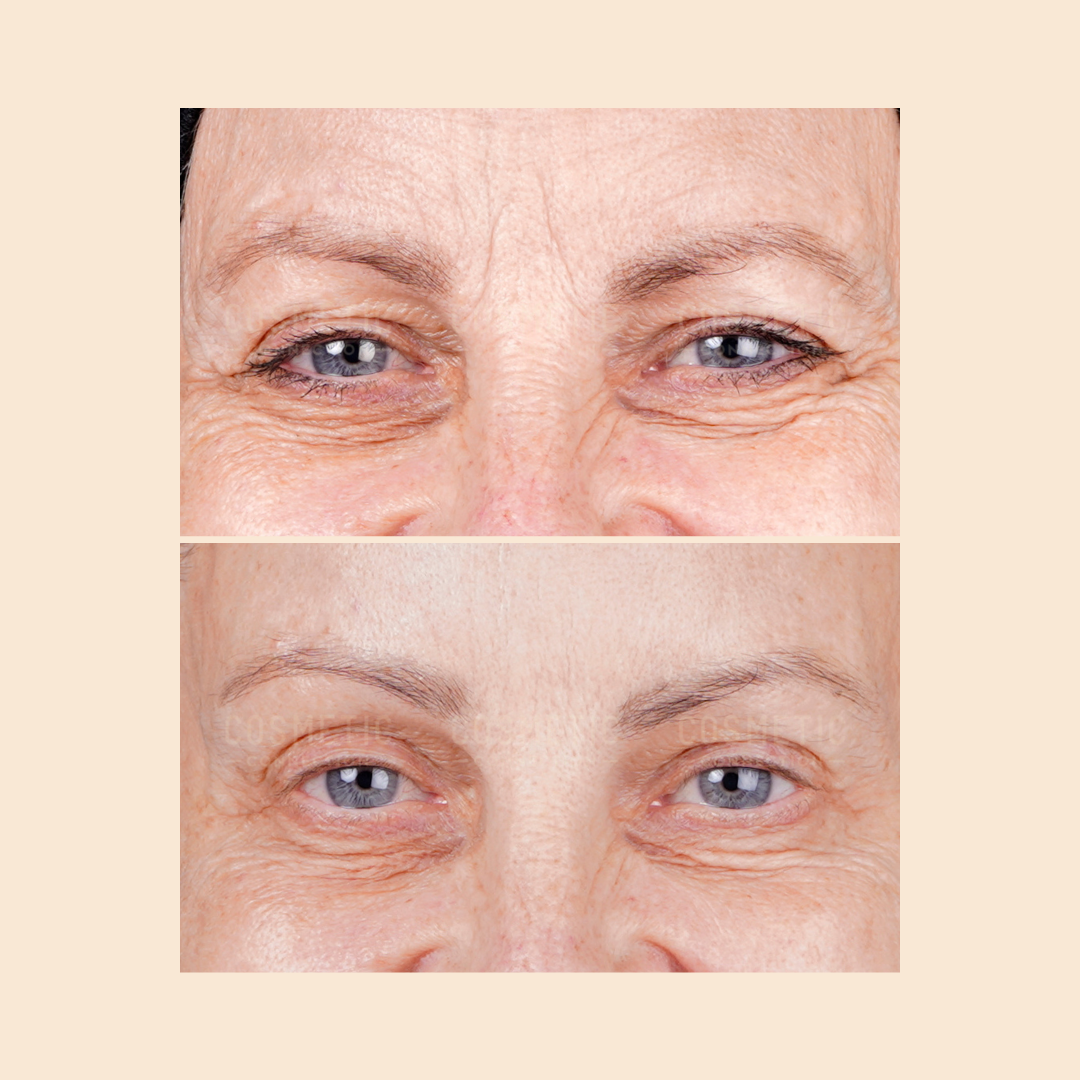
A non-surgical brow lift uses cosmetic treatments to elevate and reshape the eyebrows without surgery, stitches, or downtime. For many people, it is a practical and effective alternative to a surgical procedure — particularly when the concern is mild to moderate brow heaviness, asymmetry, or a tired appearance around the eyes. This guide explains how it works, which treatment approach may suit different people, what results are realistic, and what to consider when choosing a provider.
Quick answer: A non-surgical brow lift is a cosmetic procedure that uses muscle relaxing treatments, volume-restoring treatments, or a combination of both to lift and reshape the eyebrows. The right approach depends on what is causing the brow to sit lower — excess muscle activity pulling it down, loss of volume in the temples or upper face, or both. Results are subtle but meaningful, and the procedure involves no surgery or recovery time.
Why do eyebrows drop with age?
To understand how a non-surgical brow lift works, it helps to understand why brows change position over time. The eyebrows are held in place by a balance of opposing muscles and supported by the volume of underlying tissue.
The frontalis muscle runs across the forehead and lifts the brow, creating forehead wrinkles when doing so. Beneath it, a group of smaller muscles — including the corrugator supercilii, procerus, and the lateral portion of the orbicularis oculi — pull the brow downward. In youth, the frontalis comfortably wins this tug of war. With age, that balance shifts.
At the same time, volume in the temples decreases as the fat pads reduce in size and the underlying bone structure gradually remodels. This lateral volume loss pulls the outer third of the brow downward and inward, creating the heavy, tired, or hooded appearance that many people notice from their late thirties onward.
Brow descent does not always happen evenly. Some people notice the inner brow drops first, creating a frowning appearance at rest. Others notice the outer brow descends, which makes the eyes appear smaller and heavier. Understanding which pattern is present determines which treatment approach is most likely to help.
What treatment approaches are used in a non-surgical brow lift?
There are two primary non-surgical approaches to brow lifting, and they work through different mechanisms. Many people benefit from a combination of both.
Muscle relaxing treatments
A muscle relaxing treatment works by reducing the activity of the muscles that pull the brow downward. When these depressor muscles are relaxed, the frontalis — the muscle responsible for brow elevation — can work with less opposition, and the brow rises slightly as a result.
This approach is particularly effective for inner brow descent, frown lines at rest, and cases where muscle overactivity is the primary driver of brow heaviness. The effect is subtle — typically a few millimetres of elevation — but when applied with precision, it can meaningfully open the eye area and reduce the tired or frowning appearance at rest. Results develop over 10–14 days and typically last three to four months.
Precise placement is essential. The same treatment applied incorrectly — with too much relaxation of the frontalis — can cause the brow to drop rather than lift. This is one of the most common reasons people experience disappointing results from brow lifting at clinics that do not take an anatomy-first approach to treatment planning.
Volume-restoring treatments
Volume-restoring treatments address a different cause of brow descent: the loss of structural support beneath the skin. When the temples and the tissue immediately beneath the outer brow reduce in volume, the brow loses the scaffolding that keeps it in position.
Restoring volume to the temple and the supraorbital area provides structural support that gently elevates the brow from below. The effect is immediate and tends to be particularly useful for lateral brow descent — the outer-third drop that creates hooded upper eyelids. Results typically last considerably longer than muscle relaxing treatments, often 12 to 18 months depending on the amount placed and the individual.
Who is a suitable candidate?
Most people with mild to moderate brow descent are likely candidates, but suitability depends on the underlying cause and the degree of change needed.
People who tend to respond well include those with:
- A brow that sits at or just below the brow bone, rather than significantly below it
- Lateral brow heaviness causing the appearance of hooded upper eyelids
- Inner brow descent creating a permanently frowning appearance at rest
- Asymmetry between the two brows that has developed gradually
- General upper face heaviness or a tired appearance not caused by excess skin
A non-surgical brow lift is less likely to be the right solution when there is significant excess skin above the upper eyelid — a condition called dermatochalasis — or when the brow has descended substantially below the orbital rim. In those cases, a surgical approach is typically required to achieve a meaningful result, and a non-surgical treatment may fall short of expectations.
In our experience, many people arrive asking specifically for brow lifting when the real driver of their concern is upper eyelid heaviness or temple hollowing. The assessment is where this distinction gets made. Treating the wrong thing in the wrong location produces results that disappoint — which is why we begin with a clinical assessment before recommending any approach.
The relationship between brow position and eyelid appearance is worth understanding in its own right. Our guide to upper eyelid volume loss explains how brow descent and eyelid changes interact and why addressing one without the other often produces incomplete results.
Get started
What results can you expect?
The results of a non-surgical brow lift are real but should be understood in proportion. This is not a procedure that produces a dramatic surgical-level change — and for most people, that is exactly the point.
Typical outcomes include:
- A modest elevation of the brow position — measurable in millimetres but visible in photographs and in person
- A more open, rested appearance around the eyes
- Reduced heaviness over the upper eyelid from lateral brow descent
- Softening of the frowning appearance at rest caused by inner brow descent
- Improved symmetry when one brow sits lower than the other
What a non-surgical brow lift cannot do: it cannot remove excess upper eyelid skin, produce the degree of elevation a surgical brow lift achieves, or permanently alter brow position. Results require maintenance.
Duration varies by approach. Muscle relaxing treatments typically last three to four months. Volume-restoring treatments in the temple and brow area typically last 12 to 18 months. Many people find that combining both achieves the best outcome — the muscle relaxing component addresses the dynamic pull while the volume component provides structural support.
How does a non-surgical brow lift relate to facial balancing?
Brow position does not exist in isolation. It is one element of the upper face, and changes to brow height and shape affect how the entire face reads — the perceived balance between upper and lower face, the openness of the eye, and the overall sense of symmetry.
In our clinical practice, brow lifting is frequently part of a broader facial balancing plan rather than a standalone treatment. A brow that sits too low can make the midface look proportionally large, can make eyes appear more recessed, and can affect how features like the nose and lips are perceived relative to the upper face.
When we assess someone for brow lifting, we consider brow position relative to the orbital rim, the relationship between brow height and upper eyelid exposure, the asymmetry between the two sides, and whether temple volume loss is contributing to the appearance. This is a facial reading, not a checklist.
For people interested specifically in the lateral brow and its relationship to upper eyelid appearance — including the increasingly sought-after hunter eyes aesthetic — our post on achieving the hunter eyes look non-surgically covers the anatomy and approach in detail.
What does the procedure involve?
The procedure is performed in a clinical setting. There is no surgery, no anaesthesia, and no recovery period.
A typical appointment involves:
- A clinical assessment of brow position, upper eyelid anatomy, and the likely cause of the concern
- A treatment plan discussion — which approach is recommended and why
- Application of a topical numbing preparation where relevant
- Treatment delivered via fine-gauge needle, with precision placement guided by the pre-treatment assessment
- A review of what to expect in the days following, including any temporary effects at the treatment site
Most appointments take 30 to 60 minutes in total, including the consultation component. Minor redness or swelling at the treatment site is common and generally resolves within a few hours. Most people return to normal activity the same day.
Our brow lifting treatment page outlines the specific approach we use at Cosmetic Connection, including the assessment process and what to expect on the day.
How to choose a provider
Brow lifting is a precision procedure. Small differences in placement can produce very different outcomes. Choosing the right provider matters more here than it does for treatments where the margin for error is wider.
| Factor | What to look for | Why it matters |
|---|---|---|
| Clinical oversight | Doctor-led assessment and treatment | Brow lifting requires anatomical knowledge — incorrect placement can cause brow heaviness or asymmetry rather than improvement |
| Assessment approach | Face assessed as a whole before any treatment is recommended | Effective lifting requires understanding the brow’s relationship to the eyelid and upper face, not just the brow in isolation |
| Pricing structure | Flat-fee or clearly disclosed pricing before treatment | Volume-based pricing can create an incentive to use more product than is in the patient’s interest |
| Suitability discussion | Provider explains when non-surgical treatment may not be appropriate | A provider willing to recommend surgery when that is genuinely the better answer is a provider you can trust |
| Follow-up process | Review appointment included or available | Results from muscle relaxing treatments develop over 10–14 days — a review at that point allows for any refinement |
At Cosmetic Connection, every brow lifting appointment begins with a clinical assessment rather than a treatment assumption. Our doctor-led approach means the conversation starts with what is actually causing the concern. You can learn more about our approach on our Our Difference page.
Get started
Frequently asked questions
How long does a non-surgical brow lift last?
Duration depends on which approach is used. Muscle relaxing treatments typically last three to four months. Volume-restoring treatments in the temple and brow area typically last 12 to 18 months. Many people combine both approaches — the volume component maintains the structural lift while the muscle relaxing component is refreshed at regular intervals.
Is a non-surgical brow lift painful?
Most people describe the experience as mild discomfort rather than pain. A topical numbing preparation is applied before treatment where relevant, and the procedure uses fine-gauge needles with small amounts of product placed at each site. Any discomfort typically resolves immediately after the appointment.
Can a non-surgical brow lift help with hooded eyes?
It depends on what is causing the hooded appearance. If the hood is primarily the result of the outer brow descending and pulling skin over the upper eyelid, a volume-restoring treatment in the lateral brow and temple area can produce a meaningful improvement. If hooding is caused by excess upper eyelid skin, non-surgical brow lifting will not fully address the concern and surgery may be the more appropriate solution.
What is the difference between a non-surgical and a surgical brow lift?
A surgical brow lift physically repositions the brow by removing or repositioning tissue, producing a permanent change that can be significantly more dramatic. A non-surgical brow lift uses treatments to either reduce muscle activity pulling the brow down or restore structural volume beneath it — producing a subtler, temporary result with no surgery or recovery. The two are not competing options for everyone: some people are better suited to one based on the degree of descent and the underlying cause.
Will a non-surgical brow lift look natural?
When performed correctly, yes. The goal is to restore a brow position that looks appropriate for your face — not to create an obviously lifted or arched result. The most common cause of an unnatural outcome is over-treatment or incorrect placement. A doctor-led, suitability-first approach significantly reduces this risk.