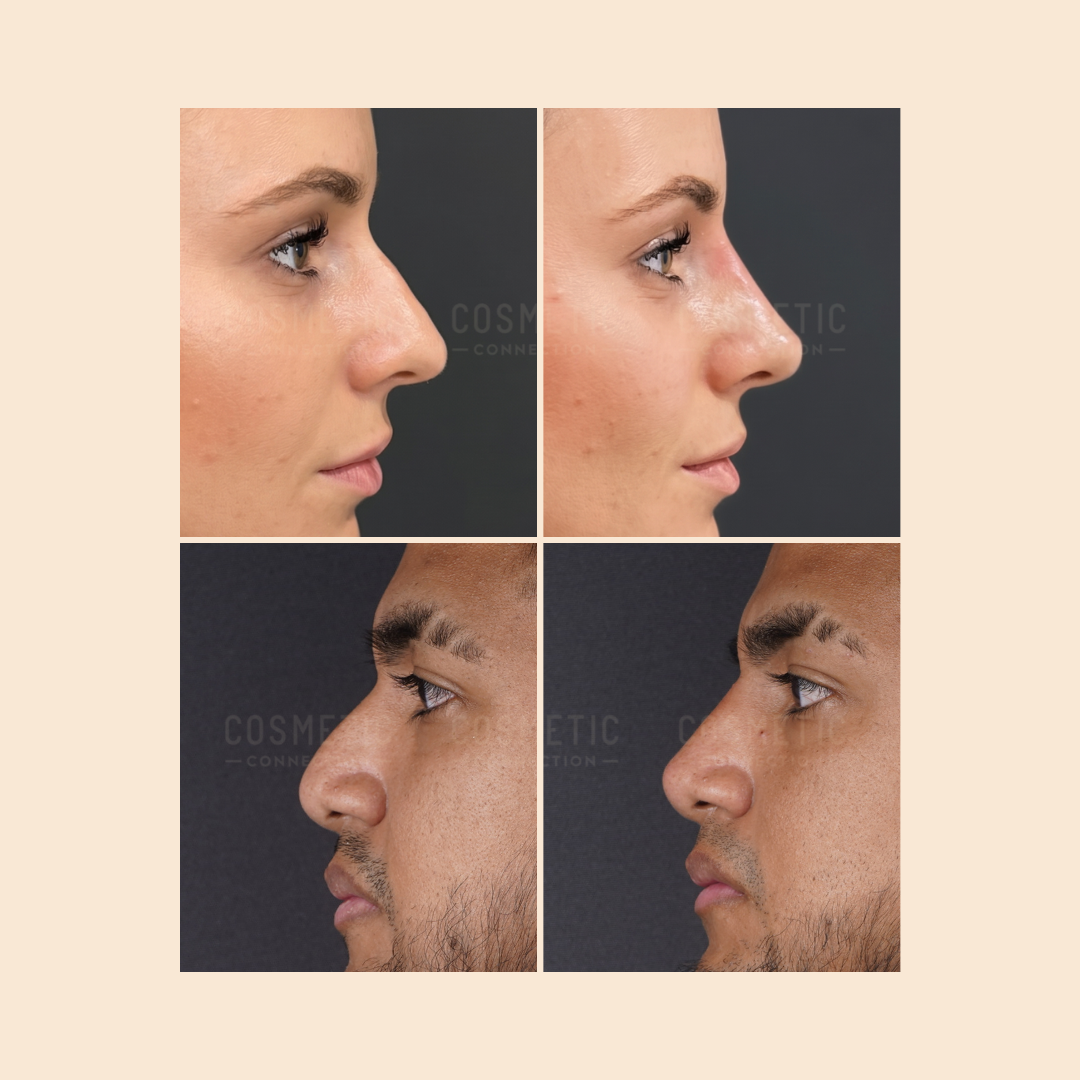
Yes, non-surgical rhinoplasty can be reversed. This is one of the most important features that separates it from surgical rhinoplasty: if the treatment goes wrong, either because you are unhappy with the result, or if a complication occurs, an appropriate medical reversal agent can reduce or eliminate the treatment rapidly. This guide explains how reversal works, when it is used, what to expect from the process, and what happens to your nose afterwards.
Quick answer: Non-surgical rhinoplasty using a cosmetic treatment can be reversed using an appropriate medical agent. Reversal is used for two reasons: to correct an unwanted aesthetic result, or as an emergency treatment for side effects like vascular occlusion, a rare but serious complication. In most cases, significant reversal occurs within hours.
How does reversal work?
The reversal agent is an enzyme that breaks down the substance used in non-surgical rhinoplasty. When placed into the treated area, it breaks the molecular bonds in the product, causing it to liquify, and be rapidly metabolised by the body.
The process is rapid. In most cases, significant reversal is visible within hours. Full resolution is typically seen when any treatment-related swelling resolves.
The reversal agent is administered in a similar way to the original treatment using a fine needle into the area where the product is located. The procedure takes only a few minutes.
When is reversal used?
- Aesthetic dissatisfaction If you are unhappy with the shape, symmetry, or amount of product placed, and don’t want to wait months to years for the result to wear off, reversal allows you to return to your natural baseline or a partial state, and then consider whether to re-treat. Before deciding whether you like the result, follow the treatment aftercare and allow enough time for the nose to heal.
- Vascular occlusion (emergency) If the substance inadvertently compresses or enters a blood vessel during treatment, causing signs of compromised blood supply, the reversal agent must be administered immediately as an emergency treatment. The TGA identifies vascular occlusion as the most serious complication of facial treatments, and immediate reversal is the primary intervention.
- Existing product from a previous provider If you have had treatment elsewhere and wish to start fresh, either because of an unwanted result or because you are changing providers, reversal of existing product before re-treatment is sometimes the safest approach.
- To remove the treatment before undergoing a surgical rhinoplasty Most surgeons require any non surgical rhinoplasty results to be removed before performing nose job surgery. This is so they have a clear baseline, and normal anatomy to work with during the operation.
Does reversal return my nose to exactly how it was?
In most cases, reversal returns the nose to its pre-treatment state, or very close to it. However, there are some nuances:
- Repeated treatments may require more reversal agent to fully address accumulated product
- In rare cases where product has been present for a long time, underlying ageing-related changes mean your baseline will have shifted. As this change has been hidden by the treatment, reversing it may reveal anatomical differences that you don’t remember.
For the far majority of people, reversal is a reliable return to baseline. A review 2 weeks after reversal confirms the outcome before any decisions about re-treatment are made.
What does the reversal process feel like?
The reversal agent feels like a sting, and is usually more painful than the original treatment. However, because less precision is required, reversing can be completed often in less than a few minutes. Some people experience temporary redness, swelling, or bruising at the treatment sites, which resolves within a few days.
Occasionally, people experience a mild histamine response (itching, redness) to the reversal agent. This is usually mild and short-lived. True allergic reactions are rare but possible, which is another reason reversal should be performed in a clinical setting by a qualified practitioner.
Get the decide guide
Can you re-treat after reversal?
Yes. After reversal and a settling period, typically 2–4 weeks, re-treatment is possible. The settling period allows swelling from the reversal to resolve and gives your practitioner a clear baseline from which to plan the new treatment.
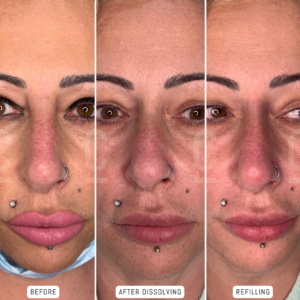
This patient came to us with nasal bridge and tip widening after having regular treatments at many different clinics for years. We reversed her results and then retreated her 4 weeks later.
Widening is easy to avoid by adopting a conservative approach.
Frequently asked questions
Is the reversal process painful?
The procedure involves placement into the treated area, so mild discomfort is expected, slightly more than the original treatment. Topical and injectable numbing can be applied beforehand to reduce this.
How many reversal sessions will I need?
Most people need one session. Larger volumes or older product may require a second session. Your practitioner will assess whether additional sessions are required at a follow-up appointment.
Can treatment from another provider be reversed?
Yes. A qualified practitioner can reverse treatment placed by any provider. They will assess the likely location and volume of existing product and plan the reversal accordingly. However, you should obtain your treatment records to ensure accurate reversal planning.
Does the reversal agent affect my natural tissue?
The reversal agent does break down naturally occurring substances in the tissue, not just the product. This effect is temporary, and the body replenishes it naturally over time. The clinical impact is minimal and resolves on its own within days to weeks.
What if the product used is not a standard treatment, can it still be reversed?
Certain older or non-standard product types cannot be reversed using standard reversal agents. This is one of the most important reasons to only use appropriate treatments in the nose. Complications from non-standard products cannot be addressed with reversal.
I’ve had the treatment for years, do I need to reverse it and start again?
No, just because you’ve regularly had treatment does not automatically mean you need to reverse it and start fresh. If the previous treatments were done correctly, and there are no issues with the current appearance, you can continue to maintain your results without dissolving first.
Want to know more about non surgical rhinoplasty?
Read our complete guide to non surgical rhinoplasty in Australia.