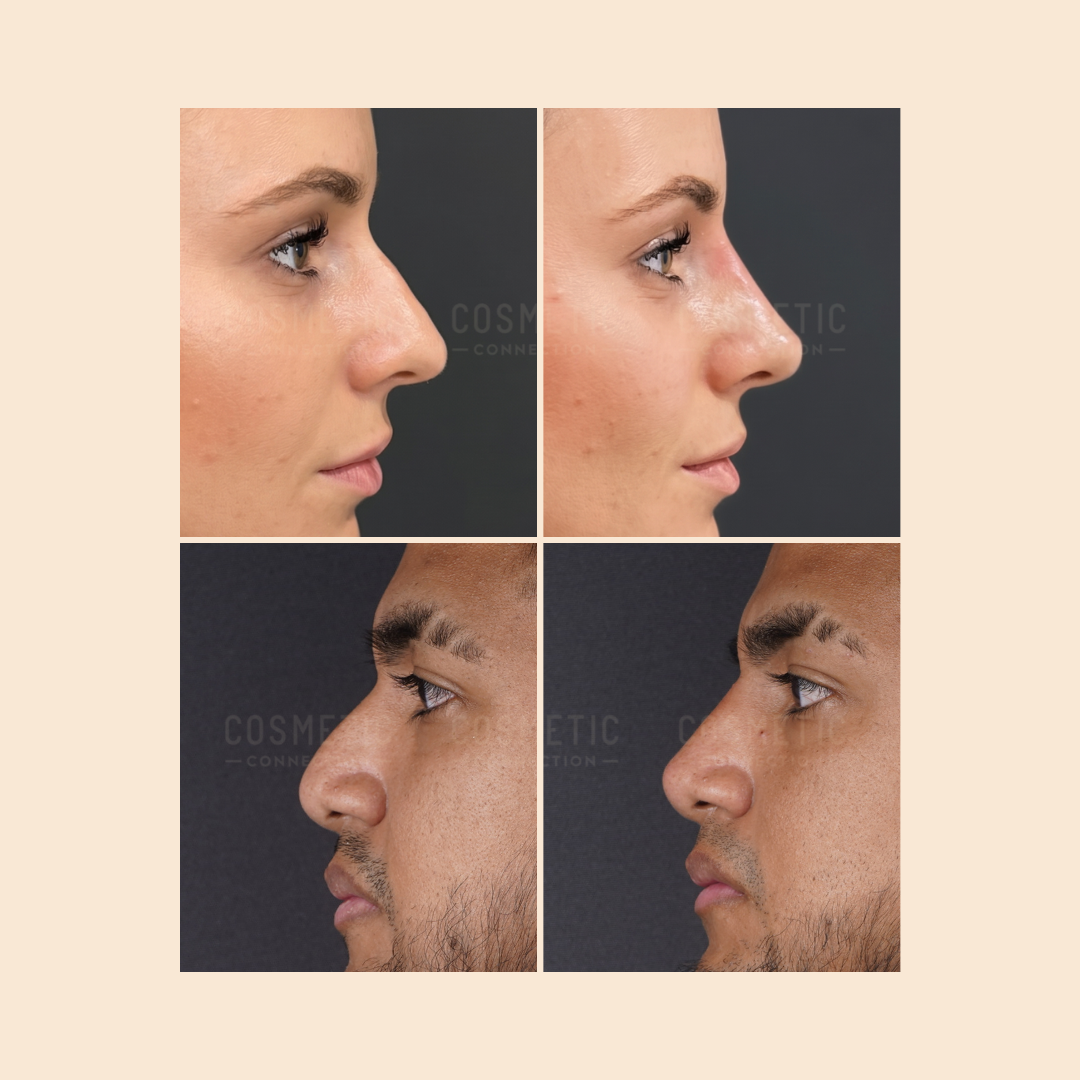
Finding the right doctor for non-surgical rhinoplasty in Australia requires more than a Google search and a look at Instagram. The procedure carries specific risks that make practitioner selection a genuine safety decision, and the Australian market includes a wide range of providers whose qualifications, experience, and safety protocols vary significantly. This guide explains what qualifications to look for, how to verify them, what questions to ask at consultation, and why doctor-performed care matters more for non-surgical rhinoplasty than for all other injectable treatments.
Quick answer: For non-surgical rhinoplasty in Australia, look for a registered medical doctor with specific training and experience in nasal injectable technique, not just general injectable experience. Verify specific cosmetic training via one of the three Australian Cosmetic Colleges (accsm.org.au/, cpca.net.au/,acam.org.au/). Prioritise practitioners who perform the consultation and treatment themselves rather than delegating entirely, and confirm the appropriate reversal agent is on-site before booking.
Does it matter whether a doctor or nurse performs the treatment?
This is one of the most searched and most misunderstood questions in the cosmetic injectable space. The honest answer is nuanced.
In a well-run, doctor-supervised model, a highly experienced nurse injector can perform non-surgical rhinoplasty, provided a doctor is genuinely involved in the in-person assessment, prescribing, and oversight. The key word is genuinely. In practice, many clinics describe themselves as “doctor-supervised” when the doctor’s involvement is limited to signing a prescription remotely, with no real in-person clinical oversight.
For non-surgical rhinoplasty specifically, doctor-performed care where the doctor assesses your anatomy and performs the treatment themselves, carries the lowest risk for three reasons: doctors are trained in medicine, have more extensive training in anatomy and emergency management; a doctor performing the procedure can make real-time clinical decisions without needing to escalate to a supervisor; and doctor-led clinics are more likely to have robust complication management protocols as a matter of institutional culture.
In cases where a non-surgical rhinoplasty is being used to improve a surgical result, a doctor must perform the treatment.
What qualifications should a non-surgical rhinoplasty doctor have?
| Qualification or training | What it indicates |
|---|---|
| MBBS or equivalent medical degree | Base medical qualification — minimum requirement |
| Fellowship or specialist training (ACCSM, ACAM) | Advanced cosmetic medical training |
| Specific nasal anatomy and technique training | Most directly relevant qualification for this procedure |
| Membership of professional bodies | Signals engagement with professional standards |
What to look for beyond qualifications
Volume and specificity of experience A practitioner who performs non-surgical rhinoplasty regularly will have a more refined technique than one who offers it occasionally. Ask how many procedures they perform per month, and how many years they’ve been doing it.
Media presence and peer recognition Practitioners sought out by media for expert commentary have typically earned peer recognition. This is not a guarantee of skill, but it is a meaningful corroborating signal.
Patient reviews with procedure-specific language Look for reviews that specifically mention non-surgical rhinoplasty outcomes, consultation experience, and the practitioner’s approach to suitability and honesty about limitations.
Transparency about limitations A practitioner who occasionally declines to treat, or who redirects clients toward surgery when that is more appropriate, is demonstrating clinical integrity.
Clinic reputation and standards Clinicians typically work at clinics that align with their standards, experience and ethics. Not only should you research the clinician, but also look into the clinic where the clinician works.
Dr Aaron Stanes leads the clinical team at Cosmetic Connection, with clinics in St Leonards (Sydney) and Toorak (Melbourne). At Cosmetic Connection, all non-surgical rhinoplasties are doctor-performed, and follow a suitability-first philosophy. This means an honest assessment of what is and is not achievable comes before any treatment decision.
Get started
Doctor vs nurse: a direct comparison for non-surgical rhinoplasty
| Factor | Doctor-led | Nurse-led (supervised) | Nurse-led (independent) |
|---|---|---|---|
| TGA compliance | ✅ | ✅ if genuine supervision | ❌ |
| Anatomy training depth | Extensive | Variable | Variable |
| Emergency management capability | High | Moderate | Variable |
| Real-time clinical decision making | ✅ | Requires escalation | Requires escalation |
| Recommended for this procedure | ✅ First choice | ✅ With caveats | ❌ |
Frequently asked questions
How do I find a doctor who specialises in non-surgical rhinoplasty in Sydney or Melbourne?
Search for doctor-led cosmetic medicine clinics in your city. Look for practitioners who specifically mention non-surgical rhinoplasty in their content rather than just injectables generally. Verify experience through ACCSM, ACAM, and CPCA, and assess their specific experience through published case work and reviews.
Is a plastic surgeon better than a cosmetic doctor for non-surgical rhinoplasty?
No. Plastic surgeons are the appropriate choice for surgical rhinoplasty. For non-surgical rhinoplasty, a cosmetic doctor with specific nasal injectable training and high case volume is often the more experienced choice, because this procedure is a core part of their daily practice, not a peripheral offering.
What should I expect at a good initial consultation?
A thorough consultation determines suitability. It should involve a physical assessment of your nose, a discussion of your specific concern and goals, an honest conversation about what is achievable, the pros and cons, a review of your health history, and time for your questions.
Want to know more about non surgical rhinoplasty?
Read our complete guide to non surgical rhinoplasty in Australia.