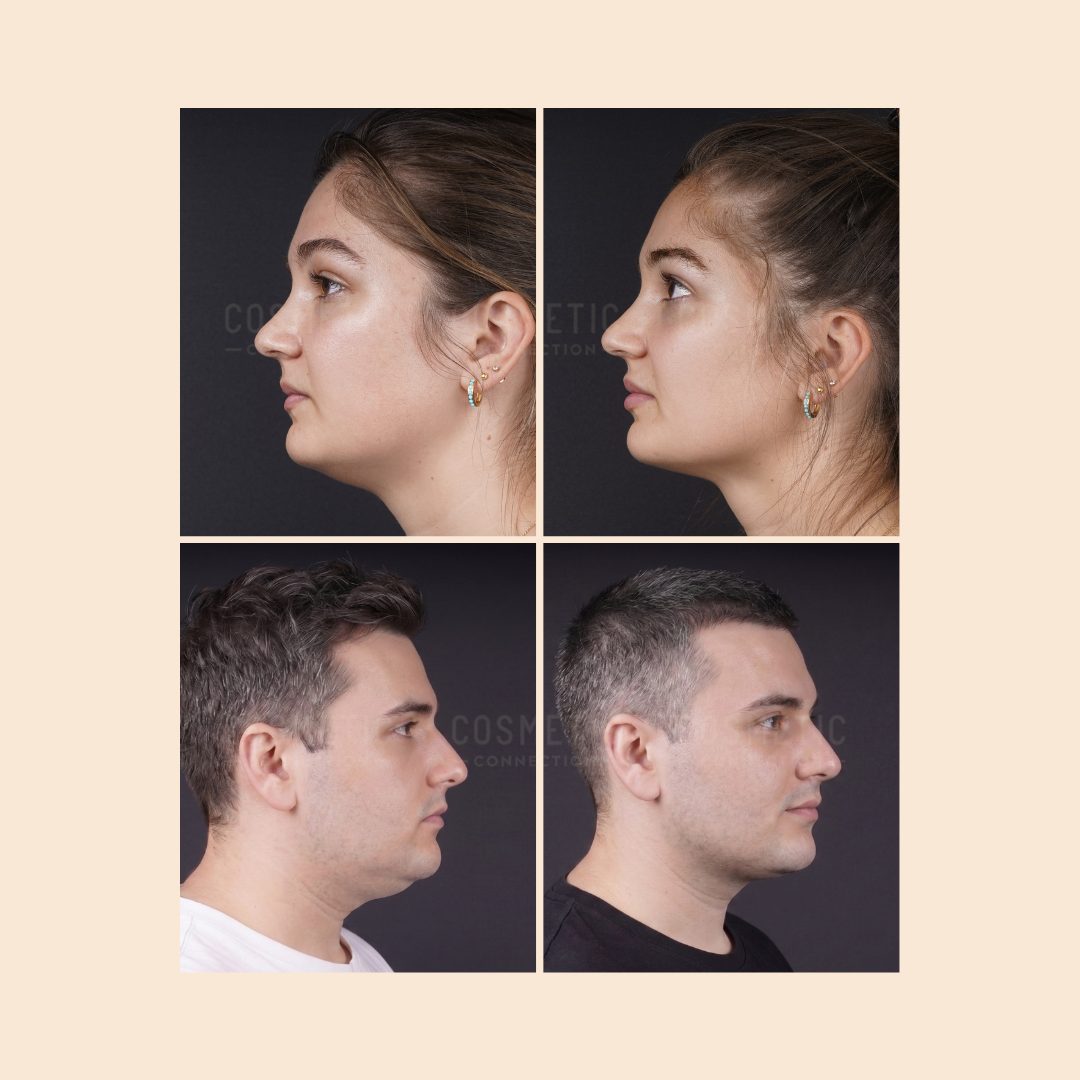
A double chin is not always a weight issue. Many people who are slim, fit, or at a healthy weight still develop fullness under the chin — and no amount of diet or exercise will change it. Understanding why this happens is the first step to knowing what, if anything, can be done about it.
Quick answer: A double chin in people who are not overweight is most commonly caused by genetics, jaw structure, or age-related changes to the skin and soft tissue under the chin. These causes do not respond to lifestyle changes, which is why the fullness persists regardless of weight or fitness level.
The three causes of a double chin that have nothing to do with weight
Most people assume a double chin means excess body fat. In reality, there are three distinct causes — and weight is only one of them.
Genetics. The distribution of fat in the body is largely determined by genetics. Some people are predisposed to store fat beneath the chin even when their overall body fat percentage is low. This is the same reason some people carry weight in their hips or abdomen while others remain lean in those areas. If a parent or sibling has a double chin at a healthy weight, there is a meaningful chance you will too.
Jaw structure. The angle between the chin and the neck — known as the cervicomental angle — is determined by the position and projection of the chin and jaw. A chin that sits further back than ideal creates a shorter, less defined angle between the chin and neck, which can give the appearance of a double chin even when there is minimal or no fat in the area. This is sometimes called a pseudo double chin. No amount of fat reduction will address this if the underlying cause is structural.
Age-related skin and tissue changes. As skin loses collagen and elasticity with age, it becomes less able to sit tightly against the underlying structures. The soft tissue beneath the chin can descend and loosen, creating the appearance of fullness that was not there before. This is driven by skin laxity, not fat accumulation, and it behaves very differently in response to treatment.
In our experience, many patients who come in describing a double chin actually have a structural or laxity-related concern rather than a fat-related one. Distinguishing between these causes is the most important part of the initial assessment.
How to tell which type you have
There is a simple self-assessment that can give you a reasonable indication of the cause of your under-chin fullness.
Stand in front of a mirror and look at your profile. Tilt your head back slightly. If the fullness largely disappears when you do this, there is likely a significant fat component. If the fullness remains or the skin appears loose when you tilt your head, skin laxity may be the primary driver. If you have a naturally recessed or small chin and the fullness appears most prominent in profile, jaw structure may be the main contributor.
This self-assessment is not a substitute for a clinical evaluation. The causes often overlap, and treatment planning requires a proper assessment of your specific anatomy. But it can help you understand what you are looking at before you seek advice.
What lifestyle changes can and cannot do
If your double chin is driven primarily by genetics, jaw structure, or skin laxity, lifestyle changes will have limited to no effect on it.
Weight loss can reduce the fat component of under-chin fullness, but it cannot change the distribution of fat that genetics has determined, alter your jaw structure, or tighten skin that has lost its elasticity. In some cases, significant weight loss can actually make the appearance worse by reducing facial volume while leaving loose skin behind.
Exercises targeting the neck and jaw area are widely promoted as a remedy for double chins. There is no clinical evidence to support their effectiveness for reducing submental fullness. The muscles beneath the chin are not the source of the fullness in the vast majority of cases, and exercising them does not reduce fat or tighten skin in the area above them.
If you have tried maintaining a healthy weight and lifestyle and the fullness under your chin has not changed, that is a clear signal that lifestyle is not the solution for your situation.
When does a double chin appear in slim people?
Genetic under-chin fat can appear at any age, including in teenagers and young adults, and is entirely unrelated to body weight. Structural causes are present from early adulthood. Age-related skin laxity typically begins to show in the thirties and becomes more noticeable through the forties and fifties.
It is also worth noting that certain medications, hormonal changes, and thyroid conditions can contribute to fat distribution changes including in the submental area, though these are less common causes. If the fullness has appeared suddenly or is associated with other symptoms, a conversation with your GP is the appropriate starting point.
For the large majority of people who ask “why do I have a double chin if I’m not fat?” the answer is genetic predisposition, jaw structure, or the natural ageing process — and the solution is not in the gym or the kitchen.
Get started
What options exist for non-weight-related double chins
The appropriate treatment — if treatment is wanted — depends entirely on the cause.
For fat-related fullness, including genetically predisposed fat in people who are not overweight, fat dissolving treatments are a well-established non-surgical option. These treatments work by disrupting fat cells in the treatment area, which are then cleared by the body over several weeks. Multiple sessions are typically required. This approach is not suitable where skin laxity is the primary concern, as it reduces volume without addressing skin quality.
For skin laxity, treatment options focus on tightening and lifting the skin in the submental area rather than removing fat. These are distinct treatment categories and produce different outcomes.
For structural causes — a recessed chin or a naturally acute cervicomental angle — non-surgical chin augmentation can improve the angle between the chin and neck, reducing the visual appearance of a double chin without targeting fat at all. Our chin contouring guide covers this approach in more detail.
Many patients benefit from a combination approach, and some have overlapping causes. This is why assessment before treatment is essential. Our comprehensive guide to double chin fat removal covers the full range of options and how they are selected based on individual anatomy.
Is treatment suitable for everyone with a non-weight-related double chin?
Not always, and an honest provider will tell you this clearly. Fat dissolving treatments are not suitable for people whose primary concern is skin laxity rather than fat. Structural causes may or may not benefit from non-surgical treatment depending on the degree of chin recession and the overall facial anatomy.
The suitability assessment is the most important part of the process. If a provider does not conduct a thorough assessment of the cause of your fullness before recommending treatment, that is a significant concern. You can read more about what determines suitability in our post on double chin treatment suitability.
For those who are suitable, results can be meaningful and lasting. For those who are not, a good provider will explain what alternatives are appropriate and what realistic expectations look like.
Get started
Frequently asked questions
Can you have a double chin at a healthy weight?
Yes. A double chin in people at a healthy weight is most commonly caused by genetics, jaw structure, or age-related changes to skin and soft tissue. These causes are unrelated to body fat percentage and do not respond to diet or exercise.
Will losing weight get rid of my double chin if I’m already slim?
Unlikely. If your double chin is driven by genetics, jaw structure, or skin laxity rather than weight-related fat accumulation, weight loss will not change it. In some cases, losing weight from an already lean baseline can reduce overall facial volume without improving the specific concern under the chin.
What is a pseudo double chin?
A pseudo double chin refers to the appearance of under-chin fullness that is caused by jaw or chin structure rather than actual fat or skin laxity. A chin that projects less than ideal shortens the angle between the chin and neck, creating the visual impression of a double chin even when there is minimal fat in the area.
Do chin exercises work for a double chin?
There is no clinical evidence that chin or neck exercises reduce submental fullness. The muscles in the area are not the source of the fullness in most cases, and exercising them does not reduce fat or improve skin laxity. Exercises are unlikely to produce a meaningful change in the appearance of the chin and neck area.
When should I see a GP about my double chin?
If fullness under the chin has appeared suddenly, is associated with other symptoms such as fatigue, weight changes, or swelling elsewhere, or feels firm or tender, see your GP. These symptoms can occasionally be associated with thyroid or lymph node changes that warrant medical assessment. For cosmetic concerns without other symptoms, a cosmetic medicine consultation is the appropriate starting point.