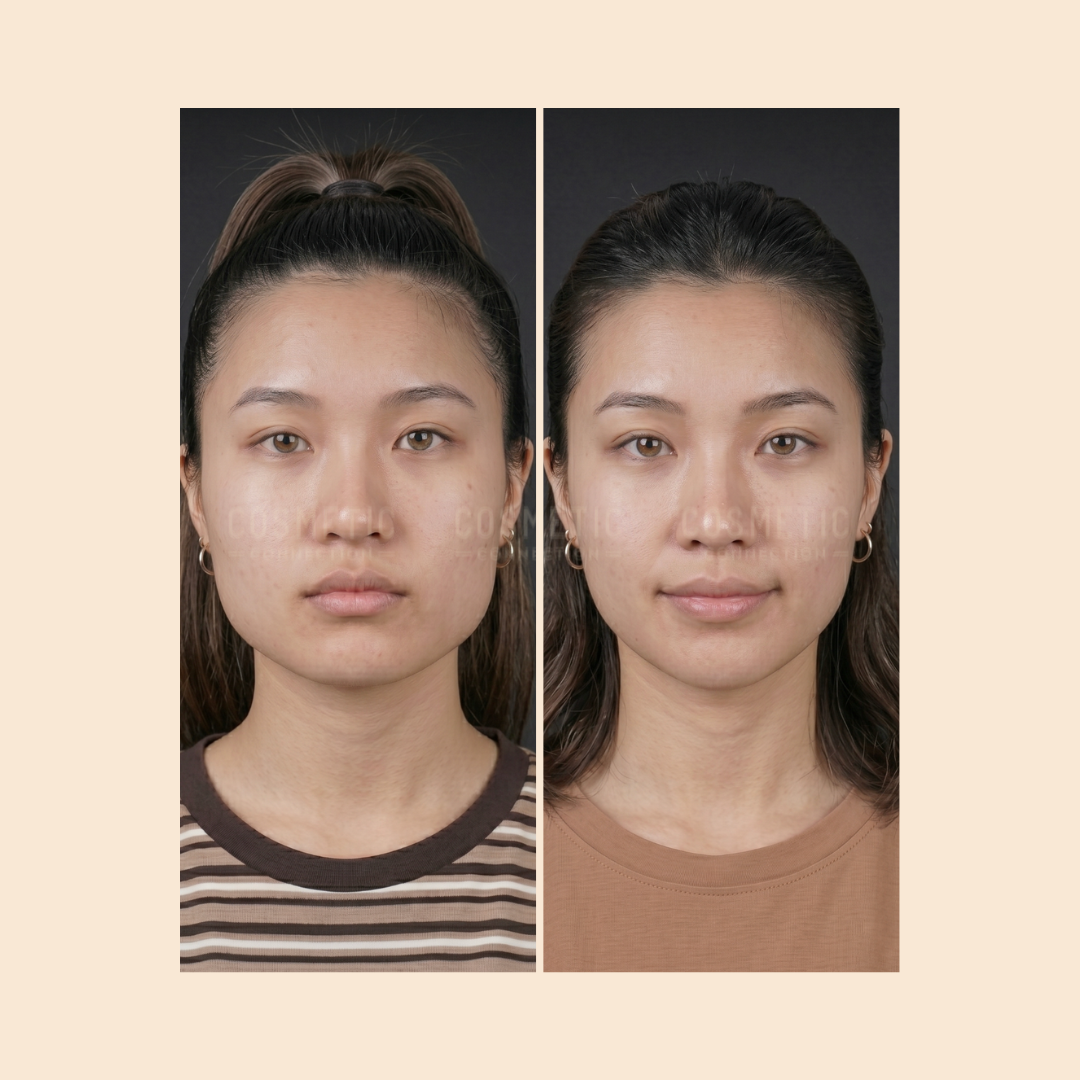
Masseter treatment can meaningfully slim a wide or square jaw — but it works best for specific face shapes and causes of jaw width. This guide covers the anatomy behind round and square face shapes, what makes someone a good candidate for non-surgical jaw slimming, and when the treatment is unlikely to deliver the result you are looking for.
Quick answer: Masseter treatment is well suited to people with a square or round face shape where the jaw width is caused primarily by enlarged masseter muscles. It works by gradually reducing muscle bulk, softening the lower face. It is less effective where jaw width comes mainly from bone structure. A clinical assessment determines which factor is dominant in your case.
What creates a round or square face shape?
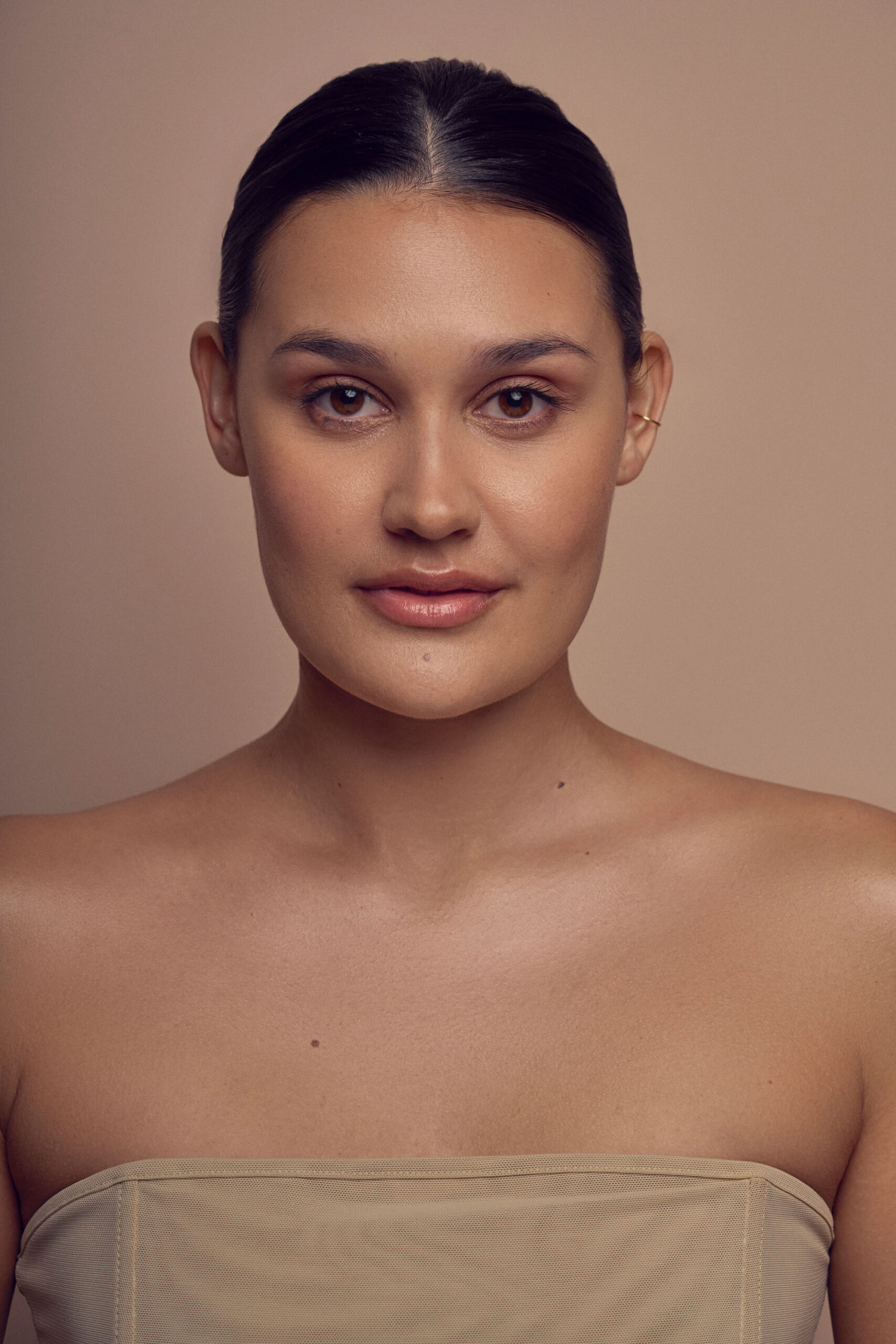
Face shape is determined by the relationship between the width of the forehead, cheeks, and lower face, and by the shape of the jaw. A square face tends to have a strong, angular jaw with a relatively consistent width from cheekbone to jaw. A round face tends to be widest at the cheeks, with a softer, less defined jaw.
In both cases, the lower face can feel “too wide” for a particular person’s aesthetic goals. But the cause of that width matters significantly — because different causes respond to different treatments.
The two main structural contributors to jaw width are the masseter muscles and the jaw bone. Most people have some contribution from both, but one tends to dominate. Understanding how the masseter muscle affects jaw shape is the first step in understanding whether treatment is likely to help.
When masseter treatment works well for a round or square face
Masseter treatment is most effective when the masseter muscles are a significant contributor to jaw width. This is often the case when:
- The jaw appears wider or more square when biting down or clenching than when the face is at rest
- There is visible or palpable muscle bulk at the angle of the jaw (the area just in front of and below the ear)
- The person has a history of jaw clenching, grinding, or stress-related jaw tension
- The jaw has become wider over time rather than always having been this way
- A round face shape feels “bottom heavy” — the lower face dominates the overall impression of the face
When these factors are present, most people respond well to treatment. Results vary depending on starting muscle size, but a meaningful reduction in jaw width and softening of the face shape is achievable in most cases. Our masseter treatment results guide shows what realistic outcomes look like across different starting points.
When masseter treatment is less likely to be effective
Treatment is less likely to produce the result a person is hoping for when the primary cause of jaw width is bone structure rather than muscle.
Indicators that bone may be the dominant factor include:
- The jaw appears equally wide whether the face is at rest or clenched
- There is minimal palpable muscle bulk at the jaw angle
- Jaw width has been consistent since adolescence and has not changed with lifestyle
- The jaw has a very angular, bony appearance rather than a rounded, fleshy one
This does not automatically make someone unsuitable — many people have a combination of both, and even partial muscle reduction can improve the overall result. But it does affect the expectation-setting conversation, and an honest assessment of what is achievable is essential before committing to treatment.
In cases where bone is clearly the dominant factor, our comparison guide for masseter treatment vs jaw reduction surgery explains what surgical options exist and when they are actually indicated.
Get started
Medical factors that affect suitability
Beyond anatomy, certain medical factors are assessed as part of the suitability consultation. These include:
- Pregnancy and breastfeeding: Treatment is not appropriate during pregnancy or while breastfeeding.
- Neuromuscular conditions: Conditions affecting neuromuscular function may affect suitability. This is assessed individually.
- Previous treatments in the area: Prior masseter treatment, particularly within a short timeframe, affects how the consultation is approached.
- Certain medications: Some medications affect how the treatment behaves. These are reviewed at consultation.
- Unrealistic expectations: If someone’s goal cannot be achieved with non-surgical treatment — for example, expecting a dramatic structural change that would require surgery — we address this directly rather than proceeding.
We take suitability seriously. Our approach is to assess first, treat second — and to tell people clearly when treatment is not likely to produce the result they are hoping for. This is part of what we mean when we talk about a suitability-first approach to cosmetic medicine.
Does it work differently for men vs women?
Masseter treatment works on the same principle regardless of gender — reducing muscle bulk to soften the lower face. However, there are some relevant differences in how it is applied.
Men generally have larger masseter muscles than women and may require a higher dose to achieve a comparable degree of reduction. Men also often have different aesthetic goals — rather than a fully tapered, oval-shaped jawline, many men want to reduce the visual “heaviness” of the jaw while retaining some definition and structural strength. A treatment plan for a male patient looks different from a template-driven approach and requires a practitioner who understands masculine facial aesthetics.
Women with a square jaw often want a more tapered lower face, and the treatment is highly effective for this when muscle is the dominant cause. Combining masseter treatment with facial balancing treatments — such as chin projection or cheek definition — can further enhance the effect of jaw slimming for both men and women.
How to find out if you are suitable
The most reliable way to determine whether you are a good candidate is a clinical assessment. Self-assessment based on the indicators above gives a useful starting picture, but muscle size and activity cannot be accurately judged from photographs or descriptions alone.
At Cosmetic Connection, we assess suitability at the consultation before any treatment is planned. You do not need to commit to treatment to find out whether it is right for you. The assessment covers your anatomy, goals, medical history, and realistic expectations — and if treatment is not appropriate, we say so clearly.
Visit our clinic locations to find our nearest location, or read our complete facial slimming treatment guide for a broader understanding of the options available before your consultation.
Get started
Frequently asked questions
Can masseter treatment make my face look thinner overall?
It can, yes — but the degree depends on how much of the facial width is driven by the masseter muscles specifically. When muscle is the main contributor to lower face width, slimming the masseter produces a noticeable improvement in overall facial proportion. When bone is the main contributor, the effect is more limited.
How much can masseter treatment slim my face?
This varies depending on your starting muscle size and how you respond to treatment. Patients with larger, more active masseters tend to see more dramatic results. In our experience, meaningful slimming is visible in most cases — though results build over multiple sessions rather than appearing all at once.
I have a round face — is masseter treatment or something else more appropriate?
It depends on what is creating the roundness. If the lower face is widened by masseter bulk, jaw slimming treatment is appropriate. If the roundness comes more from cheek volume, facial fat distribution, or overall facial proportions, a broader facial balancing assessment may be more relevant than jaw slimming alone.
Is there a minimum or maximum age for masseter treatment?
Treatment is available for adults. There is no upper age limit for patients in good health, and many people in their 40s, 50s, and beyond benefit from the treatment — including those where jaw width has contributed to an aged appearance. For younger patients, suitability is assessed individually, with a focus on whether the muscle has reached adult size.
Will the results look natural on my face?
Yes — when treatment is appropriate for your anatomy and delivered with the right dose and placement, results should look like a natural version of yourself with a slimmer jawline. The gradual timeline of results (developing over two to three months) also contributes to the natural appearance — it does not look like something abrupt has changed.