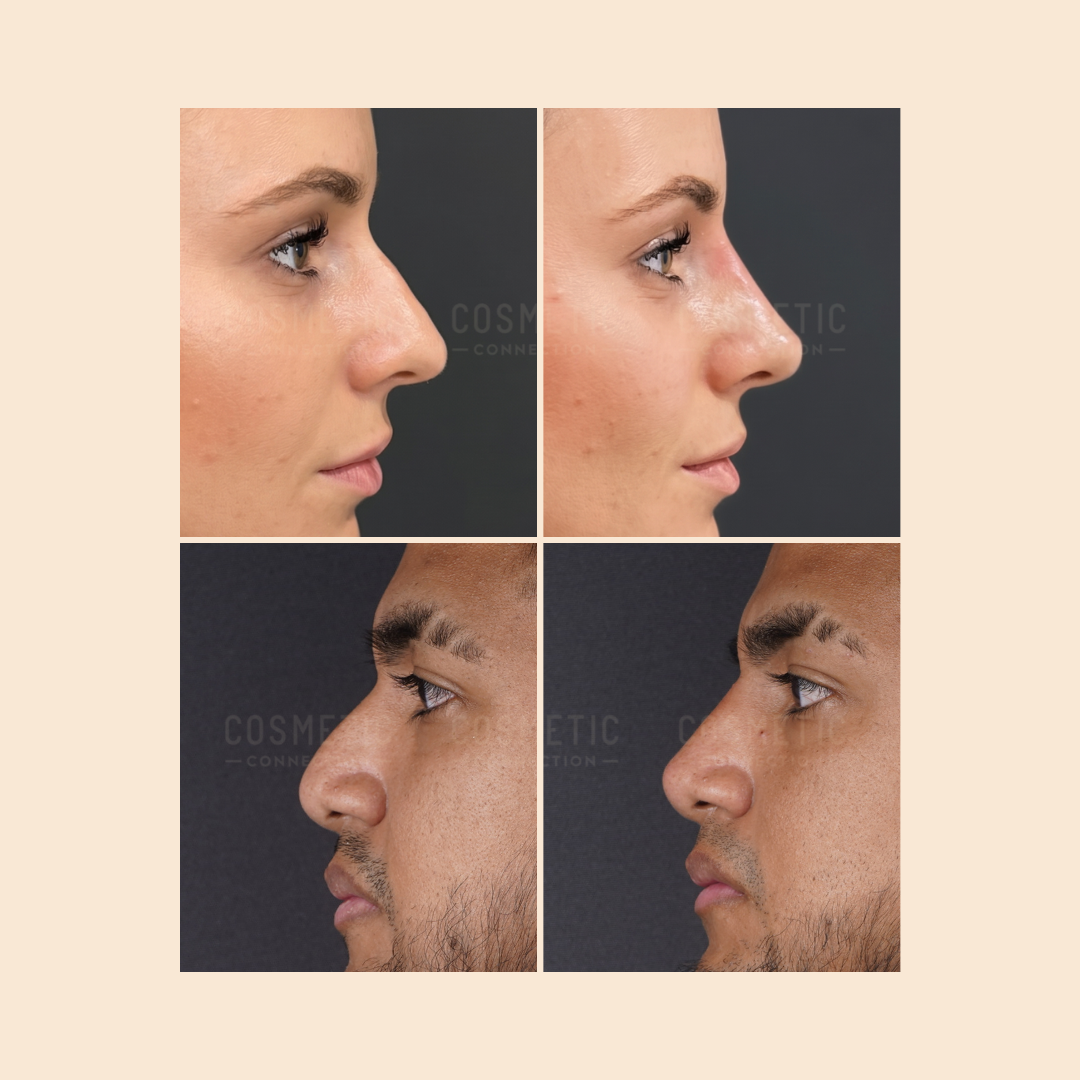
Non-surgical rhinoplasty is not suitable for everyone, and the best providers will tell you that clearly before accepting your booking. Suitability depends on your specific anatomy, the nature of your concern, your health history, and whether your expectations align with what the procedure can actually achieve. This guide walks through the key suitability factors so you can approach your consultation prepared and informed.
Quick answer: Good candidates for non-surgical rhinoplasty have a specific, defined concern that can be addressed with volume addition, such as a dorsal hump, flat bridge, or drooping tip, realistic expectations about the outcome, and no contraindications such as active skin infection. A qualified practitioner must confirm suitability; self-assessment is not sufficient.
Factors that make you a good candidate
1. A specific, achievable concern The best outcomes come from people who can articulate exactly what they want to improve and whose concern falls within what treatment can address. “I want to camouflage the bump on my bridge” is a well-defined, achievable goal. “I want a completely different nose” is vague, and not a goal treatment can meet.
2. Realistic expectations Non-surgical rhinoplasty improves proportions and camouflages concerns; it does not physically restructure the nose. People who understand this and accept it as valuable tend to be the most satisfied.
3. Good general health No active skin infection near the treatment area, and no uncontrolled medical conditions; discuss any medications with your practitioner.
4. No recent surgical rhinoplasty Post-surgical tissue and altered vascular anatomy require specific assessment before treatment is appropriate. There is no fixed timeframe although 12 months is often sufficient; it depends on the individual and the nature of the surgery.
5. No history of reactions to treatment A prior reaction increases risk and must be disclosed and carefully assessed.
6. Have a preference for a non-permanent solution Non-surgical methods don’t permanently alter the nasal structure and they are also reversible. This means you always have the flexibility to either return to your natural nose, or try different shapes with subsequent procedures.
Factors that make you a less suitable or unsuitable candidate
| Factor | Effect on suitability |
|---|---|
| Very thin nasal skin | Surface irregularities more visible; higher precision required |
| Very large dorsal hump | Volume required to camouflage may make nose appear larger |
| Goal of significantly reducing nose size | Not achievable with treatment: surgery required |
| Very wide nostrils or bulbous tip | More limited correction possible |
| Active skin infection near nose | Contraindication: treat infection first |
| Pregnancy or breastfeeding | Contraindicated: no safety data |
| History of severe allergic reactions to treatments | Contraindicated: repeat reaction likely |
| Significant existing product | Requires reversal assessment before adding more |
The suitability-first approach at Cosmetic Connection
We use the phrase “suitability first” because it reflects how we genuinely work. Before any treatment is offered, we assess whether the procedure is appropriate for your anatomy, your goals, and your history. Choosing the right clinician for your non-surgical rhinoplasty is vital for an accurate assessment.
If it is not appropriate, we say so. We explain why, and where relevant, we discuss what alternatives might be more appropriate. People who are treated when they are not truly suitable are the ones who end up dissatisfied, regardless of technical execution. Treating unsuitable candidates often involves higher risks.
Our doctor-led teams assess suitability at every initial consultation.
Not sure if you’re a candidate for non-surgical rhinoplasty? That’s exactly what our consultation process is designed to determine; honestly and without pressure.
Get started
Frequently asked questions
Can I assess my own suitability before the consultation?
You can use this guide to orient yourself, but self-assessment is not a substitute for a proper clinical evaluation. Nasal anatomy varies significantly between individuals, and factors like skin thickness, existing product, and vascular history can only be assessed in person.
What if I’m told I’m not a suitable candidate?
An honest “no” at consultation is valuable information. It means you are being assessed properly rather than just processed. If you are not suitable for treatment, your practitioner should explain why and, where relevant, discuss whether surgical rhinoplasty might address your concern.
Can I have treatment if I already had a surgical rhinoplasty?
Many people who aren’t fully happy with their rhinoplasty can have non-surgical treatment, but it requires careful assessment. Post-surgical anatomy and vascular changes affect both technique and risk. Disclose your surgical history at consultation and let your practitioner evaluate your specific situation.
Is there a minimum age for non-surgical rhinoplasty?
In Australia, patients must be 18 years or older to consent to cosmetic procedures. At Cosmetic Connection, we do not treat patients under 18.
Want to know more about non surgical rhinoplasty?
Read our complete guide to non surgical rhinoplasty in Australia.