Under eye and tear trough treatment in Australia typically costs between $1,800 and $4,000 per appointment. That is a wide range — and understanding what drives it will help you evaluate quotes accurately and avoid the most common mistake people make when pricing this treatment.
This post breaks down the genuine cost variables, what is typically included in a quote, and why pricing transparency matters more for this treatment than almost any other non-surgical procedure.
Quick answer: Under eye treatment in Australia ranges from approximately $1,800 to $4,000 per appointment. The variation reflects the extent of treatment required, the clinician’s experience and qualifications, the product or combination of products used, and the geographic location of the clinic. A flat-fee pricing model gives you the clearest picture of what you will actually pay before you commit.
What drives the cost of under eye treatment?
Several legitimate factors account for the price variation you will see across providers in Australia. Understanding each one helps you compare quotes on equal terms.
Extent of treatment
The tear trough does not exist in isolation. In many cases, addressing under-eye hollowing effectively means treating adjacent areas — particularly the mid-face, which provides structural support beneath the eye. A result that looks natural and lasts well often requires a broader treatment plan than a single isolated area. More areas treated means a higher overall cost.
Clinician experience and qualification
The under-eye area carries a more complex risk profile than most non-surgical treatment zones. Experienced, medically qualified clinicians — particularly those with a focused scope in facial anatomy — typically charge at the higher end of the range. This reflects the years of training, the clinical infrastructure required to manage complications safely, and the lower revision rate that comes with experience.
Product selection
Different non-surgical volume products have different characteristics — viscosity, longevity, and behaviour in thin tissue vary significantly. Products specifically formulated for the delicate periorbital area are often priced differently from general-purpose alternatives. In some cases, a combination approach using more than one product type is clinically preferred.
Clinic location
Clinic overheads in Sydney and Melbourne CBD locations are higher than in outer suburbs or regional areas, and this is reflected in treatment pricing. Our clinic locations span both Sydney and Melbourne, with pricing consistent across our network.
What is typically included in a quote?
This is where the comparison gets complicated. Some clinics price per millilitre of product. Others quote a flat treatment fee. Others quote a consultation fee separately. The numbers may look similar on paper but deliver very different experiences.
| Pricing model | What it means | Risk to you |
|---|---|---|
| Per-mL pricing | You pay for each unit of product used | The final cost is unknown until after treatment — and it can escalate significantly if more product is used than initially discussed |
| Flat-fee pricing | One price covers the full treatment regardless of volume used | Low — you know the cost before you commit |
| Consultation fee separate | An initial consultation fee applies before treatment pricing is confirmed | Moderate — factor this into your total cost comparison |
| Package pricing | Treatment is bundled with skincare or other services | Can obscure the true cost of the treatment itself |
At Cosmetic Connection, we use a flat-fee pricing model. The price confirmed at your consultation is the price you pay. There are no per-mL charges applied retrospectively, and no hidden additions.
Why the cheapest quote is rarely the best decision for this area
Under eye treatment is one of the highest-risk non-surgical procedures offered in cosmetic medicine. The anatomy is complex, the tissue is thin, and complications — including blue-grey discolouration beneath the skin, lumps, and in rare cases vascular events — are more likely when treatment is performed by someone without adequate training or experience in this specific area.
The cost of correcting a result that has gone wrong — through revision treatment, reversal, or management of a complication — can easily exceed the cost difference between a budget provider and an experienced clinician. In our experience, the patients who present for correction are not typically those who spent the most on their original treatment.
A 2024 meta-analysis published in Aesthetic Plastic Surgery covering 2,556 participants found that contour irregularities occurred in approximately 5.3% of cases, and visible skin discolouration in 0.9%. These rates are not uniform across providers — they are meaningfully influenced by clinician skill and product selection.
[ctaForm]
Is the cost of under eye treatment covered by Medicare or private health insurance?
No. Non-surgical cosmetic treatments are not covered by Medicare or private health insurance in Australia. The full cost is an out-of-pocket expense. Some clinics offer payment plan options — it is worth asking about this at your consultation.
For information on payment options available at Cosmetic Connection, visit our payment options page.
What to ask at your consultation before committing
A consultation for under eye treatment should include a clear pricing conversation. The questions worth asking before you agree to proceed:
- Is the quoted price a flat fee, or is it per unit of product?
- What happens if more product is needed than initially planned — is there an additional cost?
- Is the consultation fee separate from, or credited toward, the treatment cost?
- Does the quoted price include any follow-up review?
- What is the clinic’s policy if you are not satisfied with the result?
Transparent answers to these questions are a reasonable baseline expectation from any reputable provider. For more guidance on choosing the right provider for this treatment, see our post on how to choose the right under eye treatment provider.
For a full picture of what is involved in under eye treatment — including how it works, who it suits, and what results look like — see our complete guide to under eye treatment.
[ctaForm]
Frequently asked questions
How much does under eye treatment cost in Sydney?
In Sydney, under eye treatment typically falls within the $1,800 to $4,000 range. Higher-end pricing in Sydney CBD reflects clinic overheads and, in many cases, the experience level of the treating clinician. Always confirm whether the quote is a flat fee or per-mL before proceeding.
How much does under eye treatment cost in Melbourne?
Melbourne pricing follows a similar range of $1,800 to $4,000. As with Sydney, the key variable is whether you are comparing flat-fee quotes or per-mL quotes — these are not equivalent numbers even when they look similar on paper.
Why is under eye treatment more expensive than other facial treatments?
The under-eye area requires more clinical precision than most other treatment zones, carries a higher risk profile, and typically demands more time and expertise to achieve a natural result. Clinicians who specialise in this area invest significantly in training and maintain clinical infrastructure — including reversal agents and complication management protocols — that adds to the cost of safe treatment delivery.
Does the cost change if I need retreatment?
Yes — retreatment is priced as a separate appointment. Most people find results last 12 to 18 months, after which a maintenance appointment is needed to sustain the improvement. Some clinics offer returning patient pricing — ask about this at your initial consultation.
Is a cheaper clinic a red flag?
Significantly below-market pricing for under eye treatment warrants scrutiny. It may reflect a less experienced clinician, a lower-quality product, or a per-mL model where the final cost will be higher than the initial number suggested. Ask specifically about clinician qualifications and what is included in the quoted price before deciding.
References
- Liu X, Gao Y, Ma J, Li J. (2024). The efficacy and safety of hyaluronic acid injection in tear trough deformity: a systematic review and meta-analysis. Aesthetic Plastic Surgery, 48(3), 478–490. https://link.springer.com/article/10.1007/s00266-023-03613-7
- Rao BK, Berger LE, Reilly C, Alamgir M, Galadari H. (2022). Tear trough filler techniques utilizing hyaluronic acid: a systematic review. Plastic and Reconstructive Surgery, 149(5), 1079–1087.
- Yip J et al. (2024). Anti-aging trends in Australia. Journal of the European Academy of Dermatology and Venereology. https://onlinelibrary.wiley.com/doi/abs/10.1111/jdv.19647
Under eye and tear trough treatment produces some of the most striking facial improvements we see — but it is also one of the treatments we decline to perform most often. Not because the treatment is inherently problematic, but because the anatomy of the periorbital area is unforgiving, and proceeding when the assessment does not support it tends to produce outcomes that are difficult to correct.
This post covers who tends to respond well to under eye treatment, who is better served by a different approach, and what we look for in a proper under eye suitability assessment.
Quick answer: Good candidates for under eye treatment typically have a well-defined tear trough hollow, reasonable skin quality in the periorbital area, and adequate structural support in the mid-face. People with significant lower eyelid laxity, very thin translucent skin beneath the eye, or orbital fat herniation creating puffiness are often not well-suited to this treatment and may achieve better outcomes through other means.
What makes someone a good candidate?
Suitability for under eye treatment is not simply a question of whether someone dislikes their under-eye appearance. It requires a careful structural assessment of the whole periorbital area and the face more broadly.
People who tend to achieve the best outcomes from under eye treatment share the following characteristics:
A clearly defined hollow beneath the eye
The treatment is designed for volume deficiency — a sunken groove that creates shadow beneath the lower eyelid. When this hollow is the primary concern, restoring volume to that area directly addresses the problem. If the concern is primarily puffiness or excess skin rather than a hollow, volume treatment is unlikely to help and could worsen the appearance.
Good skin quality in the periorbital area
The skin beneath the eye is the thinnest on the face. When that skin is reasonably smooth and has adequate elasticity, it accommodates the placed volume and the result settles naturally. When the skin is very thin, crepey, or has visible surface texture, product placed beneath it can become visible or irregular at the surface — a phenomenon known as the Tyndall effect, where the product shows through as a blue-grey discolouration.
Adequate mid-face structure
The tear trough does not sit in isolation. Its appearance is heavily influenced by the volume and position of the cheek below it. When the mid-face is reasonably full and structurally sound, under eye treatment addresses the remaining deficit effectively. When the mid-face has significant volume loss, treating only the tear trough can look incomplete or can accentuate the contrast between the treated area and the deflated cheek beneath it.
In our clinical experience, the best under-eye results often come from addressing both the tear trough and the midface volume in a coordinated plan — rather than treating the tear trough alone.
Realistic expectations
Under eye treatment can significantly reduce the appearance of a tear trough hollow. It cannot eliminate all shadow beneath the eye, correct skin pigmentation, or address structural changes that are better suited to a surgical approach. People who understand what the treatment can and cannot do — and approach it as an improvement rather than a correction — consistently report higher satisfaction.
A 2024 systematic review published in Aesthetic Plastic Surgery involving 2,556 participants reported an overall satisfaction rate of 91% — a figure that reflects both the efficacy of the treatment and the importance of appropriate patient selection.
Who may not be well-suited to under eye treatment?
Several presentations make under eye treatment inadvisable or require a modified approach. We assess for all of these at consultation.
Significant lower eyelid laxity
If the lower eyelid skin is loose or has poor tone, adding volume beneath it can sometimes exacerbate the appearance of sagging rather than improve it. In these cases, treatment requires caution, and in some situations a surgical opinion may serve the patient better.
Orbital fat herniation
When puffiness beneath the eye is caused by orbital fat pushing forward through a weakened orbital septum, adding volume does not address the cause. In some cases, it can accentuate the contrast between the puffy area and the surrounding tissue. This is a surgical concern, not a non-surgical one. We are direct about this at assessment.
Very thin or translucent lower eyelid skin
Exceptionally thin skin in the periorbital area significantly increases the risk of visible irregularity and the Tyndall effect. This does not always rule out treatment, but it changes the product selected, the depth of placement, and the volume used. When the risk is high enough, we recommend deferring until a skin quality treatment — such as Rejuran — has improved the tissue before any volume work is considered.
Certain medical conditions and medications
People taking blood-thinning medications, those with a history of cold sores around the eye area, or those with active skin conditions in the periorbital region require individual assessment before treatment proceeds. This is not necessarily a contraindication, but it requires disclosure at consultation so the treating clinician can factor it into the plan.
[ctaForm]
What does a suitability assessment involve?
At Cosmetic Connection, every under eye treatment appointment begins with a suitability assessment — not an assumption that treatment will proceed. This assessment evaluates:
- The type and depth of the tear trough hollow
- Lower eyelid skin quality and tone
- Presence or absence of orbital fat herniation
- Mid-face volume and structural support
- The overall balance of the periorbital and facial structure
- Medical history and current medications
If treatment is appropriate, the plan is explained clearly before anything proceeds. If it is not appropriate, we will tell you why — and in many cases, we can recommend an alternative approach that better fits the clinical picture.
You can learn more about our approach to assessment and treatment planning on our patient journey page.
The periorbital area as a whole
One thing we emphasise consistently is that the under-eye area is part of a connected structure. Changes to the upper eyelid, brow, and mid-face all affect how the under-eye area reads. A suitability assessment for under eye treatment should include an honest appraisal of whether the under-eye concern exists in isolation — or whether it is part of a broader pattern of periorbital change that is better addressed with a more complete treatment plan.
For a full explanation of how under eye treatment works, what it involves, and what realistic outcomes look like, see our complete guide to under eye treatment.
[ctaForm]
Frequently asked questions
Can I get under eye treatment if I have very dark circles?
It depends on the cause. When darkness is due to the shadow cast by a hollow tear trough, volume treatment can significantly reduce it. When darkness is caused by skin pigmentation, volume treatment has limited effect on the colour itself. At assessment, we identify the primary driver of your concern before recommending a treatment path.
Can under eye treatment be done alongside other facial treatments?
Yes, in many cases. Under eye treatment is frequently combined with mid-face treatment to achieve a more cohesive result. It is also commonly included as part of a broader facial balancing plan. Your clinician will advise on sequencing and timing at your consultation.
Am I too young for under eye treatment?
Age is less relevant than anatomy. We see people in their mid-20s with a naturally pronounced tear trough who benefit from treatment, and people in their 50s for whom the anatomy makes it inadvisable. Suitability is determined by what we find at assessment, not by your age.
Am I too old for under eye treatment?
Not necessarily. In older patients, the main considerations are skin quality in the periorbital area and the degree of lower eyelid laxity. When the tissue quality supports treatment, age alone is not a contraindication. We assess this carefully at consultation.
What if I am not suitable — what are my options?
If under eye treatment is not appropriate, there are usually alternative approaches worth considering. These might include skin quality treatments to improve tissue before volume work is attempted, a referral for a surgical opinion if structural changes are significant, or a broader facial treatment plan that addresses the mid-face and improves the under-eye appearance indirectly.
References
- Liu X, Gao Y, Ma J, Li J. (2024). The efficacy and safety of hyaluronic acid injection in tear trough deformity: a systematic review and meta-analysis. Aesthetic Plastic Surgery, 48(3), 478–490. https://link.springer.com/article/10.1007/s00266-023-03613-7
- Rao BK, Berger LE, Reilly C, Alamgir M, Galadari H. (2022). Tear trough filler techniques utilizing hyaluronic acid: a systematic review. Plastic and Reconstructive Surgery, 149(5), 1079–1087.
- Journal of Aesthetic Nursing. (2021). Periorbital rejuvenation and tear trough filler. Journal of Aesthetic Nursing. https://www.aestheticnursing.co.uk/content/clinical/periorbital-rejuvenation-and-tear-trough-filler/
Under eye and tear trough treatment has one of the more complex risk profiles of any non-surgical cosmetic procedure. That is not said to alarm — it is said because understanding this is essential to making a good decision about whether to proceed, and with whom.
This post covers the full range of what can occur after under eye treatment: the common, temporary side effects that are expected in many cases, and the less common complications that require clinical management. It also covers what reduces risk most reliably — because that is information you can act on.
Quick answer: Common side effects of under eye treatment include swelling and bruising, which are temporary and typically resolve within one to two weeks. Less common complications include visible product under the skin, contour irregularities, and — rarely — vascular events. Risk is substantially influenced by clinician experience and product selection. All volume products used in this area can be dissolved if a complication arises.
Expected side effects: what is normal after under eye treatment
Some degree of swelling and bruising following under eye treatment is normal and not a sign that something has gone wrong. The periorbital area has a rich blood supply and thin, fragile tissue, which makes it more reactive than most other treatment sites.
Swelling
Swelling is the most common side effect and is expected in the majority of cases. It is usually most noticeable in the first 24 to 48 hours and tends to resolve within one to two weeks. In some people, mild swelling persists slightly longer. The final result is not visible until swelling has fully resolved.
Bruising
Bruising occurs in a meaningful proportion of patients — a 2024 meta-analysis published in Aesthetic Plastic Surgery, covering 31 studies and 2,556 participants, reported bruising in approximately 18% of cases. It is more likely in people who take blood-thinning medications, consume alcohol in the days before treatment, or have naturally fragile capillaries. Bruising in this area can take up to two weeks to resolve and, for many people, will be visible socially during that time.
Tenderness
The under-eye area may feel tender to the touch for several days after treatment. This is normal and resolves without intervention.
Less common complications and what causes them
The complications below are less frequent but clinically important. Understanding them helps you identify warning signs early and respond appropriately.
Tyndall effect (blue-grey skin discolouration)
The Tyndall effect occurs when product is placed too superficially beneath very thin skin, causing a visible blue-grey discolouration. It is one of the most commonly cited complications in periorbital treatment and is largely a function of technique and product selection. Placing product too close to the skin surface in an area with minimal tissue between the product and the outside world creates visible discolouration that does not resolve on its own. The same 2024 meta-analysis found a Tyndall effect rate of 0.9% across published studies — but this rate varies significantly with clinician experience. It is reversible with dissolving treatment.
Contour irregularities and lumps
Lumps or visible irregularities occur in approximately 5.3% of cases according to published meta-analysis data. They can result from uneven product placement, product migration, or the body’s response to the material. Mild irregularities often resolve as the product settles. Persistent or significant lumps may require dissolving treatment to correct.
Asymmetry
Minor asymmetry immediately after treatment is common, as swelling rarely distributes perfectly evenly between both sides. Persistent asymmetry after swelling has fully resolved may require a small correction at a follow-up appointment. This is not unusual and is straightforward to address.
Product migration
In some cases, product can move slightly from where it was originally placed, creating puffiness or a subtle fullness in an unintended area. Migration in the periorbital area is more likely when too much product is used, when it is placed at an incorrect depth, or in patients whose tissue does not hold volume well in this zone. It can be corrected with dissolving treatment.
[ctaForm]
Rare but serious risks
Vascular occlusion
Vascular occlusion occurs when product enters or compresses a blood vessel, restricting blood flow to the tissue it supplies. In the periorbital area, this is a serious complication that requires immediate recognition and management. Symptoms include sudden blanching or mottling of the skin, pain, or changes to vision. Any of these signs after treatment require immediate contact with your treating clinician or emergency services.
This complication is rare — but its likelihood is meaningfully reduced when treatment is performed by a clinician with specific training in periorbital anatomy, who uses appropriate technique, and who carries dissolving agents on-site for immediate use if needed.
Visual disturbance
Extremely rarely, product entering the ophthalmic vascular territory can affect vision. This is considered one of the most serious potential complications of any facial volume treatment and underscores why the under-eye area requires a higher standard of clinical expertise than most other treatment zones.
What reduces risk most reliably
The single most important risk-reduction factor is provider selection. The complication rates in published literature represent averages across a wide range of providers and clinical settings. In our clinical experience, the most common presentations we see for correction involve treatment performed by clinicians who lacked specific training in the periorbital area, used inappropriate product choices, or placed product at an incorrect depth.
The practical factors that meaningfully reduce risk:
- Clinician qualification and experience: specifically in periorbital anatomy and under-eye treatment, not just general facial treatment
- Suitability assessment: declining to treat patients whose anatomy makes a good outcome unlikely
- Reversal agents on-site: the ability to immediately dissolve product if a complication arises
- Conservative volume placement: using the minimum effective amount rather than over-treating
- Appropriate product selection: using formulations suited to the specific characteristics of periorbital tissue
For guidance on what to look for when choosing a provider for this treatment, see our post on how to choose the right under eye treatment provider.
What to do if something does not look right
If you have had under eye treatment and something does not seem right — whether that is unusual swelling, visible discolouration, pain, or anything involving your vision — contact your treating clinician promptly. Do not wait and hope it resolves. The earlier a complication is identified, the more straightforwardly it is managed.
If you experience any change to your vision, pain, or skin blanching immediately after treatment, treat it as a medical emergency and seek urgent care.
All volume products commonly used in under eye treatment are reversible. This is not a trivial point — it means that most complications, when identified in time, can be corrected with a dissolving treatment.
To understand who is and is not well-suited to this treatment before proceeding, see our post on suitability for under eye treatment.
For a complete overview of the treatment — how it works, what it costs, and what results look like — see our complete guide to under eye treatment.
[ctaForm]
Frequently asked questions
How long does bruising last after under eye treatment?
Bruising typically resolves within one to two weeks. It can occasionally take slightly longer in people who bruise easily. Applying ice immediately after treatment, avoiding alcohol, and staying upright for several hours after the procedure can all help minimise the extent of bruising.
What does the Tyndall effect look like and will it go away?
The Tyndall effect appears as a blue or grey tint beneath the skin in the treated area. It does not resolve on its own but can be corrected with a dissolving treatment. If you notice blue-grey discolouration after under eye treatment, contact your treating clinician.
Can under eye lumps resolve on their own?
Minor irregularities in the first two weeks after treatment can sometimes resolve as swelling subsides and product settles. Lumps that persist beyond two to three weeks are unlikely to resolve without intervention and should be assessed by your clinician. Dissolving treatment is straightforward and effective for persistent lumps.
Is it normal for under eye treatment to look worse before it looks better?
Yes — in the first few days, swelling can make the treated area appear fuller or puffy than expected. This is normal and does not reflect the final result. The true outcome becomes visible once swelling has resolved, typically within one to two weeks.
How do I know if I am having a vascular complication?
Warning signs of a vascular complication include sudden skin blanching (whitening), skin that becomes mottled or takes on a dusky purple colour, pain in the treated area, or any change to your vision. These signs require immediate medical attention. Contact your treating clinician or present to an emergency department without delay.
References
- Liu X, Gao Y, Ma J, Li J. (2024). The efficacy and safety of hyaluronic acid injection in tear trough deformity: a systematic review and meta-analysis. Aesthetic Plastic Surgery, 48(3), 478–490. https://link.springer.com/article/10.1007/s00266-023-03613-7
- Rao BK, Berger LE, Reilly C, Alamgir M, Galadari H. (2022). Tear trough filler techniques utilizing hyaluronic acid: a systematic review. Plastic and Reconstructive Surgery, 149(5), 1079–1087.
- Kang Y et al. (2024). Static and dynamic filler-associated tear trough deformities: manifestations and treatment algorithm. Aesthetic Plastic Surgery, 48(14), 2642–2650. https://link.springer.com/article/10.1007/s00266-024-04089-9
The result from under eye and tear trough treatment can be one of the most visually impactful changes available through non-surgical cosmetic treatment — when it is the right treatment for the right person, performed by someone with specific experience in this area. Understanding what realistic results look like, when they appear, and how long they last sets you up for a much better experience than going in with general expectations borrowed from before-and-after photos.
Quick answer: Results from under eye treatment are typically visible within one to two weeks once swelling has resolved. Most people experience a meaningful softening of the tear trough shadow, with results lasting 12 to 18 months on average. Individual variation is significant — metabolism, the extent of treatment, and anatomy all influence how long improvement persists.
What results actually look like
A well-executed under eye treatment does not produce a dramatic, obvious change. It produces a subtle one — and that is exactly the point. The goal is to reduce the shadow beneath the eye so the face looks more rested, more even, and less hollowed. People do not tend to notice that something specific was done; they notice that you look better.
The specific improvements most people experience include:
- A reduction in the depth of the hollow beneath the eye
- Less shadow in the tear trough region, particularly in direct lighting and photographs
- A smoother transition between the lower eyelid and the upper cheek
- A more rested overall appearance, without looking different
What treatment does not change: the colour of skin pigmentation, the quality of the skin surface, the position of the eyelid, or any structural puffiness caused by orbital fat herniation. If any of these are contributing factors to your concern, volume treatment addresses only part of the picture.
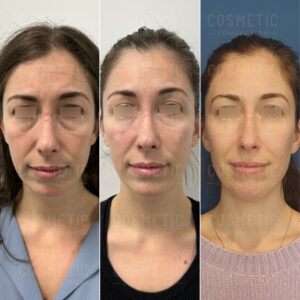
Before and after treatment for under eye and tear trough hollowness.
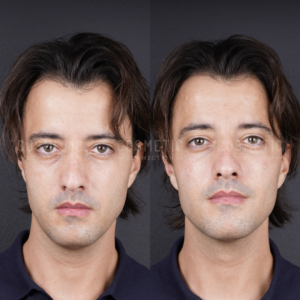
Before and after treatment for under eye and tear trough hollowness.
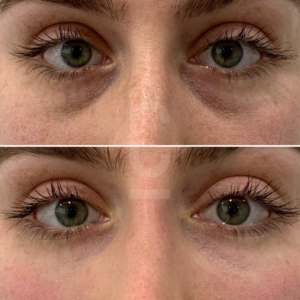
Before and after treatment for under eye and tear trough hollowness.
The results timeline: what to expect week by week
Results do not appear immediately. Understanding the normal progression helps avoid unnecessary concern in the days following treatment.
| Timeframe | What to expect |
|---|---|
| Day 1–2 | Swelling is common and often makes the area appear fuller or puffier than the intended result. Bruising may begin to appear. This is normal and does not reflect the final outcome. |
| Days 3–5 | Swelling begins to reduce. Bruising, if present, may look worse before it improves. The area may feel tender to the touch. |
| Days 7–10 | Most swelling has resolved. Bruising is typically resolving or faded. The result starts to become visible. |
| 2 weeks | For most people, this is when the final result is visible. Any asymmetry or minor irregularity that was present at one week should be reassessed now — not earlier. |
| 4–6 weeks | Product has fully settled. This is the appropriate time for a review appointment if there are any remaining concerns about the result. |
A 2024 meta-analysis published in Aesthetic Plastic Surgery, covering 2,556 participants across 31 studies, reported an overall patient satisfaction rate of 91%. In our clinical experience, satisfaction is closely correlated with managing expectations in the first two weeks — the period when the final result is not yet visible.
How long do results last?
The published literature reports a duration of effect ranging from 8 to 12 months for under eye treatment, with a widely cited average of approximately 10.8 months. Retrospective studies looking at longer follow-up periods suggest that meaningful improvement can persist beyond this range in some patients.
In our clinical practice, most people find results last 12 to 18 months before retreatment is considered. A minority maintain improvement for longer. The variables that influence longevity most significantly are:
- Individual metabolism: people who metabolise products more quickly will find results fade sooner
- Volume placed: conservative treatment tends to need retreating sooner than a more complete initial correction
- Lifestyle factors: significant weight change, high levels of UV exposure, and smoking can all accelerate the breakdown of placed product
- Combination treatment: addressing the mid-face and surrounding structure alongside the tear trough tends to produce more durable results than treating the under-eye area in isolation
If you are considering how this treatment fits into a longer-term plan, our post on under eye treatment suitability covers how individual anatomy affects both candidacy and longevity.
Why results vary between people
Two people with what looks like a similar tear trough concern can have very different results from the same treatment. This is not random — it reflects genuine anatomical variation that a proper assessment should account for before treatment begins.
Factors that influence how results appear and how long they last:
- Skin thickness and quality in the periorbital area
- The depth and width of the original hollow
- The degree of mid-face support beneath the treated area
- Whether the concern involves pigmentation, hollowing, or both
- Whether the patient is a first-time or repeat patient in this area
This is why before-and-after images from other patients — while useful for forming a general idea — are a poor predictor of what your result will look like. Your anatomy is specific, and the result depends on how well the treatment plan was matched to it.
[ctaForm]
How under eye results can be enhanced with combination treatment
Some of the best periorbital results we achieve at Cosmetic Connection come from combining under eye volume treatment with treatment that addresses the quality of the skin itself. Skin quality treatments such as Rejuran can improve the thickness, texture, and resilience of the lower eyelid skin before or alongside volume treatment — which improves both the result and how long it lasts.
Similarly, treating the mid-face as part of a broader facial balancing plan rather than in isolation tends to produce results that look more natural and require less frequent retreatment. The under-eye area is part of a connected structure — and treating it within that context produces the most cohesive outcomes.
For a full explanation of how treatment works, what it involves, and how much it costs, see our complete guide to under eye treatment.
[ctaForm]
Frequently asked questions
When will I see my final result after under eye treatment?
Most people can assess their final result at the two-week mark, once swelling has fully resolved. We recommend not judging the outcome before then — the area often looks different in the first week than it will at full settlement.
What if I do not like my result?
Under eye treatment using certain products is reversible. If a result is not what was hoped for — whether the result is too much, asymmetrical, or creates an unintended appearance — the product can be dissolved. This is a straightforward procedure, though it does require a separate appointment.
Will my results look natural?
When treatment is appropriately matched to the individual’s anatomy, results should look natural — not treated. The goal is a rested, refreshed appearance, not a visible change that draws attention to having had something done. Over-treatment in the under-eye area tends to produce an unnatural appearance and is one of the most common reasons for reversal requests. We take a conservative approach to volume in this area.
Do under eye results change when I smile?
Some people notice that volume beneath the eye becomes slightly more visible when they smile, as the cheek tissue rises and the lower eyelid compresses. This is normal anatomy and is not a complication. It should be discussed at your consultation so you know what to expect.
Can I top up my under eye treatment before it fully fades?
Yes. Some people prefer to maintain their result with smaller retreatment before the improvement has fully faded, rather than waiting until it is back to baseline. This approach is reasonable and is something to discuss with your clinician at your review appointment.
References
- Liu X, Gao Y, Ma J, Li J. (2024). The efficacy and safety of hyaluronic acid injection in tear trough deformity: a systematic review and meta-analysis. Aesthetic Plastic Surgery, 48(3), 478–490. https://link.springer.com/article/10.1007/s00266-023-03613-7
- Long-term effects of tear trough hyaluronic acid filler: a retrospective study. (2025). Journal of Clinical and Aesthetic Dermatology. https://jcadonline.com/long-term-effects-of-tear-trough-hyaluronic-acid-filler-a-retrospective-study/
- Rao BK, Berger LE, Reilly C, Alamgir M, Galadari H. (2022). Tear trough filler techniques utilizing hyaluronic acid: a systematic review. Plastic and Reconstructive Surgery, 149(5), 1079–1087.
Provider selection matters for most non-surgical cosmetic treatments. For under eye treatment, it matters more than almost anywhere else. The anatomy is complex, the tissue is unforgiving, and the consequences of treatment placed incorrectly are visible, difficult to correct, and sometimes permanent. Choosing well is the single most important thing you can do to protect your outcome.
This post sets out exactly what to look for — and what to be cautious about — when choosing a provider for under eye treatment.
Quick answer
The most important factors when choosing a provider for under eye treatment are medical qualification, specific experience in periorbital anatomy, a suitability-first approach, transparent flat-fee pricing, and the presence of reversal agents on-site. The under-eye area is not an appropriate zone for treatment by less experienced clinicians, and cost should be a secondary consideration to clinical credentials.
Why provider selection matters more here than elsewhere
The tear trough sits at the convergence of several anatomical risks. The skin is the thinnest on the face. The blood vessels in the periorbital region include branches that connect to the ophthalmic circulation. The tissue holds product differently than other areas of the face, and the margin between a subtle, natural result and a visible complication is narrow.
A 2024 meta-analysis published in Aesthetic Plastic Surgery reported complication rates including contour irregularities in 5.3% of cases and visible skin discolouration in 0.9%. These are averages. They do not represent what happens in the hands of every provider equally — and the evidence consistently shows that complication rates are significantly influenced by clinician experience and product selection.
The risk profile of under eye treatment is manageable in skilled hands and disproportionately elevated in less experienced ones.
The most important selection criteria
1. Medical qualification and periorbital-specific experience
Not all medical practitioners are equally trained for this treatment zone. A general cosmetic nurse or injector with broad facial experience is not the same as a clinician who has developed specific competence in periorbital anatomy and under-eye treatment. Ask directly:
- What is your medical qualification?
- How many under eye treatments do you perform per month?
- What training have you done specifically in the periorbital area?
An experienced, medically qualified clinician should answer these questions without hesitation. A provider who deflects or gives vague answers to qualification questions is a meaningful warning sign.
2. A genuine suitability-first approach
One of the clearest markers of a responsible provider is a willingness to say no. Under eye treatment is not suitable for everyone, and a clinic that proceeds with everyone who presents — without conducting a real suitability assessment — is prioritising revenue over outcomes.
At consultation, a proper assessment should include evaluation of your lower eyelid skin quality, the depth and character of your tear trough, the presence or absence of orbital fat herniation, and the structural support of your mid-face. If a clinician proceeds to treat you without examining these things, that is a warning sign.
For a detailed breakdown of who is and is not well-suited to this treatment, see our post on under eye treatment suitability.
3. Reversal agents on-site
The most commonly used products for under eye treatment can be dissolved quickly if a complication arises. But this only matters if the clinic actually carries the dissolving agent on-site and the clinician knows how to use it. Ask this directly. The answer tells you something important about how the clinic approaches safety.
4. Transparent, flat-fee pricing
Per-mL pricing models are common in cosmetic treatment, but they are particularly problematic for under eye treatment — where the amount of product used can shift during a session and the final cost may be significantly higher than the opening number. A flat fee for the full treatment, confirmed before anything begins, is the clearest pricing model and the most transparent for the patient.
For a full breakdown of what drives cost variation and how to compare quotes accurately, see our post on under eye treatment costs in Australia.
5. A defined follow-up and outcomes policy
Ask what happens if you are not satisfied with the result. A provider who offers no follow-up, has no outcomes policy, and will not discuss correction is not one who will stand behind their work. A two-week review appointment is standard practice at a responsible clinic, and a clear policy on how complications and unsatisfactory results are managed should be something you can understand before you commit.
Red flags: what to be cautious about
| Red flag | Why it matters |
|---|---|
| Pricing significantly below market ($500–$900) | Under-eye treatment at this price point almost always reflects either an inexperienced clinician, an inappropriate product, or a per-mL model where the final cost will escalate |
| No consultation before treatment proceeds | A same-day consultation-and-treat model does not allow for proper suitability assessment |
| Treating everyone who presents | Responsible providers decline some patients. A 100% treatment rate signals that suitability is not being genuinely assessed |
| Unable to answer questions about qualifications | Experienced, qualified clinicians are transparent about their training and credentials |
| No reversal agents on-site | This is a basic safety standard for any provider working in the periorbital area |
| Before-and-after images with no visible variation in outcomes | Real clinical results vary. Curated galleries showing only perfect outcomes may not reflect the full picture |
[ctaForm]
How a doctor-led approach changes the risk profile
Under eye treatment in a doctor-led clinic differs from the same treatment in a nurse-led or beauty-focused setting in ways that materially affect your risk. Doctors bring a deeper understanding of anatomy, a broader capacity to manage complications, and a higher regulatory standard of accountability for clinical decision-making.
At Cosmetic Connection, our doctor-led approach means that clinical decisions — including the decision not to treat — are made by practitioners who understand the full anatomical picture and operate under the standards expected of medical professionals. Treatment is concern-based and suitability-first, not appointment-focused.
This matters beyond the under-eye area. If you are interested in other facial concerns — whether that is the nose, jawline, lips, or a non-surgical rhinoplasty — the same clinical standards apply across every treatment we offer.
Questions to ask at your consultation
Before committing to any provider for under eye treatment, ask these questions and note how they are answered:
- What is your medical qualification and how many under eye treatments do you perform per month?
- Do you carry reversal agents on-site?
- What is your pricing model — flat fee or per mL?
- What does your suitability assessment involve, and do you ever decline to treat?
- What is your policy if I am not satisfied with the result?
- Do you offer a follow-up review appointment, and is it included in the cost?
These are not difficult questions. A provider who answers them confidently and directly is one who has thought about these things. One who hedges, deflects, or becomes defensive is giving you useful information.
To understand more about the complete treatment — how it works, what results look like, and what the experience involves — see our complete guide to under eye treatment.
[ctaForm]
Frequently asked questions
Can a nurse perform under eye treatment safely?
Registered nurses with specific advanced training in periorbital anatomy can perform this treatment. The credential alone is less important than the specific training and experience in this treatment zone. Ask directly about periorbital-specific training and volume of experience, not just general qualifications.
Is a cosmetic clinic the same as a medical clinic for this treatment?
Not necessarily. The term “cosmetic clinic” covers a wide range of settings — from doctor-led medical practices to beauty salons offering cosmetic treatments. What matters is the qualification and specific experience of the person performing your treatment, and whether the clinical infrastructure — including reversal agents and complication management protocols — is in place.
How do I know if before-and-after photos are a reliable indicator of a clinic’s results?
Before-and-after galleries show selected outcomes. To get a more realistic picture, look for a range of results — not only the most dramatic improvements — and ask whether the photos were taken at one week or at full settlement (typically two to four weeks). Results at one week often look different from final outcomes.
Does it matter if a clinic is TGA compliant?
Yes. TGA compliance in advertising reflects a clinic’s broader relationship with regulatory standards. A clinic that makes inflated or misleading claims in its marketing is giving you information about how it operates generally.
Should I go to the cheapest provider I can find for this treatment?
We would strongly advise against making cost the primary selection criterion for under eye treatment. The cost of correcting a poorly performed result — including reversal, repeat treatment, and in some cases long-term management — can far exceed the difference between a budget provider and an experienced clinician. For this specific treatment area, the investment in the right provider is genuinely meaningful.
References
- Liu X, Gao Y, Ma J, Li J. (2024). The efficacy and safety of hyaluronic acid injection in tear trough deformity: a systematic review and meta-analysis. Aesthetic Plastic Surgery, 48(3), 478–490. https://link.springer.com/article/10.1007/s00266-023-03613-7
- Rao BK, Berger LE, Reilly C, Alamgir M, Galadari H. (2022). Tear trough filler techniques utilizing hyaluronic acid: a systematic review. Plastic and Reconstructive Surgery, 149(5), 1079–1087.
- Yip J et al. (2024). Anti-aging trends in Australia. Journal of the European Academy of Dermatology and Venereology. https://onlinelibrary.wiley.com/doi/abs/10.1111/jdv.19647
Cheek treatment does not lift jowls. This is a claim that circulates widely in cosmetic medicine — and it’s inaccurate in a way that sets patients up for disappointment. What cheek volume treatment can do is improve the appearance of the lower face by rebalancing facial proportions. That’s a real and meaningful effect, but it’s not the same thing as a lift — and understanding the difference matters before you book a consultation.
Quick answer: Cheek volume treatment improves the proportional relationship between the mid-face and lower face, which can make jowls appear less prominent by restoring balance to the overall face. It does not mechanically lift or tighten jowl tissue. If jowls are your primary concern, the most appropriate treatment is one that directly addresses the lower face — not the cheeks.
Where the “cheek filler lifts jowls” claim comes from
The idea that cheek treatment lifts the jowls emerged from early theoretical models in cosmetic medicine that proposed a mechanical relationship between mid-face volume and lower face tissue position. The reasoning was intuitive: if you restore structural support higher up the face, the tissue below it might follow.
Clinical experience and a more precise understanding of facial anatomy have since shown this to be an oversimplification. The soft tissue compartments of the face are separated by retaining ligaments and fascial planes — they don’t behave like a curtain that lifts when you pull the fabric higher up. Adding volume to the mid-face does not transmit a lifting force to the jowl fat pads or lower face tissue. The two regions are structurally independent in this respect.
What does change is the visual impression created by better mid-face proportion. And that’s a real, documented, clinically meaningful effect — just not a mechanical lift.
What cheek treatment actually does for the lower face
The lower face and mid-face are visually connected even though they’re structurally independent. When the mid-face loses volume, several things happen simultaneously that affect how the lower face reads:
- The cheeks flatten and lose projection, removing the structural visual anchor of the mid-face
- The nasolabial folds deepen as the tissue transition between mid-face and lower face loses support
- The relative prominence of the lower face — including the jowls — increases as the mid-face recedes
- The face as a whole takes on a bottom-heavy appearance
When cheek volume is restored, these relationships shift. The mid-face regains its structural visual presence. The nasolabial folds appear softer because the transition above them has improved. The lower face looks more proportionate because it’s now being compared to a fuller mid-face rather than a depleted one. The jowls may appear less prominent — not because they’ve moved, but because the face is now more balanced overall.
This is a proportional rebalancing effect. It’s real, it’s visible, and patients consistently notice it. But it is not a lift, and it does not substitute for treatment that directly addresses the lower face when that’s where the primary concern lies.
Age-related mid-face fat compartment changes involve both volume loss and inferior migration — the tissue shifts downward rather than simply depleting. This pattern explains why restoring mid-face volume produces a visual rebalancing effect: you’re partially reversing the upward-to-lower redistribution that has occurred over time. The effect on the lower face is perceptual, not structural.
What actually causes jowls
Understanding what produces jowls is the clearest way to understand why cheek treatment cannot address them directly.
Jowls form through a combination of:
- Skin laxity — reduction in collagen and elastin causes the skin to lose its ability to resist the downward pull of gravity
- Fat pad descent — specific jowl fat pads descend below the mandibular border over time, creating the characteristic lower face heaviness
- Bone resorption — the mandible reduces in size and projection with age, reducing the structural scaffold that holds overlying tissue in position
- Ligament relaxation — the retaining ligaments that hold facial tissue in place lose tension with age, allowing downward migration
None of these mechanisms are influenced by adding volume to the cheeks. Skin laxity, fat pad descent, bony atrophy, and ligament relaxation require treatment approaches directed at the lower face — not the mid-face.
When cheek treatment is and isn’t the right conversation
The most important clinical determination is whether jowls are the primary concern or a secondary concern that sits alongside mid-face changes.
| Presentation | Primary treatment consideration | Role of cheek treatment |
|---|---|---|
| Mid-face volume loss with some lower face heaviness | Cheek volume treatment | Primary — proportional rebalancing will influence lower face appearance |
| Jowls as primary concern with good mid-face volume | Jowl contouring treatment | Not indicated — cheek treatment will not address the concern |
| Both mid-face and lower face concerns | Combined approach — cheeks and jowls addressed as a plan | Supportive — addresses mid-face component while lower face is treated directly |
| Significant skin laxity with jowling | Surgical assessment warranted | Limited — non-surgical treatment has ceilings in the context of significant laxity |
The pattern we see most commonly in practice is a patient with genuine mid-face volume loss who is also noticing the lower face becoming heavier, and who has heard that cheek treatment will address both. In these cases, restoring mid-face volume does produce a meaningful improvement in how the lower face reads — but it should be presented honestly as a proportional effect, not a jowl treatment.
For patients where jowls are a standalone or primary concern, the appropriate starting point is a consultation that considers the lower face directly. Our jowl contouring and lifting treatment page explains what non-surgical lower face treatment involves. For patients considering the face more broadly, our facial balancing guide provides a framework for thinking about how different areas relate to each other — which is often the more useful starting point than focusing on a single feature.
[ctaForm]
Non-surgical options that directly address jowls
Where jowls are a genuine concern — either as a standalone issue or alongside mid-face changes — the non-surgical options that directly address the lower face include:
Jowl contouring treatment
Prescription medicines placed strategically along the mandibular border and pre-jowl area can restore definition to the jawline and reduce the visual prominence of jowls by improving the transition between the lower face and jaw. This approach addresses the contour rather than the laxity, and works best in patients with early to moderate jowling rather than significant skin laxity. For a full overview, see our jowl contouring treatment page.
Collagen stimulating treatment
For patients with early to moderate skin laxity contributing to jowling, collagen stimulating treatments can improve skin quality and tissue support over time. Results develop gradually and are not as immediately dramatic as direct contouring, but can complement contouring treatment in a combined plan.
Surgical facelift
For patients with significant jowling and skin laxity, non-surgical options have real limitations. A surgical facelift is the most effective intervention for significant lower face descent and is worth discussing with a plastic surgeon if the degree of concern is significant. This is a conversation we have openly at consultation — we don’t recommend non-surgical treatment where surgery is clearly the more appropriate answer.
What to ask at your consultation
If you’re attending a cheek treatment consultation with jowl concerns, the questions worth asking directly are:
- Is mid-face volume loss genuinely contributing to how my lower face looks — or are the jowls an independent concern?
- If I have cheek treatment, what realistic change can I expect in the appearance of my lower face?
- Is my lower face concern best addressed in the cheeks, the lower face directly, or both?
- Are there limits to what non-surgical treatment can achieve for my degree of jowling?
A clinician who answers these questions directly — including acknowledging the limits of what cheek treatment can do — is one whose recommendations you can trust. A clinician who tells you cheek treatment will lift your jowls without qualification is telling you something that isn’t accurate.
At Cosmetic Connection, this kind of direct, honest assessment is the standard we hold at every consultation. You can read more about our approach on our our difference page, and find our clinic locations at our locations page.
For a complete overview of cheek volume treatment — including its benefits for mid-face proportion and what results look like — see our cheek volume treatment guide. For patients considering whether to start with the cheeks or the lower face, our facial balancing guide provides a useful way to think about the face as a whole.
[ctaForm]
Frequently asked questions
Will cheek treatment make my jowls look better?
It may — but not by lifting them. If mid-face volume loss is contributing to a bottom-heavy appearance, restoring that volume rebalances the proportional relationship between the mid-face and lower face. Jowls can appear less prominent as a result. This is a visual effect produced by better overall facial balance, not a structural change to the jowl tissue itself. If jowls are your primary concern, a lower-face-specific treatment is more likely to produce meaningful change.
Why do some clinics say cheek filler lifts jowls?
The claim originated from early theoretical models in cosmetic medicine that have since been shown to be an oversimplification. The facial soft tissue compartments don’t behave in a way that allows volume in the mid-face to mechanically lift tissue in the lower face. What clinicians often observe — and sometimes describe loosely as a lift — is the proportional rebalancing effect described above. The distinction is clinically important and worth asking your treating doctor to explain clearly.
What’s the best non-surgical treatment for jowls?
For early to moderate jowling, lower face contouring using prescription medicines along the mandibular border is the most direct non-surgical approach. Collagen stimulating treatments can complement this where skin laxity is a contributing factor. For significant jowling with meaningful skin laxity, non-surgical treatments have real limitations and a surgical consultation is worth pursuing. The appropriate answer depends on the individual’s degree of concern and anatomy — which is why an in-person assessment is always the first step.
Can you treat both the cheeks and jowls at the same appointment?
Yes — and in cases where both mid-face volume loss and lower face jowling are present, addressing them together as part of a treatment plan often produces a more cohesive result than treating either area in isolation. The consultation determines which areas are contributing most to the concern, what the appropriate approach for each is, and what the treatment plan looks like across one or more appointments.
Is there a non-surgical treatment that actually lifts the face?
Non-surgical treatments can improve the appearance of facial support and contour — but the term “lift” as applied to non-surgical treatment is often used loosely and should be understood as a visual or proportional effect rather than a mechanical one. Procedures that directly tighten skin or repositions tissue require surgical intervention. Non-surgical options produce meaningful cosmetic improvement within their appropriate scope — the key is having an honest assessment of what that scope is for your specific concern.
Masseter treatment is a non-surgical procedure that reduces the size of the masseter muscles — the chewing muscles on either side of the jaw — to slim the lower face and soften a square or wide jawline. It is one of the most requested facial contouring procedures in Australia, used for both cosmetic and functional purposes. This page explains what the treatment involves, how it works, who it suits, and what to expect.
Quick answer: Masseter treatment involves placing a muscle-relaxing treatment into the masseter muscles on both sides of the jaw. This reduces the muscle’s activity and, over several weeks, causes it to gradually reduce in size. The result is a slimmer, more tapered jawline. Sessions take around 15 minutes and require no downtime.
What is the masseter muscle?
The masseter is a powerful jaw muscle on either side of the face, running from the cheekbone down to the lower jaw. Its primary function is chewing — it generates the biting force needed to break down food. It is one of the strongest muscles in the body relative to its cross-sectional area.
In some people, the masseter is naturally large. In others, it grows larger over time as a result of teeth grinding, jaw clenching, habitual gum chewing, or a diet high in hard foods. When the masseter is enlarged, it widens the lower face and can create the appearance of a square or heavy jaw.
Understanding how the masseter muscle works and why it enlarges is useful context before considering treatment — it explains why non-surgical treatment can be effective for some people and less so for others.
How does masseter treatment work?
Masseter treatment uses a prescription muscle-relaxing treatment placed directly into the masseter muscle on both sides of the face. The active agent is a muscle-relaxing substance that temporarily reduces the muscle’s ability to contract with full force.
With reduced activity, the masseter undergoes disuse atrophy — it gradually reduces in bulk over the weeks following treatment. This is the same biological process by which any muscle reduces in size when it is used less. The treatment does not cause sudden or dramatic change. The muscle reduces slowly, which is part of why results look natural.
The effect is temporary. The muscle’s nerve supply regenerates over time, and without further treatment, the muscle will return to its original size. Most people begin maintenance treatment before this happens. For a more detailed explanation of the mechanism, our guide on how masseter treatment works at a cellular level goes deeper on the biology.
What is masseter treatment used for?
The procedure has two main applications that often overlap in the same patient.
Cosmetic jawline slimming — reducing the visual width of the lower face to create a slimmer, more tapered profile. This is the most common reason people seek treatment. It is particularly well suited to people with a square face shape where the width comes primarily from muscle bulk rather than bone structure.
Jaw clenching and bruxism management — reducing the force generated by the masseter to decrease the effects of teeth grinding and jaw clenching. This can alleviate associated symptoms including jaw tension, headaches, and tooth wear. Our guide to bruxism and jaw clenching treatment covers this in detail.
Both applications use the same treatment. The indication — cosmetic, functional, or both — shapes the consultation and the treatment plan, but the procedure itself is the same.
What happens at a masseter treatment session?
A session at Cosmetic Connection begins with a suitability assessment. We assess the size and activity of your masseter muscles, confirm that non-surgical treatment is appropriate for your goals, and explain what to expect in realistic terms — including the timeline for results and how many sessions you are likely to need.
The treatment itself takes ten to fifteen minutes. A fine needle is used to place the muscle-relaxing treatment into the masseter on both sides. Most people describe the discomfort as minimal. There is no anaesthesia required and no downtime — you can return to normal activities immediately.
For a full account of what the session involves, our step-by-step masseter treatment guide covers the process from consultation through to the full results timeline.
[ctaForm]
What results can you expect and how long do they last?
Results develop gradually and are not visible immediately after the session. Most people notice early softening at four to six weeks, with more visible slimming continuing over the following two to three months as the muscle reduces in bulk.
Initial results typically last four to six months before the muscle begins to return to its original size. With consistent treatment over multiple sessions, many people find that the degree of slimming improves and the interval between treatments can extend. Some reach a point where one or two sessions per year maintains their result.
| Timeframe after treatment | What to expect |
|---|---|
| 0–2 weeks | No visible change; reduced muscle contractile activity begins |
| 4–6 weeks | Early softening becomes noticeable at the jaw angle |
| 2–4 months | Progressive slimming; full result developing |
| 4–6 months | Peak result; early signs of muscle recovery begin |
| 6–9 months without re-treatment | Muscle returns toward original size |
Our masseter treatment results guide shows what realistic outcomes look like across different starting points and across multiple sessions.
Who is masseter treatment suited to?
Masseter treatment is suited to people whose jaw width or squareness is driven primarily by masseter muscle bulk — either naturally large muscles, or muscles that have enlarged over time due to clenching, grinding, or other parafunctional habits.
It is less effective where jaw width comes primarily from bone structure. A clinical assessment establishes which factor is dominant in your case.
Treatment is available to adults in good health. It is not appropriate during pregnancy or breastfeeding, and certain neuromuscular conditions affect suitability. These are discussed at consultation.
For a detailed breakdown of suitability criteria — including how to tell whether your jaw width is muscle or bone driven — our suitability guide for masseter treatment covers the assessment criteria in full.
How does masseter treatment compare to surgical jaw reduction?
Surgical jaw reduction physically reshapes the jaw bone and is permanent. Non-surgical masseter treatment reduces muscle bulk and is temporary but reversible. For most people, the cause of jaw width is muscle — not bone — which makes non-surgical treatment the appropriate first step.
Surgery is generally considered only when bone structure is the dominant driver of jaw width and when the risks of surgery are clearly outweighed by the anticipated outcome. The risk profile of surgical jaw reduction — including nerve damage, general anaesthesia, and a recovery measured in months — is significantly higher than non-surgical treatment.
Our detailed comparison of masseter treatment and jaw reduction surgery covers how to make this decision, including a side-by-side breakdown of cost, recovery, risk, and who each option suits.
How much does masseter treatment cost in Australia?
Non-surgical masseter treatment in Australia ranges from $600 to $1,500 per session, depending on the extent of treatment required and the clinic’s pricing model.
The most important pricing distinction to understand is flat-fee versus per-unit pricing. Per-unit pricing means the final cost depends on how many units are used — which can vary between patients and may result in a higher bill than initially quoted. At Cosmetic Connection, we use a flat-fee model — one cost, confirmed before your appointment, with no add-ons.
Our facial slimming treatment cost guide covers the full pricing landscape in Australia, including what drives cost variation and how to compare clinics on more than just price.
[ctaForm]
Masseter treatment in Sydney and Melbourne
Cosmetic Connection offers masseter treatment at our Sydney clinic in St Leonards and our Melbourne clinic in Toorak. Both operate under the same doctor-led model and flat-fee pricing structure.
Visit our locations page for address details, or read the city-specific guides above for information about what to expect at each location.
Frequently asked questions
Is masseter treatment the same as jaw botox?
Yes — “jaw botox”, “masseter botox”, “jaw slimming treatment”, and “masseter treatment” all refer to the same procedure: a muscle-relaxing treatment placed into the masseter muscles to reduce their size and slim the lower face. The terminology differs but the treatment is the same.
How is masseter treatment different from facial slimming?
Masseter treatment is the primary tool in non-surgical facial slimming. “Facial slimming” refers to the broader goal — a slimmer, more defined lower face — while “masseter treatment” refers to the specific procedure used to achieve it. Our complete facial slimming guide explains how masseter treatment fits into a broader facial contouring plan.
How long before I see results?
Early softening is typically noticeable at four to six weeks. The full slimming effect may need multiple sessions, and can develop over 3-6 months as the muscle gradually reduces in bulk with prolonged relaxation. Results begin to fade after five to six months without re-treatment.
Is masseter treatment painful?
Most people describe it as mildly uncomfortable rather than painful. The needle is fine and the treatment is brief. Some people choose topical numbing cream beforehand, though most find it unnecessary. Our guide on treatment discomfort covers this in detail.
What are the side effects?
Common side effects are mild and temporary — bruising, tenderness, and minor swelling at the treatment sites, typically resolving within a few days. Less common effects include temporary asymmetry or reduced chewing strength. Serious adverse events are rare when treatment is administered by an experienced medical practitioner. Our masseter side effects guide covers the full risk profile.
Masseter botox — the use of botulinum toxin injections to reduce the size of the masseter muscles and slim the jawline — is one of the most commonly searched cosmetic procedures in Australia. This educational guide explains what the treatment involves, how botulinum toxin works on muscle tissue, what results look like, how long they last, and what the risks are. It is written as a clinical reference, not as promotional material.
What is masseter botox? Masseter botox refers to the use of botulinum toxin — a prescription muscle-relaxing agent — injected into the masseter muscles on either side of the jaw. The toxin temporarily reduces the muscle’s ability to contract, causing it to gradually reduce in size over several weeks. The result is a slimmer, more tapered jawline. The treatment is also used to address jaw clenching (bruxism) and related tension headaches.
What is botulinum toxin and how does it work on the masseter?
Botulinum toxin is a purified protein derived from the bacterium Clostridium botulinum. In clinical use, it is produced under controlled pharmaceutical conditions and administered in highly precise, small-volume doses. It is classified as a Schedule 4 prescription medication in Australia and may only be prescribed and administered by registered medical practitioners.
When injected into the masseter muscle, botulinum toxin binds to the nerve terminals that signal the muscle to contract. This temporarily reduces the muscle’s ability to generate force. With reduced activity, the muscle undergoes a process called disuse atrophy — it gradually reduces in bulk over the weeks following treatment.
The degree of atrophy depends on the baseline size of the muscle, the dose administered, and individual physiology. The effect is not permanent — the nerve terminal regenerates over time, the muscle regains its full contractile capacity, and without re-treatment, the muscle returns to its original size.
This mechanism is well established. Botulinum toxin has been used clinically for decades across a range of medical and cosmetic applications, including the treatment of movement disorders, hyperhidrosis, migraine, and facial aesthetics.
Masseter botox vs jaw botox — are they the same thing?
Yes. “Masseter botox”, “jaw botox”, “botox jaw slimming”, and “botox face slimming” all refer to the same procedure — botulinum toxin injections into the masseter muscles for the purpose of facial slimming or jaw clenching management. The terminology varies by how the person conceptualises the treatment (by anatomical structure, by treatment type, or by aesthetic outcome) but the procedure is the same.
Some practitioners distinguish between treatment aimed primarily at cosmetic jawline slimming and treatment aimed primarily at managing bruxism (jaw clenching and grinding). In practice, these are delivered identically — the difference is in the clinical indication and the conversation at consultation, not the treatment itself.
What botulinum toxin products are used for masseter treatment in Australia?
Several botulinum toxin products are approved by the Therapeutic Goods Administration (TGA) for clinical use in Australia. The brands most commonly used in cosmetic practice include Botox (onabotulinumtoxinA, manufactured by Allergan/AbbVie), Dysport (abobotulinumtoxinA, manufactured by Galderma), and Xeomin (incobotulinumtoxinA, manufactured by Merz). Each has slightly different unit potencies and clinical profiles, though all share the same general mechanism of action.
None of these products are TGA-approved specifically for cosmetic masseter reduction — this is an off-label use. Off-label prescribing by registered medical practitioners is legal and common in Australian clinical practice, provided appropriate informed consent is obtained and the prescriber has satisfied themselves of the safety and clinical rationale for the use.
Botulinum toxin products used in cosmetic practice in Australia are Schedule 4 prescription-only medications. They cannot legally be administered by individuals who are not registered medical practitioners, or prescribed for cosmetic purposes via a telehealth-only pathway without an in-person consultation requirement under current TGA guidelines.
What does masseter botox treat? Clinical indications
Botulinum toxin injection into the masseter is used for two distinct clinical purposes, which often overlap:
| Indication | Clinical description | Notes |
|---|---|---|
| Cosmetic masseter reduction | Reduction of masseter muscle bulk to slim the lower face and soften a square or wide jawline | Off-label TGA use; requires medical prescription |
| Bruxism management | Reduction of masseter muscle force to decrease teeth grinding, jaw clenching, and associated TMJ symptoms | Off-label TGA use; may have partial private health coverage in some cases |
| Masseteric hypertrophy | Treatment of clinically enlarged masseter due to habitual clenching, parafunctional habits, or idiopathic muscle growth | Can have both cosmetic and functional overlap |
In clinical practice, these indications are not always cleanly separated. Many patients presenting for jaw botox for cosmetic reasons also have a history of jaw clenching — and vice versa. A comprehensive consultation addresses both dimensions.
Dosing for masseter botox — what the evidence base says
Dosing for masseter botox varies significantly between patients and practitioners. There is no single universally agreed dose — published clinical practice ranges are broad, and appropriate dosing depends on the size of the muscle, the desired degree of reduction, the product used, and the practitioner’s clinical experience.
In general terms, higher-volume masseter muscles require higher doses to achieve meaningful reduction. Underdosing is the most common clinical error — producing minimal cosmetic effect without meaningful atrophy. Overdosing can produce excessive weakness in surrounding muscles, including those involved in chewing strength, and in rare cases can affect the zygomaticus minor, causing a change in smile shape.
Most published clinical protocols suggest dosing ranges of 20–100 units of onabotulinumtoxinA (Botox) per side for masseter reduction, with typical clinical doses in the 25–50 unit range per side for moderate to significant muscles. AbobotulinumtoxinA (Dysport) has a different unit conversion ratio — doses are not interchangeable between products.
What does masseter botox feel like? The patient experience
The procedure is brief — most sessions take ten to fifteen minutes. The patient is typically seated upright. The masseter is palpated to confirm its location and size, and treatment points are marked. A fine-gauge needle delivers the botulinum toxin into the muscle at multiple points per side.
Most patients describe the sensation as a mild sharp pinch, repeated several times per side. Topical numbing cream can be applied beforehand but is not routinely required. Some patients experience temporary jaw achiness or tightness in the hours following treatment, which resolves without intervention.
Immediate post-treatment effects may include minor swelling, redness, or bruising at the injection sites. These are temporary and typically resolve within a few days.
Masseter botox results — timeline and expectations
Results from masseter botox do not appear immediately. The timeline is as follows:
| Timeframe | Expected change |
|---|---|
| 0–2 weeks | No visible change; reduced muscle contractile force begins |
| 4–6 weeks | Early softening of the jaw angle becomes noticeable |
| 2–4 months | Progressive muscle atrophy; most noticeable slimming effect |
| 4–6 months | Peak result; onset of muscle recovery begins |
| 6–9 months | Results fade without re-treatment; muscle returns toward original size |
With repeated treatment over multiple cycles, many patients experience cumulative reduction — the muscle does not fully recover between sessions and gradually reduces in overall size. This is why many experienced practitioners and patients report that the interval between treatments can extend over time.
Risks and side effects of masseter botox
Masseter botox has a well-established safety profile when administered by an experienced medical practitioner. Adverse effects fall into three categories:
Common and expected
- Bruising or redness at injection sites — typically resolves within 3–7 days
- Mild jaw achiness or tenderness — resolves within 24–48 hours
- Minor swelling — transient
Uncommon but documented
- Temporary asymmetry — where one side responds differently from the other; typically addressed at review
- Reduced chewing strength — can occur with higher doses; usually transient and resolves as dosing is refined
- Headache — uncommon; typically within the first 24 hours
Rare and serious
- Diffusion to adjacent muscles — in rare cases, spread to nearby facial muscles can cause temporary changes in smile shape or facial expression. Risk is substantially reduced with accurate anatomical knowledge and appropriate placement technique
- Allergic reaction — rare; standard anaphylaxis protocols apply
- Paradoxical increase in jaw tension — occasionally reported; mechanism unclear
Serious adverse events from masseter botox in medically supervised settings are uncommon. The risk profile compares favourably to the alternative of surgical jaw reduction, which carries substantially greater risk including nerve damage, anaesthesia complications, and irreversible structural change.
Who should not have masseter botox?
Contraindications to botulinum toxin treatment include:
- Pregnancy and breastfeeding
- Neuromuscular conditions including myasthenia gravis, Lambert-Eaton syndrome, and amyotrophic lateral sclerosis
- Known hypersensitivity to botulinum toxin or any formulation component
- Active infection at or near the proposed treatment site
- Concurrent use of aminoglycoside antibiotics or other agents that potentiate neuromuscular blockade
- Unrealistic expectations regarding the degree of change achievable
Where jaw width is driven primarily by bone structure rather than muscle bulk, masseter botox will produce limited cosmetic improvement — not because of a safety concern, but because the treatment addresses muscle, not bone. This is assessed clinically at consultation.
Regulatory framework in Australia
Botulinum toxin is a Schedule 4 (prescription only) medication under Australian law. Its advertising to consumers is strictly regulated by the Therapeutic Goods Administration (TGA). Under current TGA guidelines, registered medical practitioners may not advertise prescription-only cosmetic treatments by product name, claim, or implication in consumer-facing materials.
This is why most Australian cosmetic clinics refer to “masseter treatment”, “muscle-relaxing treatments”, or “facial slimming treatment” rather than “botox” in their published content — not because the treatment is different, but because naming the substance in an advertising context breaches TGA advertising standards.
The TGA’s advertising guidance is available at: https://www.tga.gov.au/resources/resource/guidance/advertising-guidance-therapeutic-goods-advertisers
The Medical Board of Australia’s guidelines for registered medical practitioners performing cosmetic procedures are available at: https://www.medicalboard.gov.au/Codes-Guidelines-Policies/Cosmetic-procedures-guidelines.aspx
Further reading — masseter and facial slimming treatment
The following pages provide detailed clinical information on specific aspects of masseter and facial slimming treatment in Australia:
- Complete facial slimming treatment guide — full overview of non-surgical facial slimming, who it suits, and what to expect
- Masseter muscle anatomy and function — how the masseter muscle works and why it enlarges
- How masseter treatment works — the mechanism of muscle-relaxing treatment in the masseter
- Masseter treatment vs jaw reduction surgery — how to choose between non-surgical and surgical options
- Masseter treatment suitability for round and square face shapes — who is a good candidate and how anatomy is assessed
- Masseter treatment in Melbourne — what to expect at a Melbourne clinic
- Masseter treatment in Sydney — what to expect at a Sydney clinic
- Facial slimming treatment costs in Australia — price ranges, what influences cost, and how to compare clinics
- Masseter treatment results — what to expect across initial and repeat sessions
- Masseter treatment side effects — full risk profile and what to do if something goes wrong
- Masseter treatment recovery guide — timeline and aftercare
- Does masseter treatment hurt? — comfort, numbing, and what the procedure feels like
- Masseter treatment step by step — what happens from arrival to full results
- Benefits of masseter treatment — cosmetic and functional outcomes
- Jaw clenching, bruxism, and TMJ treatment — when masseter treatment is used for functional rather than cosmetic purposes
- Masseter treatment vs other facial slimming options — how non-surgical jaw slimming compares to other non-surgical alternatives
- Masseter treatment FAQ — comprehensive answers to common questions
- Masseter jaw slimming — treatment page — service information at Cosmetic Connection
- Facial slimming — treatment page — facial slimming service overview
Melbourne patients looking to slim a square or wide jawline have access to non-surgical masseter treatment at Cosmetic Connection’s Melbourne clinic. This page covers how the treatment works, who it suits, what a session involves, and how to find the right provider in Melbourne — so you can make an informed decision before you book.
Quick answer: Masseter treatment in Melbourne involves a series of small muscle-relaxing treatments placed into the masseter muscles on either side of the jaw. It reduces muscle bulk over several weeks, slimming the lower face without surgery or downtime. Sessions take around 15 minutes, and results develop over four to eight weeks.
What is masseter treatment and what does it do?
The masseter is a chewing muscle on either side of the jaw. When this muscle is enlarged — either naturally or from habits like teeth grinding and jaw clenching — it can make the lower face appear wider or squarer than it otherwise would.
Masseter treatment works by reducing the activity of the masseter muscle, which over time causes the muscle to reduce in size. The result is a slimmer, more tapered jawline that looks natural — not like anything has been “done”.
It is worth being clear about what the treatment does not do: it does not change bone structure. If a wide jaw is primarily driven by the shape of the jaw bone itself, masseter treatment will produce limited results. In our experience, most people presenting with jaw width concerns have muscle as the primary or dominant contributor, but this is confirmed at consultation. If you want to understand more about how to tell the difference, our guide on masseter treatment vs jaw reduction surgery explains this clearly.
Who is masseter treatment suited to in Melbourne?
Masseter treatment suits a broad range of people. The common thread is a desire to slim or soften the lower face without surgery — the specific reason varies.
Some people have always had a wide jawline and simply prefer the look of a more tapered lower face. Others have developed a wider jaw over time due to teeth grinding (bruxism) or persistent jaw clenching, often linked to stress. For this group, treatment addresses both the cosmetic appearance and, in many cases, the associated tension headaches and jaw discomfort.
Others are motivated by facial balance — they find that a prominent jaw detracts from other features they like, or creates a bottom-heavy proportion in the face. This is where masseter treatment often works particularly well in combination with other treatments. Our facial slimming treatment guide covers the range of scenarios where treatment is appropriate.
If you are unsure whether your anatomy makes you a good candidate, our dedicated suitability guide for masseter treatment walks through the assessment criteria in detail.
What to expect at a masseter treatment session in Melbourne
A masseter treatment session at our Melbourne clinic follows a consistent process.
The consultation comes first. Before any treatment, we assess your masseter muscles — their size, density, and activity level — and confirm that non-surgical treatment is appropriate for your goals. We explain what to expect, including realistic timelines for results and how many sessions you are likely to need initially.
The treatment itself is brief. Most sessions take between ten and fifteen minutes. A muscle-relaxing treatment is placed into the masseter on both sides using a fine needle. Some people experience mild discomfort, but most describe the sensation as minimal.
There is no downtime. You can return to work and most activities immediately. Some temporary tenderness at the treatment area is common in the day or two following the session.
Results develop gradually. You will typically notice early softening at four to six weeks, with more visible slimming continuing over the following two to three months as the muscle reduces in bulk. For a detailed step-by-step account of what happens at and after a session, our masseter treatment step-by-step guide covers the process from arrival to full results.
[ctaForm]
How long do results last?
Results from masseter treatment are temporary but cumulative. Most people find that initial results last four to six months, after which the muscle gradually returns to its previous size without further treatment.
With consistent treatment over time, many people find two things happen: the degree of slimming improves with each session as the muscle responds cumulatively, and the interval between sessions can often be extended. Some people reach a point where they require treatment once or twice a year to maintain their result.
The timeline varies depending on muscle size and activity, individual physiology, and whether the underlying cause (jaw clenching, for example) has also been addressed. Our masseter slimming recovery guide includes realistic timelines and what influences them.
How much does masseter treatment cost in Melbourne?
Non-surgical masseter treatment in Melbourne generally ranges from $600 to $1,500 per session, depending on the extent of treatment required and the clinic.
At Cosmetic Connection, we use a flat-fee pricing model — you know the cost before your appointment, with no variable unit pricing or hidden extras. Our facial slimming cost guide explains what influences pricing and what to look for when comparing providers.
What to look for in a Melbourne masseter treatment provider
The skill and experience of the treating practitioner matters significantly in masseter treatment. The masseter muscle sits close to other important structures, and accurate placement determines both the result and the risk of unwanted effects.
When assessing a provider in Melbourne, look for:
- Medical qualifications and a focus on facial anatomy — not a general aesthetic clinic that treats everything
- A suitability-first approach — a provider who assesses whether treatment is appropriate for you before recommending it
- Clear, transparent pricing — no variable unit pricing with unexpected totals at checkout
- Before and after examples specific to masseter treatment, not just general “injectable” results
- A defined consultation process before any treatment is administered
At Cosmetic Connection, every masseter treatment patient in Melbourne is assessed for suitability before proceeding. We are a doctor-led clinic with a hyper-focused service model — masseter treatment is one of our most performed procedures, not an afterthought on a long menu of unrelated services.
[ctaForm]
Frequently asked questions — masseter treatment Melbourne
How many sessions will I need?
Most people start with an initial series of two to three sessions spaced four to six months apart. After this, the interval between sessions can often be extended. The exact number depends on your muscle size and how you respond to initial treatment — this is discussed at your first consultation.
Is masseter treatment painful?
Most people describe the discomfort as minimal. A fine needle is used, and the treatment is quick. Some people choose to use topical numbing cream beforehand, but most find it unnecessary. Our guide on whether masseter treatment hurts covers comfort management in more detail.
Will I look different immediately after treatment?
No — results are not visible immediately. The muscle takes several weeks to begin reducing in size. You may notice some minor swelling or tenderness at the treatment site in the first day or two, but nothing that affects your appearance noticeably.
Can masseter treatment help with jaw clenching and grinding?
Yes. Many people seek masseter treatment for both cosmetic and functional reasons. Reducing the activity of the masseter muscle often results in reduced jaw tension, fewer tension headaches, and less discomfort from grinding and clenching. Our bruxism and jaw clenching guide covers the functional benefits in more detail.
Are there any side effects I should know about?
Side effects are generally mild and temporary. Bruising, tenderness, and minor swelling at the treatment area are the most common and typically resolve within a few days. Rare side effects include temporary asymmetry or an unintended effect on nearby muscles. Our masseter treatment side effects guide covers what to expect in full.
Serving Melbourne patients across the inner suburbs and surrounds from our Toorak clinic. Visit our locations page for address and appointment details.practitioners/Cosmetic-procedures.aspx
The most effective way to reduce crow’s feet depends on what type you have. Lines that appear when you smile respond to treatments that reduce muscle activity. Lines visible when your face is at rest respond to volume restoration. And for early, superficial lines — or as part of an ongoing maintenance plan — good skincare plays a meaningful supporting role. The common mistake is applying one approach to a problem that needs another.
This post covers every credible approach: what the clinical evidence says, who each option suits, and what you can realistically expect from each one.
Quick answer: The clinical approach depends on the type of crow’s feet. Movement-based lines respond to muscle-relaxing treatments, which typically produce results in 5–14 days and last 3–4 months. Lines visible at rest respond to volume-restoring treatment. A combination of both is often most effective. Skincare — particularly retinoids and daily SPF — helps slow progression but cannot reverse established lines on its own.
Step 1: work out what type of crow’s feet you have
Before deciding on an approach, it helps to understand what you’re dealing with. The simplest way to assess this at home is to look at your outer eye area in a mirror with a neutral, relaxed expression — no smiling, no squinting.
- If lines are not visible at rest, your crow’s feet are predominantly dynamic. They exist because of muscle movement and are best addressed with muscle-relaxing treatment.
- If lines are visible at rest, you have static crow’s feet. These have become structurally embedded in the skin and require volume restoration or a combination approach to address.
- If you have both — lines that are present at rest and deepen significantly with movement — a combination approach typically produces the best result.
This distinction is the starting point for every crow’s feet treatment plan we build. Without it, treatment is guesswork. The full clinical approach to assessment and treatment planning is covered in the crow’s feet complete treatment guide.
Clinical approach 1: muscle-relaxing treatments
For dynamic crow’s feet, muscle-relaxing treatments are the most effective and most established option. They work by temporarily reducing the activity of the orbicularis oculi — the muscle that circles the eye — which reduces the depth and frequency of the folding action that creates the lines.
The effect appears within 5–14 days and lasts approximately 3–4 months. Over time, with consistent treatment, many patients find their lines progressively soften even at rest, as the skin gets extended periods without the repeated movement that deepens static lines.
Periorbital treatment with muscle-relaxing treatments as one of the most well-evidenced applications in cosmetic medicine, with a consistent safety and efficacy profile across decades of clinical use.
The treatment is delivered with precision around the outer eye area. Numbing cream is applied beforehand. The procedure itself typically takes less than 15 minutes.
Treatment is available at our clinics. The crow’s feet eye wrinkles treatment page covers how we approach this specifically.
Clinical approach 2: volume-restoring treatment
For lines that are visible when your face is completely relaxed, volume-restoring treatment addresses the structural deficit that muscle-relaxing treatment cannot. It works by adding support beneath the skin surface, physically reducing the depth of the line from below.
The periorbital area requires a high level of technical skill for volume-restoring treatment. The skin is thin, the anatomy is complex, and the margin for error is narrow. Product selection, placement depth, and the volume used all have significant implications for the result and safety profile.
Results are immediate, with the final settled appearance visible within 2–4 weeks. Duration is typically 9–18 months, depending on the product used, the individual’s metabolism, and lifestyle factors.
This approach is often combined with muscle-relaxing treatment in the same session. A global professional consensus concluded that combined treatment of the periorbital area consistently produces superior outcomes to either treatment used alone for patients with both dynamic and static lines.
What skincare can (and can’t) do for crow’s feet
Skincare is not a substitute for clinical treatment once crow’s feet are established — but it is a genuine part of the long-term management picture. The two most evidence-based topical interventions are:
Daily broad-spectrum SPF. UV exposure is the single most significant environmental driver of periorbital ageing. Australia has among the highest UV Index readings globally (ARPANSA), making daily SPF non-negotiable in this context. SPF prevents further collagen degradation and photodamage — it cannot reverse existing lines but meaningfully slows their progression.
Topical retinoids. Medical-grade retinoids have reasonably strong evidence for improving fine, superficial lines over time. Their effect on established static crow’s feet is limited — they improve skin surface texture and support collagen maintenance, but cannot address the structural change in the dermis that creates deeper resting lines.
Beyond these two, peptides, antioxidants (particularly vitamin C), and hyaluronic acid-based moisturisers contribute to overall skin quality. They belong in a maintenance routine, but their effect on established crow’s feet should not be overstated.
If you’ve been consistent with good skincare and still notice crow’s feet progressing, that’s the signal that you’ve likely reached the threshold where topical intervention alone isn’t sufficient. That’s when a clinical assessment becomes the appropriate next step.
[ctaForm]
What you can do at home: a realistic framework
| Approach | What it helps with | Limitations | Clinical evidence |
|---|---|---|---|
| Daily SPF (50+) | Slows UV-driven collagen loss | Preventative only — does not reverse lines | Strong — ARPANSA, dermatology consensus |
| Topical retinoid | Improves fine surface lines, supports collagen | Limited effect on static or deep lines | Moderate — evidence for surface lines |
| Hydration / hyaluronic acid | Plumps skin temporarily, reduces fine lines | No structural change — purely surface effect | Low-moderate — cosmetic improvement only |
| Facial massage | Lymphatic drainage, circulation | No evidence for reducing crow’s feet specifically | Insufficient |
| Eye creams | Moisturisation, minor surface improvement | No evidence for structural improvement | Insufficient for line reduction |
Combining approaches: when more than one treatment helps
For most people over 35 with noticeable crow’s feet, a single treatment approach will improve but not fully resolve the concern. This is not a failure of the individual treatment — it reflects the fact that crow’s feet in this age group typically have both dynamic and static components that require different treatments to address.
A common combination approach at Cosmetic Connection looks like this:
- Session 1: Muscle-relaxing treatment for the dynamic component. Assess the resting appearance after 2 weeks to see how much static improvement has occurred.
- Session 2 (if needed): Volume-restoring treatment targeting any residual resting lines after the muscle-relaxing treatment has settled.
- Ongoing: Maintenance of both treatments on their respective timelines, with skincare supporting between sessions.
This phased approach allows the treatment to be calibrated to your actual response rather than treating at maximum from the outset. It’s a clinical philosophy, not just a process — and it’s part of what we mean by a suitability-first approach.
For an in-depth comparison of how these treatment types stack up, see crow’s feet treatment options compared: what actually works.
If you’re ready to find out which approach applies to your situation, the straightforward next step is to get started with a consultation.
Frequently asked questions
Can I get rid of crow’s feet without injections?
Skincare, particularly daily SPF and topical retinoids, can slow progression and improve early fine lines. However, established crow’s feet — particularly those visible at rest — cannot be meaningfully reduced without clinical treatment. Injectable approaches are the most effective option currently available for reducing existing crow’s feet.
How quickly do crow’s feet treatments work?
Muscle-relaxing treatments begin to take effect within 5–7 days, with the full result visible at 14 days. Volume-restoring treatment is immediate, with the final settled result at 2–4 weeks. Collagen-stimulating treatment builds over 3–6 months.
Does squinting cause crow’s feet?
Yes. Repeated squinting — whether from sun exposure, screen use, or prescription needs — accelerates the formation of crow’s feet by increasing the frequency and force of orbicularis oculi contraction. Wearing sunglasses outdoors and addressing any uncorrected refractive errors are both practical preventative steps.
Are there non-surgical ways to prevent crow’s feet from getting worse?
Yes — daily broad-spectrum SPF is the most evidence-based preventative measure. Avoiding UV exposure, staying hydrated, not smoking, and using a medical-grade retinoid all contribute. Clinical treatments, when started early, can also slow the progression of dynamic lines into static lines over time.
Will getting rid of crow’s feet make me look younger?
Most patients describe the result as looking more rested or refreshed rather than dramatically younger. The goal of a well-executed crow’s feet treatment is subtlety — the lines are less prominent, the eye area looks less tired, but the face still reads as yours. Whether that translates to “looking younger” is a secondary effect, not the treatment’s goal.